Tag: Waste

  • Jellybrella: TTT’s creative project for spring 2019

    In Spring 2019 TTT is inviting everyone to join in with Jellybrella, our free and participatory community arts sustainabity project reusing waste to celebrate creativity, diversity, welcoming, wellbeing and making alongside others.  
    We’ll be popping up in February, March, April & May. All invited!

    It’s early days to be sharing this, but we’ve started to share info on Jellybrella so it’s an opportunity to tell the full story on the blog. Yesterday we created an Instagram account – have a look.
    Thanks loads to David Pitt for donating time to create our logo!
    We’re proud that the May 11th event will be part of the Wandsworth Arts Fringe. It will be a free family creative workshop for adults & children where we’ll use scrap materials to create exciting sculptures. 
    Specifically we’ll be transforming the lost and found umbrellas of Tooting, getting together to enjoy some community making –  we’ll all become artists making our community beautiful with stories & hands-on making together.
    Why umbrellas? We’ve realised they are everywhere – in pubs, stations, public spaces; left behind, lost, broken…or maybe usable.
     
    Umbrellas represent shelter, put you into your own little umbrella-world and we use them to express ourselves, to look and feel good. They are so diverse…and that’s before we have decorated them.
    Why Jellybrella? Think umbrellas transformed into jellyfish: we’ll re-use waste materials to make giant sea creatures, sea flowers & jellyfish.
    Before the public event on May 11th we’re also doing a series of workshops with diverse local adult groups. Those will be differently-facilitated from the family day – an adult group’s response to creating with umbrellas will be different if, for example, they are visually impaired or a dementia group. Please get in contact here to chat if you are part of an adult group that may be interested to host a workshop.
    Whatever the setting, in the workshops neglected umbrellas will come alive with their trailing tentacles of many colours. Or make your Jellybrella into a message or poem with a cascade of words.  As proud makers we’ll parade them – the test ones we’ve made are great in motion. If it rains on our parade…we’ll have our Jellybrellas!
    There will also be a storyteller who will move us with tales of lost & found umbrellas & living with less waste, helping us all be artists taking care of the health and wellbeing of our neighbours, community and city.
    All materials will be provided – if you like please bring your own favourite or neglected umbrella (surprise us!) to transform into a Jellybrella.
    The venue in May will be Sprout Community Arts in Furzedown and we have 3 other key partners. Young people from CARAS are aiming to co-facilitate and we’re looking forward to fabulous materials from the Work & Play Scrapstore and from Wandsworth Oasis – thanks for all this community support!
    We are also very grateful for the support of the award of a Wandsworth Arts Fringe Grant. That’s great to make the project happen and to put it on the map, and having the funds enables local artists to maintain their own livelihoods. 
    “People don’t know that we need Jellybrella but afterwards we’ll wonder how we lived without!”
  • TTT’s new series of practical & participative local ‘Carbon Conversations’ is running in April and May

    Carbon Conversations is back! Our new series of six free meetings in April & May in SW16 – organised by TTT’s Ben Cuddon. The six facilitated workshops enable individuals to explore how they can reduce their personal carbon footprints. The meetings bring together small groups of local people to discuss the areas of our lives where we can reduce our own carbon emissions: travel, food, domestic energy, consumption and waste.

    A quote from a past participant: “The beauty of Carbon Conversations is the optimism, creativity and shared ideas”

    During the six weekly sessions you’ll discuss in a supportive atmosphere all the practicalities of making your own ‘low-carbon lifestyle’ changes. Making these changes is never one size fits all. 

    Exploring your own situation, start point and preferences is so valuable and makes the series personal and practical. 
    The meetings are well structured with a mix of games, activities and exercises.


    Click here for the flyer and see below for summary details:
    Venue: in SW16 near Streatham Common Station 
    Timings: all meetings run from 7:00 pm to 9:00 pm 
    Dates: six Thursdays from April 19th to May 24th, one a week
    Free: there is no fee to take part. The only cost is currently £14 for the workbook and learning materials, which TTT charges at cost. Sessions are led for free by TTT’s trained Carbon Conversations facilitators. 

    TTT has run over 10 series of Carbon Conversations since 2011. 
    On average participants are able to identfy how to reduce their own carbon footprints by a third – by over 4 tonnes of carbon.
    Wait a minute! 
    What does ‘four tonnes of carbon’ mean? 
    You may already be worried about shorthand & jargon. The way we facilitate the meetings means that you do not need to be an expert
    Although it’s a complex subject, we guarantee that by the end of the sessions you will learn useful new language and concepts and understand the practical elements of household carbon reduction.

    This is a great place to start if you want to reduce your carbon footprint, meet some friendly and like-minded people and explore the topic as it affects you, rather than being lectured at!

    As a participant said: 

    “At the last session I don’t think anybody wanted to leave!”

     Join us to find out how to reduce heat loss from your home!  
  • It’s International Compost Awareness Week! Here’s lots of ways to get involved for 52 weeks & more

    Over seventy years ago the 
    organic agriculture pioneer 
    Sir Albert Howard stated :
     “The health of soil, plant, 

    animal and man 
    is one and indivisible”

    Taking care of the soil where we grow our food, making compost, reducing waste, healthy eating, exploring the ‘circular economy’ of growing plants, beginning to understand the web of beneficial organisms that exists below and above ground:  

    our gardens, kitchens, eating and shopping preferences are the forums for all of these.
    We can all learn more and make our own contributions even more valuable, right here in Tooting.


    Wandsworth Borough Council has published a post in its website about food waste and composting, and we’re copying some of the links here because they are accessible and practical ways being offered this spring and summer to learn more and share experience.

    • Firstly, there’s the Wandsworth Composting Project – all the details are here in this flier. TTT and other partners are contributing too.
    • Secondly there’s a practical workshop on composting skills on June 4th at Bramford Community Garden – here’s the flier.
    • Thirdly, there’s the Grow Your Own at Home! gardening classes sponsored by Be Enriched, taking place near Tooting Broadway and starting on June 10th. Here’s the flier.

    In June and early July there are further public compost advice sessions planned – when the dates are fixed we’ll share them.

    Home composting may look like a dark art: 
    these events will share the skills to demistify it for local residents.

    The Wildlife Gardening Forum has a website that’s a treasure house of experience, including a good web page on soil and fertility: click here to read it.

    Home composters provide a community service as well as benefiting our own gardens by returning organic material to the soil. We remove kilos of kitchen waste per household every week from the borough’s waste transport and processing. That borough service has a carbon cost as well as a financial cost – we can reduce both costs by working with our waste to recognise it as a valuable resource.


    Wandsworth Food Partnership  is complementary to these topics. It’s been developing over the past year as a network of people and organisations interested in food in Wandsworth. That means community groups, enterprises, charities, churches, gardens, schools, the health sector…

    Taking part is not restricted and maybe in time there will be thousands of members including families and individuals: all contributing to developing the local food culture in diverse ways.
    There’s a WFP facebook page, please get in contact for more detail.

      You’ll see our priorities on the WFP shopping bag:
      > Working together
      > Reducing food waste
      > Sustainability
      > Cultural aspects of food
      > Healthy eating
      > Physical activity

      Over the next twelve months the partnership is going to act as a hub: inspiring, celebrating, sharing, linking and reaching out to as many local groups and people as possible in each of these priority areas.

      These food priorities can all interrelate locally to inspire a positive food culture in Wandsworth. 
      In a similar way, soil organisms combine to create good compost in our gardens….

    • Building on the 2016 Tooting Foodival at home – home-made pasta recipe, plus seed sprouting

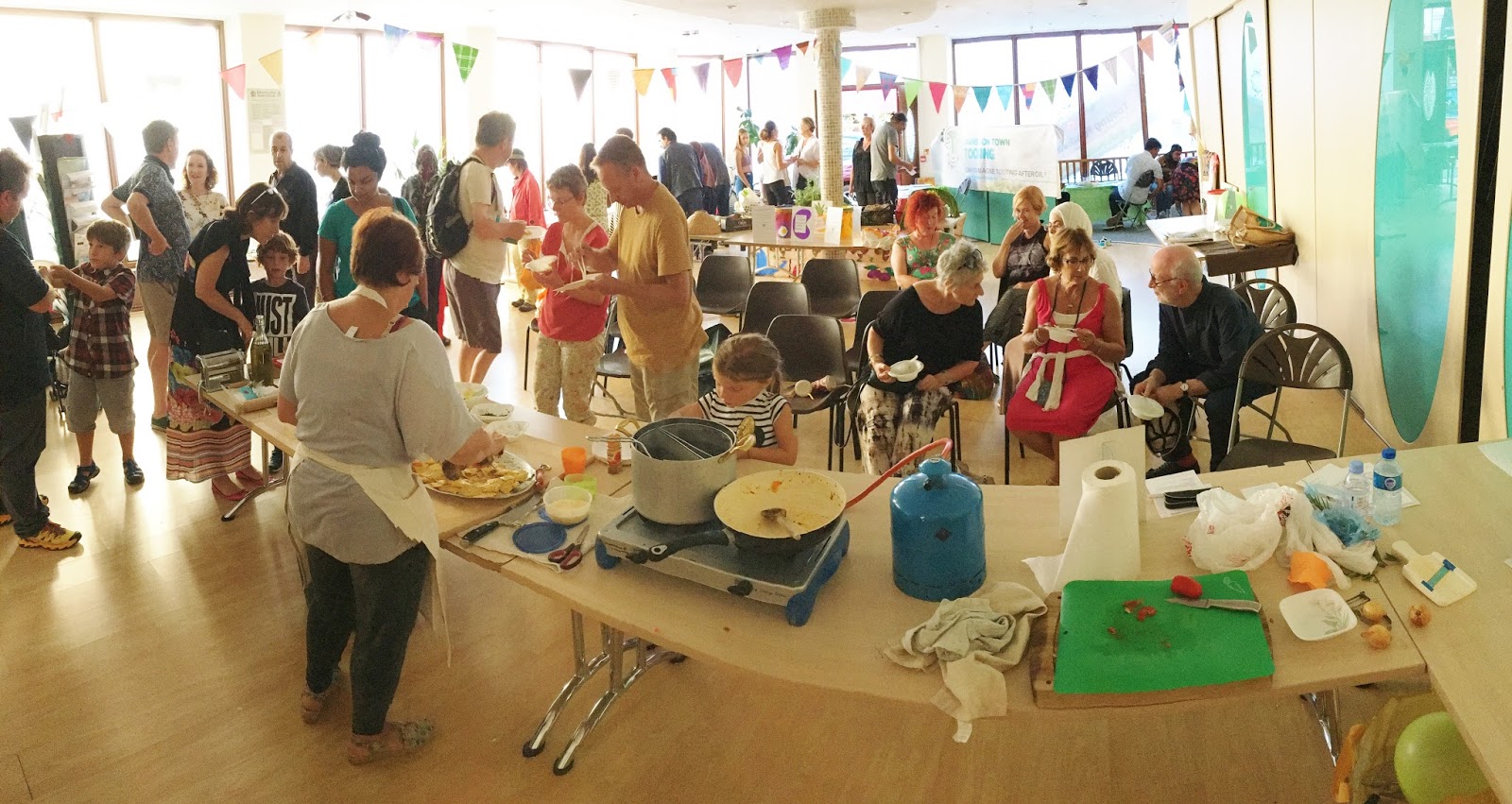
      There are new posts on our Foodival blog (click on that link) which follow up on two of the fun events at this year’s Tooting Foodival: celebrating local food together as a community.
      One post gives Minestra Supper Club’s recipe based on Elisabetta’s pasta-making demonstration.
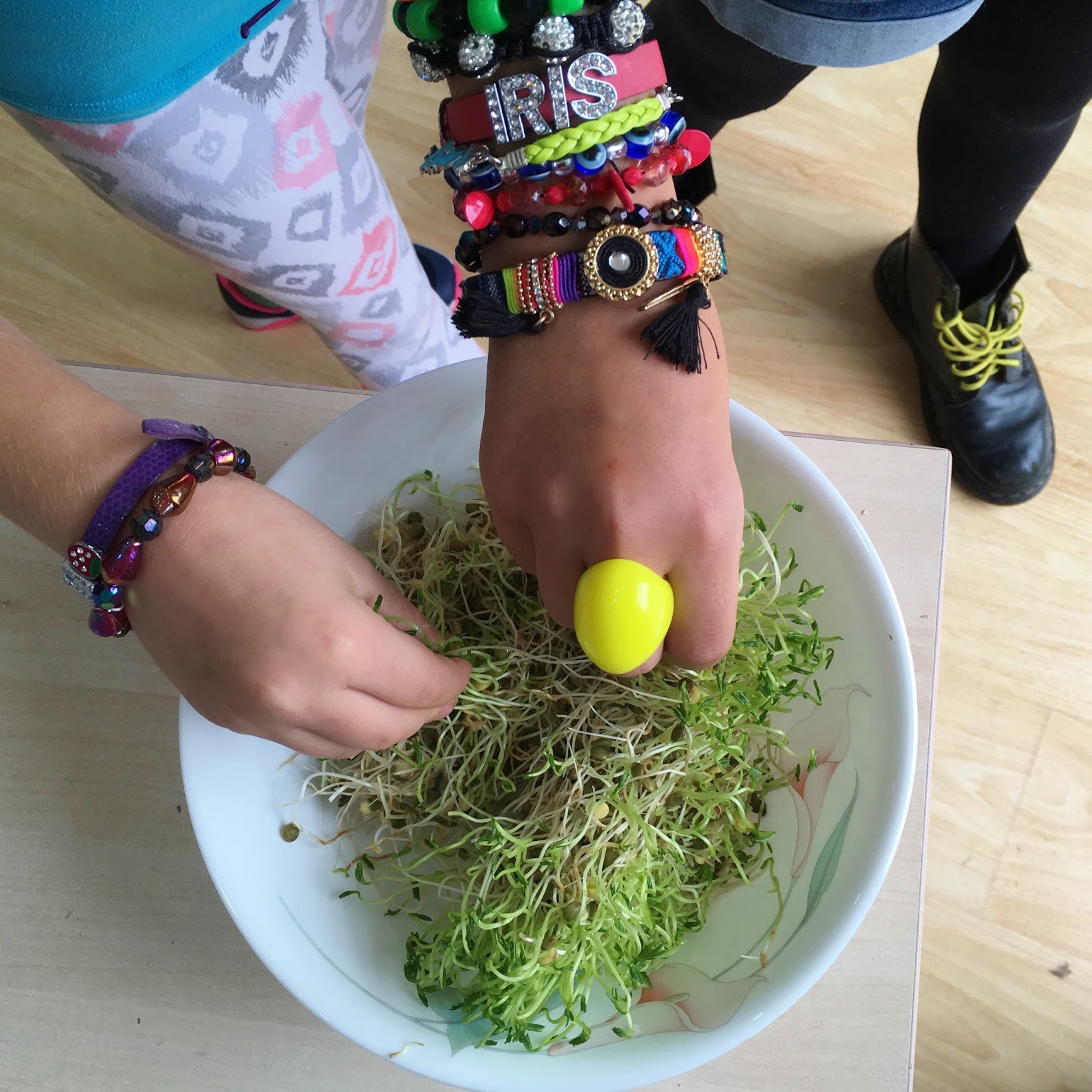
      The other shares all the how-tos of our grow-you-own home seed-sprouting crusade.
      Do enjoy both. Maybe you can combine the two…?
      Let us know how you get on!

      Both these posts celebrate local Foodival themes which have been London-wide campaigns in September: Urban Food Fortnight and Zero Waste Week
      Click for more information.

    • Cleaning Up A Tooting Grot Spot

      Earlier this month TTT organised a clean up of the Church Lane car park, which had embarrassingly been listed as one of the UK’s Top Grot Spots.  With the help of Wandsworth Council this notorious dump was “cleaned for the Queen” and TTT held conversations about, well, anything really with a surprising number of passers by, in the hastily set up pop-up Living Room. Amazing what Lucy and Simon can fit in that van! 

      TTT Team in the Pop-Up Living Room in Church Lane Car Park
      And with Council Leader Ravi Govindia
      More on this site from the Council here.  Do you know any other neglected areas of Tooting or around that could do with cleaning up?  Let us know.  It would be great to convert some unloved urban spaces into something the community can enjoy.
    • Conversations About Waste

      Today, Saturday March 5th 12.30-3pm, join us in our colourful Pop Up Sitting Room in the Church Lane Car Park in Tooting, near the junction with Mitcham Road! TTT is hosting community conversations about reducing waste and how we make ‘good change’ in Tooting. Supported by Wandsworth Council, as part of the Keep Britain Tidy nation-wide celebrations to ‘Clean for the Queen we’ll be doing our bit to tidy up, save resources and cherish the place we live in. The nearby Al Farah cafe will be providing some provisions! Drop by! We would love to see you.

    • WEF – Rubbish, recycling and the circular economy

      Wandsworth Environment Forum are holding a public meeting on Tue 19thJanuary(7pm, Room 123, Wandsworth Town Hall) covering such questions as:
      What can be recycled and where does it go after sorting?
      Is incineration of non-recyclables better than landfill?
      How is Wandsworth performing on waste processing and recycling? (Here are the government’s latest statistics for London: http://data.london.gov.uk/dataset/household-waste-recycling-rates-borough/resource/6f7bc5cd-217b-4eed-9450-af086f17908e) Unfortunately Wandsworth doesn’t compare well with the London and England rates.)
      Why doesn’t the council collect food waste?
      How might we do more together to minimise waste locally?
      Sharon Ross from Western Riverside Waste Authority / Materials Recovery Facility (MRF) at Smuggler’s Way and Cllr Jonathan Cook, Wandsworth Council’s environment spokesman will be fielding such questions and no doubt there will be some lively discussion!
      The Circular Economy

      The concept of the circular economy will be presented by Gemma George from London Sustainability Exchange. As you may know, this is a new way of thinking about creating systems which re-use materials and effectively minimise waste and dramatically reduce our need for new raw materials. 

      The idea is currently being promoted to the top end of the business world by the Ellen MacArthur Foundation (founded by the former solo yachtswoman – see www.ellenmacarthurfoundation.org/).

      The final discussion will look at how we, the community sector, and Wandsworth Council might work together to take forwards improvements to the current systems and any ideas for new initiatives.
      TTT will be having a stall there and we hope to see you there! If can’t come to the meeting but have a question, please either sign up to Project Dirt Wandsworth Cluster, http://www.projectdirt.com/cluster/wandsworth/, or e-mail Vicki Carroll, WEF chair, on vickigoat@hotmail.com.
    • TTT receives Wandsworth Recycling Golden Ticket prize – THANK YOU Ms Osmond!

      Wandsworth’s Golden Ticket prize draw scheme means that every two months a properly-sorted bag of recycling – complete with a WBC golden ticket put there by the householder – is selected to win a £5000 prize. Half of the prize is a community pot which the winner donates to local community groups, and half is the householder’s own reward.

      Three weeks ago the first of four monthly draws took place, and Ms Osmond from Tooting selected Transition Tooting as one of the winners. We have received £1000, and so have two other organisations: FAST, a young people’s project in Nine Elms and Share Community which offers training support for disabled people.

      Charles from TTT; Michaela, Kerry and Jason from FAST; and Annie from Share Community

      All of us in TTT are bowled over at being selected by Ms Osmond.   We hugely appreciate it, and will report back on what we do with these valuable funds in order to help make Tooting a more sustainable and happier place. Thank you again!

      Ms Osmond’s donation is extra generous because she added £500 of her personal prize to make the community pot a round £3,000 – so her three selected organisations each received £1,000.

      NB this scheme continues for three more draws, so it is really worth householders popping their golden tickets into correctly-sorted recycling, and certainly worth community organisations registering as potential beneficiaries. To get more tickets or to register, click here on the WBC website or  here on the WRWA site 

      Here we are joined by Michael Singham, WBC Waste Strategy Manager…and yes, a bag of recycling. 
      The next draw is on the 18th December – Good Luck and Happy Recycling!

    • Wandsworth Oasis UPFest: Tuesday 3rd November

      ‘It’s all about waste’  That’s how Gill Perkins, CEO of the Wandsworth Oasis charity, describes the driving theme behind UPFest: the Oasis event on Tuesday November 3rd:

      All welcome to a fun and original evening: a catwalk and showcase of the joy of upcycling clothes and textiles. 
      TTT are proud to be involved via Jeni Walker and her initiative Sustainable Making and Arts TootingSMArT

      Location: the Oasis shop at 234-250 Mitcham Road, Tooting SW17 9NT
      Timings: 5:30pm to 10:00pm on Tuesday 3rd November.
      More UPFest details online here– entry by donation.

      Jeni has been making scrap silk skirt scrunchies in World AIDS Day red – available on the night next week. Here she is last week in the decorated window of the new Oasis shop at Amen Corner in Tooting:

      Oasis supports local people who are affected by HIV and have successful charity shops around the borough. Gill and the team work (tirelessly) to sell as many of the items donated as they can, but inevitably there is still so much that may be fated to become landfill. 


      Charity shops are a key local and affordable route for helping us all to ‘Re-use, Reduce and Recycle’. Shops across the UK may not think about this, but they are in the front line of supporting low-carbon living in the community and that should be celebrated.

      Gill and the Oasis team take this relationship with waste-reduction very seriously. They have struck up some ingenious partnerships over the years that have enable them to starve the dump of a bit more waste – for example engaging with a company who make shiny new candles from all the remnants that come in. 

      Oasis is offering TTT and SMArT materials that may not be saleable in the shops but which can be re-purposed in our projects: perhaps broken jewellery, or waste books…it’s an inspiring offer, and much appreciated!

      For example: The Rooting in Tooting project with CARAS hopes to use waste textiles from Oasis to make wall-hanging exterior planters, as shown here – in this case for strawberries.

      It’s fascinating that Oasis as an enterprise has the primary objective of raise funds for their charitable purpose and has the complementary positive goal of reducing waste in creative ways. 
      Others please take note!

      We hope to see you at the Oasis shop at Amen Corner on Tuesday evening.
      – Jeni and Chuck

    • From today: the new 5p tax will be charged for single-use plastic shopping bags

      The long-debated tax of 5 pence per single-use plastic bag becomes law from the 5th October in England, and applies to ‘free’ bags from larger shops and chains (enterprises employing more than 250 people). Smaller shops can also charge if they wish. The sums charged go into pots for charity…so there are some complex processes, rules, exceptions (and fines for non-compliance) behind the scenes. 
      Read the government’s guidance for retailers here.

      So what? 
      In 2013 we used 8 billion of these ‘free’ bags per year, just from UK supermarkets….with year-on-year totals growing.
      Wales, Northern Ireland and Scotland have already implemented this tax – the latest figures show that in Wales, the use of these short-life bags nationally has been reduced by 79% over 4 years.

      The majority of these bags are instant waste, with an enormous cumulative impact in terms of costs of dealing with household and business rubbish, and blight from windswept litter all around us. 
      Read TTT’s earlier 2010 post about global plastic pollution here
      They are derived from oil, a non-renewable resource. (There are other options such as bidoegradeable cornstarch).

      Of course there is a carbon saving if bag use is reduced – savings in terms of materials used to make them, and their distribution, and the carbon costs of disposing of them. 
      ‘Reduce’ has much more positive impact than ‘re-use’ or ‘recycle’ and is much more within our own control.

      What does this mean for me?
      There’s a new article – click here – which summarises exactly that.

      Which shopping bag to use today?

      There’s an easy option that can suit all pockets: 
      use a textile ‘bag for life‘. 
      Made of jute or cotton, they are recyclable when they finally pack up – cut up and composted, or used as mulch.

      For a good short article about re-usable bags, click here.

      Cloth bags also have a carbon cost in their own production and distribution; some long-life shopping bags are made of plastic textiles.

      We can make a positive statement
      Eagle-eyed readers will see a cloth shopping bag from Modbury, Devon in the photo above. That same image is used on the ‘Welcome to Modbury’ road signs outside the town. 
      There, a local voluntary campaign in 2007 encouraged shops and shoppers in the town to stop using plastic bags.

      That brought a double win – not only reducing oil-derived waste, but also developing social glue and a sense of teamworking in the community. That is not necessarily easy: Rebecca Hosking who championed this idea in Modbury said in 2007:

      • “It seems to have really brought people together. The shops have sent all their unused plastic bags to Newcastle where they are being made into plastic chairs, and they have all set up plastic bag amnesty points where people can bring in the hundreds of bags that they keep under the kitchen sink. Now it’s just a question of seeing if people accept it. We are all trembling now. To be a pioneer is pretty scary.”

      And in Tooting?
      Now, 8 years after this pioneering in Modbury, larger enterprises all over in England will be charging for single-use bags from today. 

      • What can we do locally to build on this opportunity to make a positive statement about Tooting and its environment?
      • How can we encourage small retailers to reduce bag use? 
      • Can we make upcycled Tooting bags with charity shop textiles?
      • Grow our own shopping bags? …any more ideas?

      Fashionable on eBay, but still plastic