Category: Gardening

  • TootingCAN: A Day of Skill-Sharing, Connection, and Hope

    TootingCAN: A Day of Skill-Sharing, Connection, and Hope

    All Photos credit: George Dixon

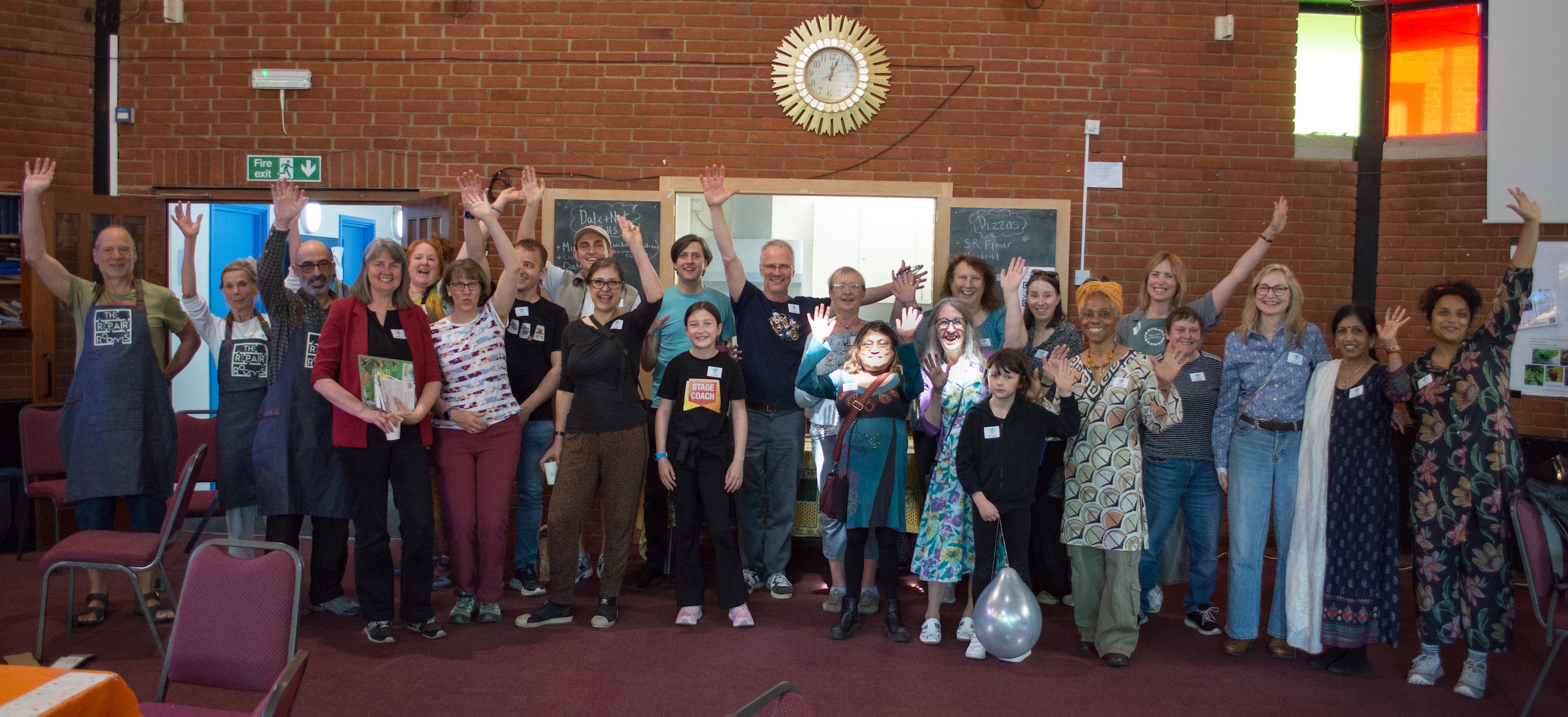
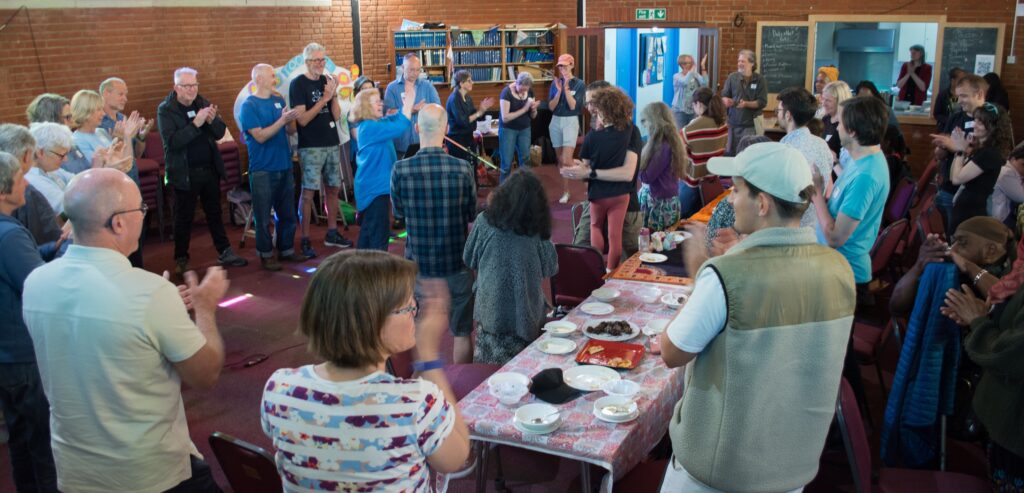
    What a day! On 9 May 2026, the United Reformed Church in Rookstone Road buzzed with energy, creativity, and a shared passion for making Tooting a better place. TootingCAN, organized by Transition Town Tooting (TTT) and funded by the Wandsworth Grant Fund, brought together 108 participants from all walks of life to celebrate the skills, resilience, and kindness that make our community thrive.

    From the moment you walked in, you could feel that this was more than just an event. It was a testament to what happens when we come together to learn, share, and care for one another. Whether you were trying your hand at British Sign Language (BSL), crafting a comic book, or whipping up date balls in the kitchen, there was something for everyone, and everyone had something to give.

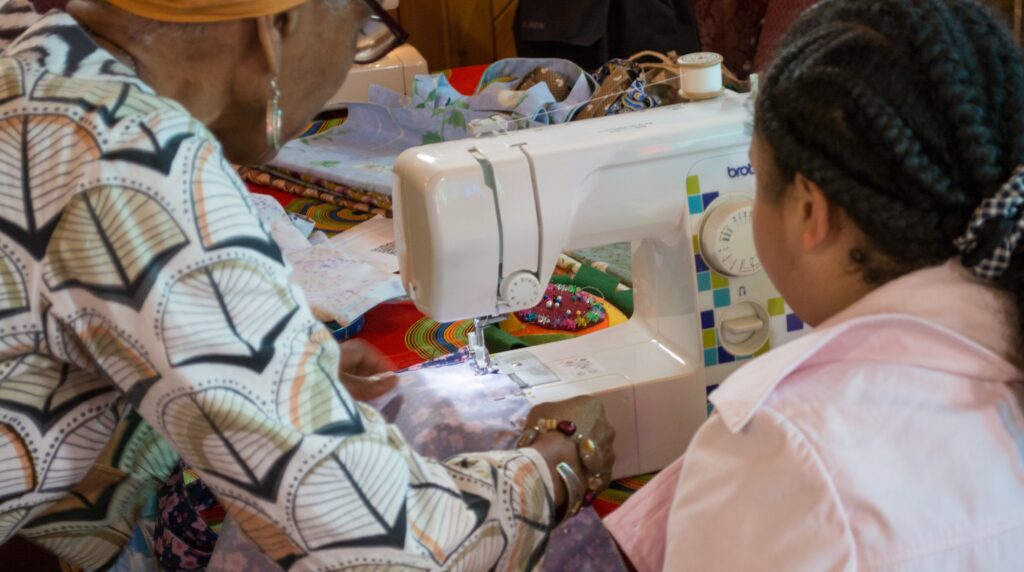
    Stitching the Totes

    A Celebration of Skills and Community

    TTT’s mission is to tackle the climate and ecological emergency through volunteer-led, community-driven action right here in Tooting. TootingCAN is our moment to convene the people with skills and experiences from our locality to do exactly that through sharing, showcasing that our work is nothing without the vibrant and diverse community right here in Tooting. Participants left with new experiences, fresh ideas, and a sense of belonging that’s vital to build a flourishing sustainable future.:

    • 108 participants engaged across 15 activities.
    • 15+ workshops delivered, from worm composting to AI sustainability and Indian dance.
    • Around 75% of attendees were Wandsworth residents, proving that the best solutions start right where we live.

    But the real magic was in the story we all started to weave:

    • 9 out of 10 participants praised the event’s warmth and inclusivity, with many highlighting the friendliness and the diverse, healthy food as standout features.
    • Activities like the BSL workshop and Creation Station, led by children and supervised by Core Group member Abby, (where attendees crafted badges, mugs, and comic book stories) were particularly beloved, with participants calling them “inspiring” and “connected to family heritage.”
    • Special mention for Kelly’s cooking class for children; firstly as it enabled children to experience the joy of cooking nutritious meals from scratch, secondly as it introduced them to cooking sustainably through plant based recipes. It is hoped that this will plant the seeds for these children to enjoy cooking and cook meals that are good for the planet – potential huge long term gains if they can be sustained (through more Tooting CANs!)
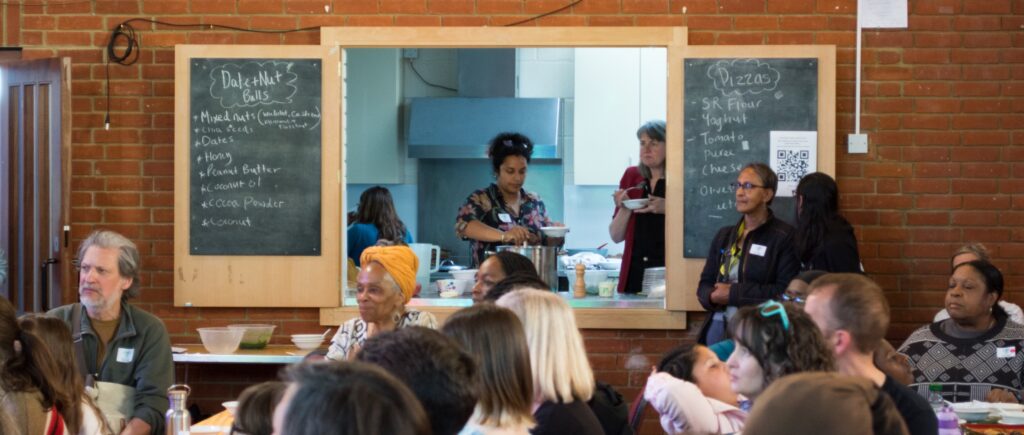
    • The event closed with a community meal, performances of the fresh BSL skills and slick Indian dance moves before a collective sing song with the Lido Choir which brought the room to life, proving that joy is a skill we all share.

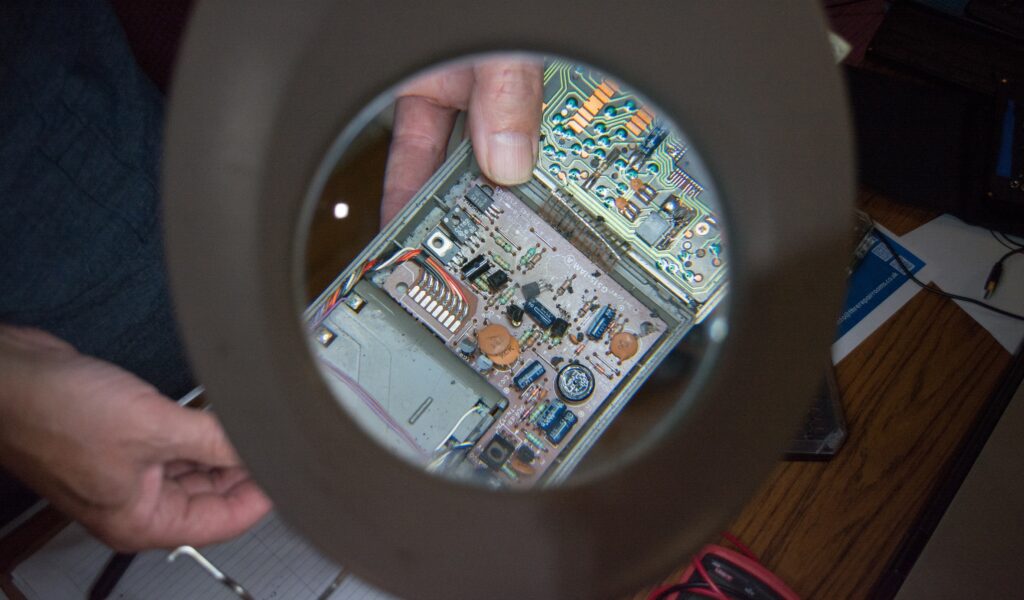
    Lap around a Laptop, take a look inside…

    Feedback That Warms the Heart and nourishes our work

    This year, we had an engaging and creative way to gather feedback on the walls of the entrance corridors. One attendee, a 70-year-old singer, said:

    “I loved the community atmosphere, anyone can sing! I’d love to see more singing in future events.”

    Another, a 50-year-old stitching enthusiast, shared:

    “I connected sewing to my family heritage and loved the Lido Choir. The whole event felt so welcoming.”

    Contributors (our 30+ volunteers) echoed this sentiment. They loved seeing the diversity of skills on display and the buzz of activity, and the collective effort of hosting TootingCAN.

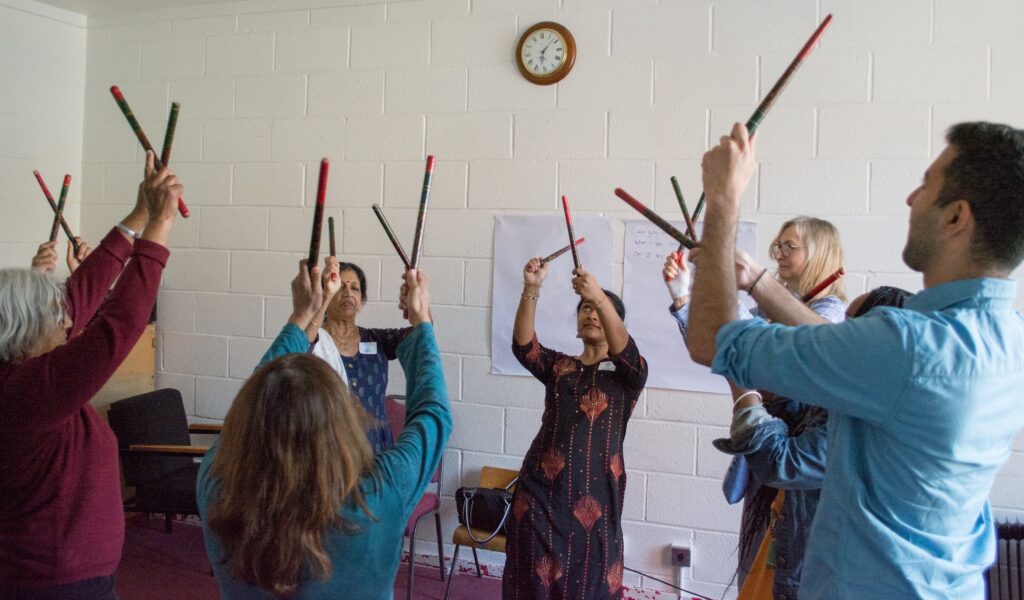
    Indian dance, clack! clack!

    What’s Next?

    Transition Town Toting have run TootingCAN for the last 3 years and the enthusiasm for it grows each time. This year, we received loads of ideas for workshops at future TootingCANs, such as:

    • More singing and creative workshops (think choral singing, book clubs and dance)
    • Deeper dives into IT topics like AI and sustainability.
    • Arts and Crafts from crochet to lino printing, collage to painting & sketching
    • Food and cooking workshops like fermentation, kimchi and baking
    • Finally, the practical stuff: gardening, bike maintenance and woodwork.

    Most importantly, TootingCAN proved that community resilience isn’t just a buzzword, it’s something we build, day by day, skill by skill, in community. Let’s see how next year’s tootingCAN develops!

    Serving lunch

    A Huge Thank You

    To every participant, volunteer, and contributor, thank you for making TootingCAN a day to remember. Your energy, creativity, and kindness are what make Tooting special. Huge thanks to Amy and the United Reformed Church, our home from home. And to the Wandsworth Grant Fund, thank you for believing in this vision and helping us bring it to life.

    The future is bright, and it starts right here in Tooting. Let’s keep sharing, learning, and growing together—because when we do, there’s no limit to what we can achieve.

    Want to get involved? Perhaps you have something to offer for next year’s TootingCAN? Transition Town Tooting is always looking for volunteers and new ideas. Get in touch at [TransitionTownTooting@gmail.com] to join the movement!

    Close with a sing song

    Tooting can!

    By Rich Couldrey

    Step in to the creation station, stick, squeeze, badge
    Take a lap around a laptop, who knew AI was…
    Stitching ties, totes to carry your prize, whirrr, prick, chat, chat
    Chaat chaat, making chaat, spiced cascade,
    A taste of tooting in date …
    balls and pizzas made, squeeze, need and dough
    The meal begins to assemble ...

    But wait, we dive underground, dark, as worms wriggle and squirm outside,
    Past quests for reflection,
    to planters repaired and hands in the soil, plants go in... grow, grow!

    In community, we relate, a rainbow human family,
    What did you say? Hands sway and flow, in letters made as we move, my name, your name, hello hello.

    Gestures turn to dance, sticks clack clack! As Ragini moves, with such grace and poise, we follow, Kathak, Kathak.

    And back, to find a way into a digital world, clickety clack of fingers on keyboards learning to excel, nearly time to relax...

    Wooosh! A gleeful child runs and newspaper kites fly out back, time to rise up... up... up... to see a drawn map of us all, BAT BAT.

    Enough of all that,
    Take a breath, in and sing,
    feel the healing, "hold on, my dear, here comes the dawn" rings,
    And stop, pause, time to eat and reflect,
    A leek and potatoes soup to fill the...head…
    heart and hands, and celebrate...
    Tooting's rainbow soul,
    ‘til next time we gather and change the world once more.
  • Changes at the Tooting Community Garden

    Tooting’s Green Sanctuary Reinvents Itself

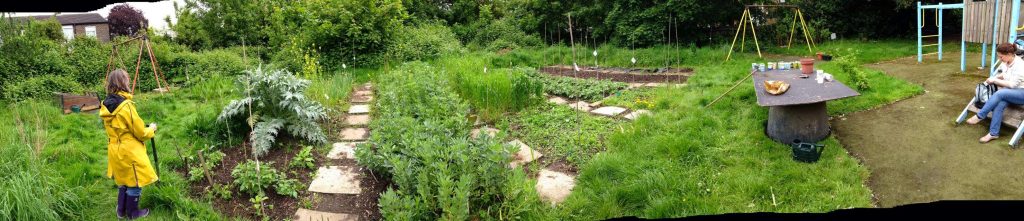
    After over ten years of flourishing as a vibrant oasis in the heart of Tooting, the Tooting Community Garden will go into a period of transformation. For local residents the garden has long offered a place where wilderness and community spirit met. Now, as a new development takes shape, the garden faces its next chapter.

    Development and Change

    The largest portion of the cherished green space will soon make way for a new, though long-planned, project: eight assisted living flats.

    While the reduction in size marks a significant change for the garden – the loss of wild space and refuge for all the animals loving rotting wood and leafy corners (look at our Instagram for the biodiversity we have!)

    Nevertheless, we see it as a new beginning. Planning approval was granted on the condition that the community garden would remain, ensuring its legacy continues in a reimagined guise. We are grateful for the ongoing commitment from Naseem Aboobaker to our gardening cause.

    Looking Forward

    Though the footprint of the garden may shrink, its ambitions for it remain unchanged. We are determined to maintain a dedicated space for growing, learning, and fostering sustainable practices and we are working with the architect to maintain as much of what has become ‘our’ space as possible.

    Over the coming six months, our focus will shift to a horticultural rescue mission: identifying which of our perennials to keep and for which we might be seeking new homes—or perhaps even foster plots—for our surplus plants. With a touch of hope, we imagine a handful of these plants as the first seeds of what will become the Fishponds community garden.

    This oasis began its journey many years ago in summer 2012, emerging from the brambles behind 5, North Drive. Starting out with preparing beds to grow vegetables of the years we added trees and shrubs and fruit bushes. So many of those donated to find a new home as people had to leave their gardens or had to much success with their planting.

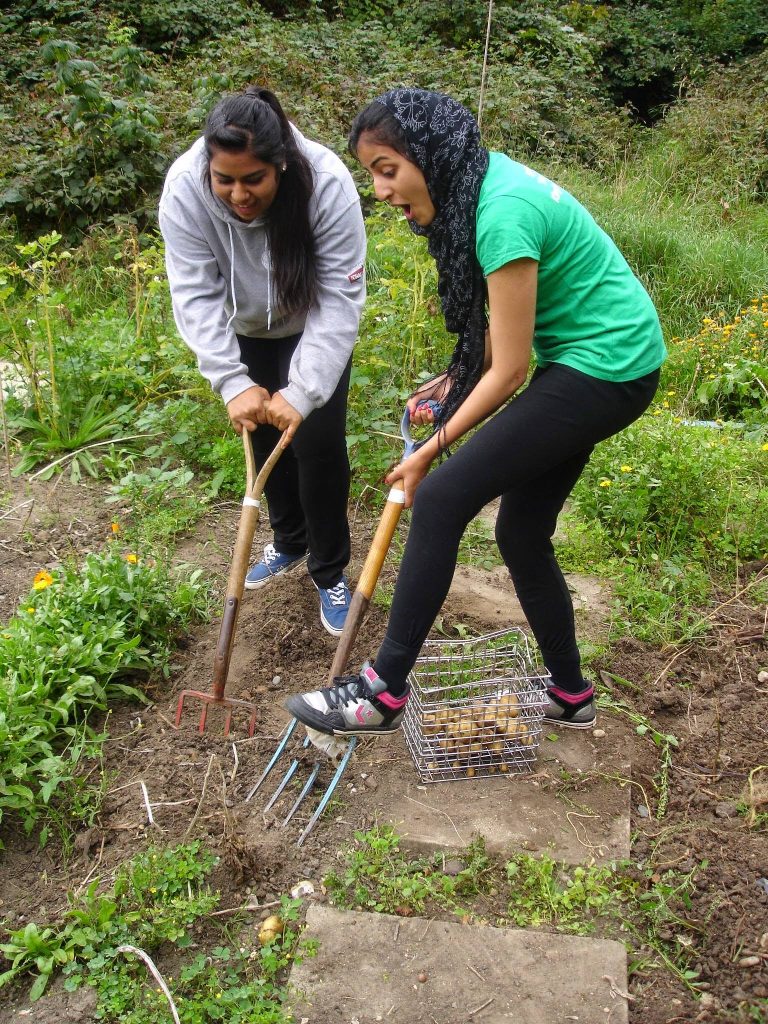
    When developers took away the small woodland that bordered our sanctuary, we seized the opportunity—introducing a patch of flax and carving out a potato plot, breathing new life into every inch of the reclaimed ground.

    Not to forget, the herb bed created and tended to by our friend Rose until the very last weeks of her life. The new community garden will hold a space that will be Rose’s bed.

  • Bioblitz at Tooting Community Garden

    Bioblitz at Tooting Community Garden

    Having been inspired by Fishponds Bioblitz we decided to do our own and to start with looking out for our garden animals.

    A BioBlitz is defined as a short, intensive period of time during which a group of people find and identify as many species of plants, animals, fungi and other organisms as possible within a specific georgraphic are.

    We decided to focus on animals this time and spend a gardening session to expore our own area. Maybe a little less scientific but nevertheless fun. We also wanted to see how much diversity we have in our garden and to continue doing these exercises year on year to monitor the development of animal diversity.

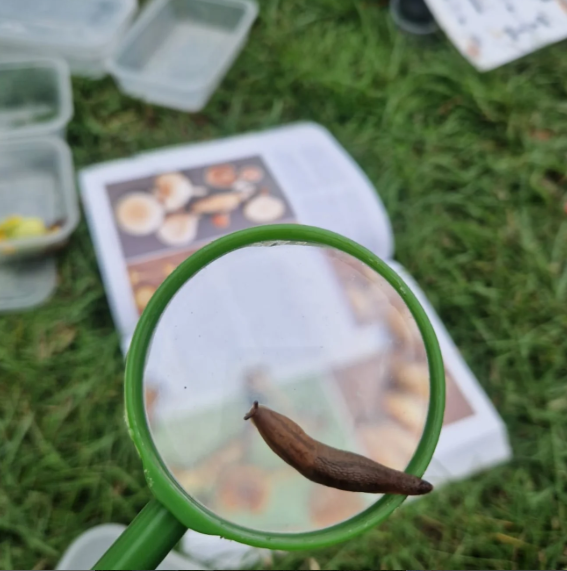
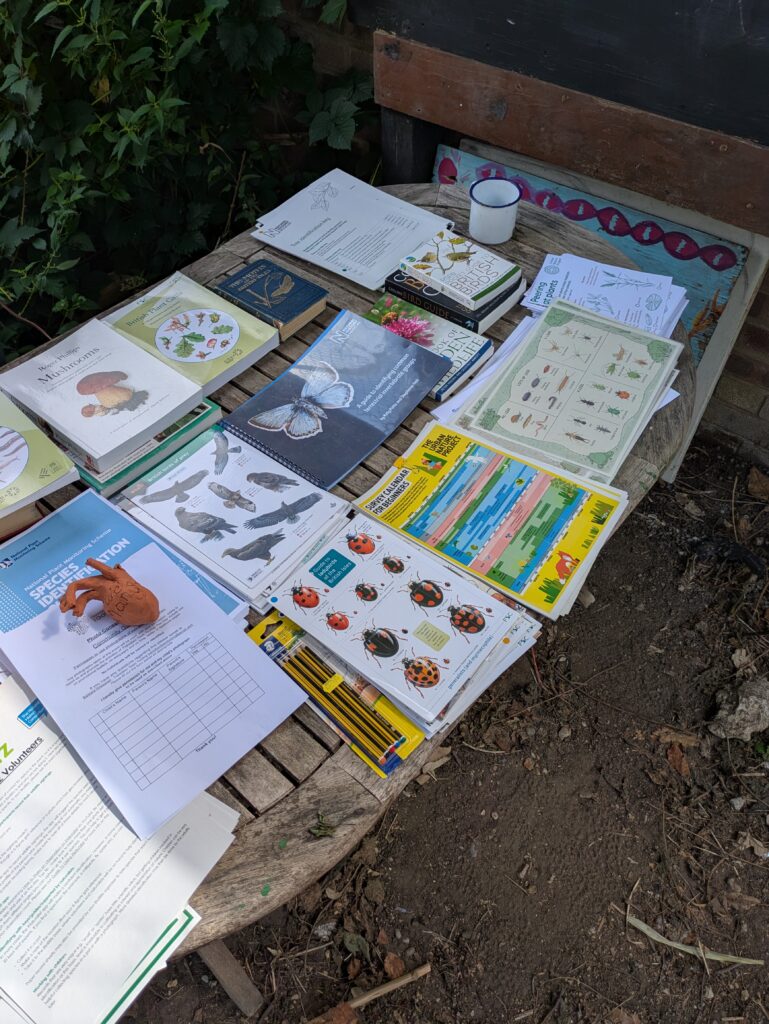
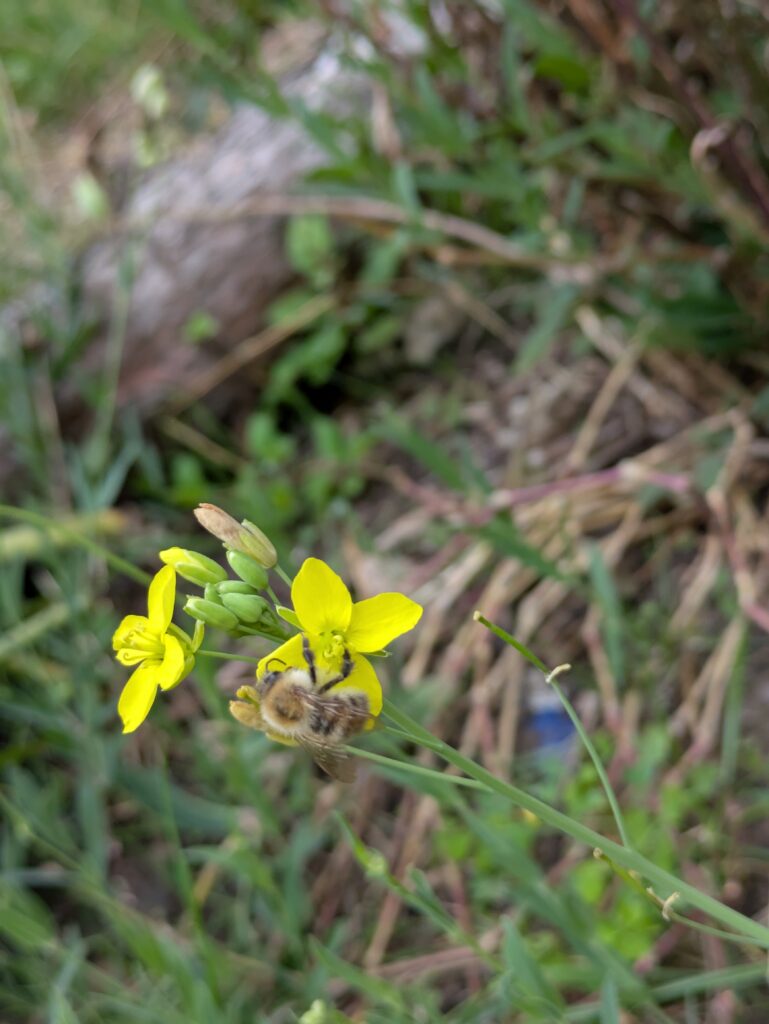
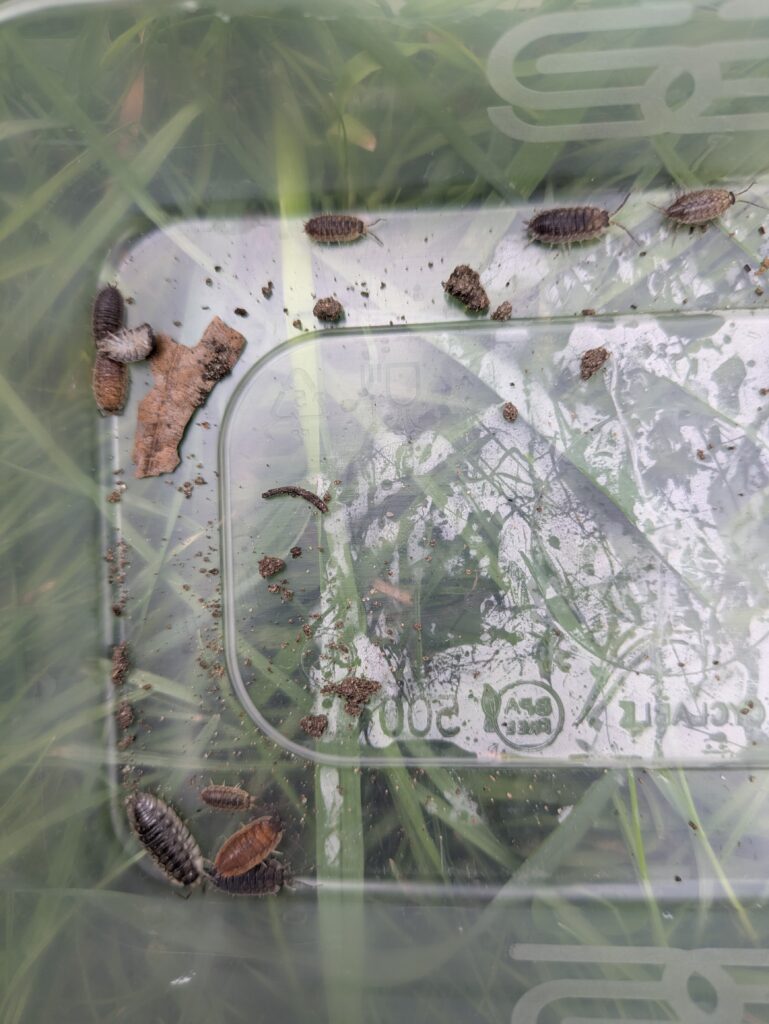
    Equipped with containers, brushes and sticks we ventured around the garden, we looked closely at our flowers to look for pollinators, we turned over stones for invertebraes and lifted the rugs from our compost bins to capture some of our many arachnids.

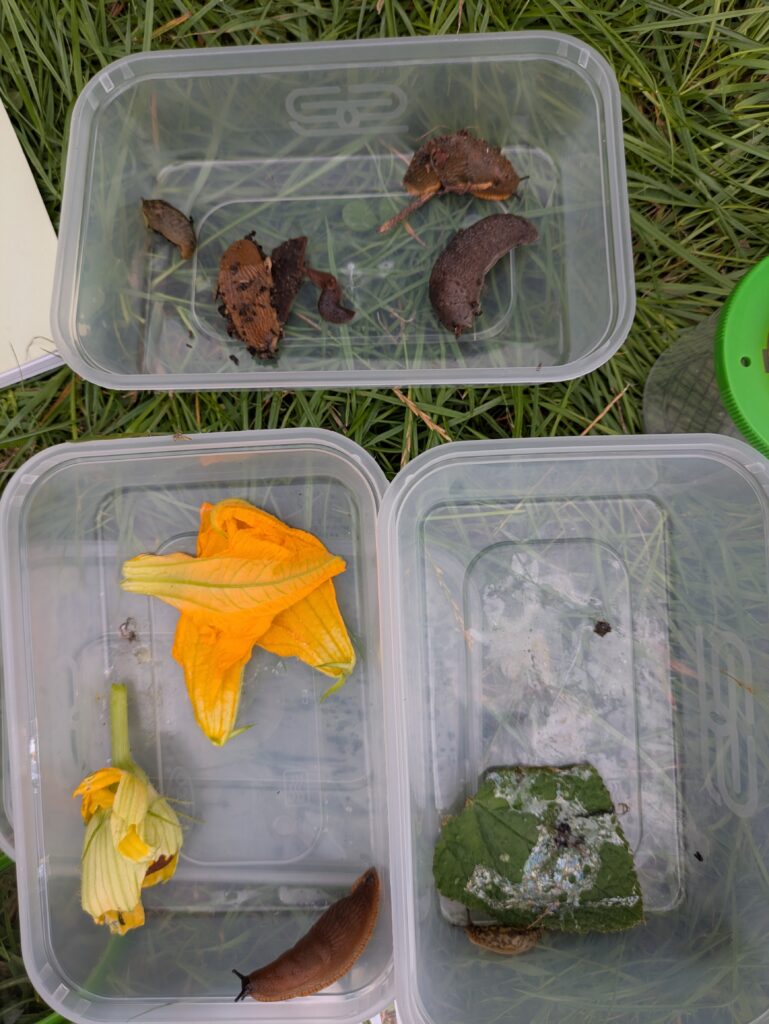
    The writer of this post was most surprised by the diversity of snails and slugs in the garden. Not their best friends when it comes to cultivating kale they thought there is ‘THE slug’ and ‘THE snail’. A leopard slug is surprisingly pretty.

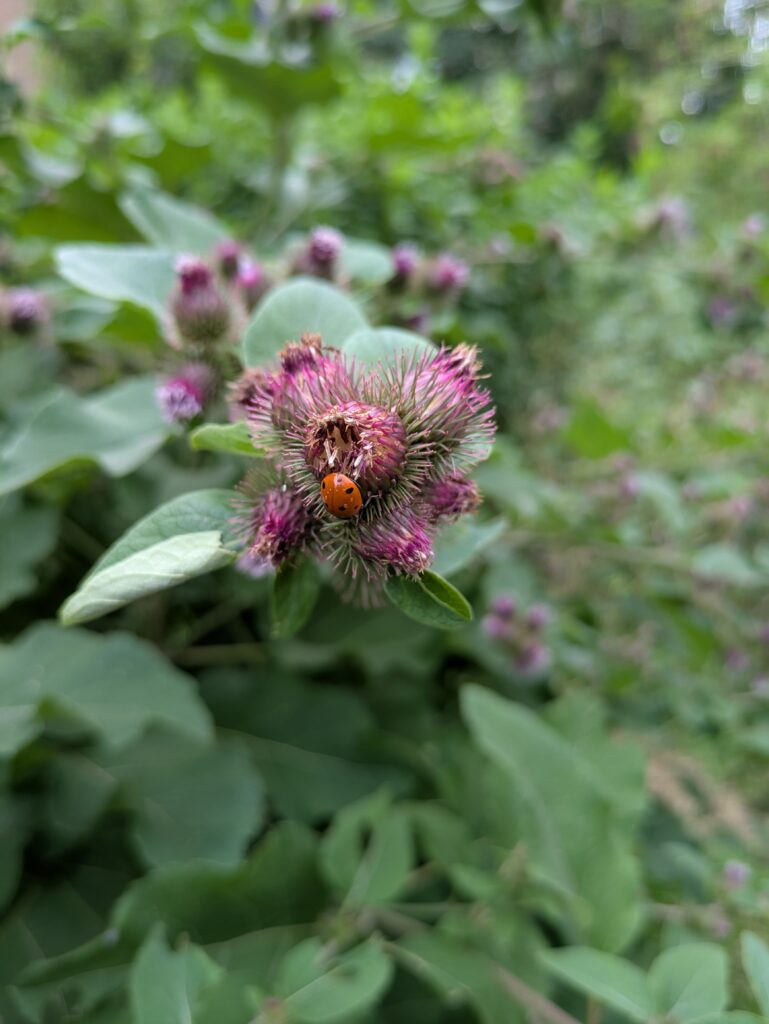
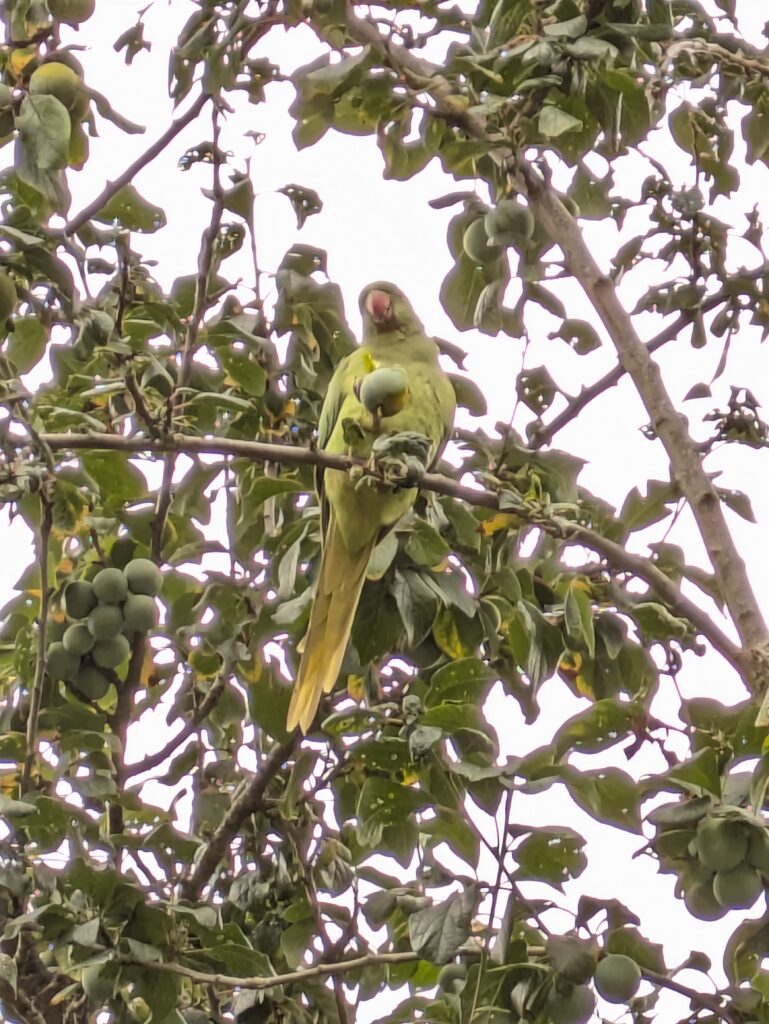
    We found Parakeets eating the greengages (see the video on our Instagram of that), different sizes of crab spiders a jumping spider a red tailed and a white backed bumblebee.

    We learned the difference between a millepedes and centipedes. Did you know that centipedes are carnivorous and actually have fangs to immobilise their prey.

    We collected a variety of types of woodlice of all sizes.

    Some of our hollyhocks have already started to go to seed – and it is fascinating to watch the tiny weevils with their trunk munching on the seeds.

    The kids surprised with their knowledge of bugs and most of all how they handled the bugs and spiders.

    A successful and enjoyable day had in the TCG.

  • The Community Garden bakes a loaf of bread

    That is the plan anyway. How did it come about?

    Many years ago a previous community garden group grew wheat and managed to bake one loaf of bread from it. So why not try it again?

    Inspired by one of our members who was asking for a source of getting wheat for her garden we also got ourselves some seeds. We tend to grow low maintenance crop in the garden as we don’t have the resource to tend to delicate plants. We also found in recent years weather volatility is driving us towards the hardier end of plants that tolerate draught and rain. So the wheat seemed a good idea.

    We got in touch with the Brockwell Bake Association https://www.brockwell-bake.org.uk/ who offer ‘April Bearded’, a grain last commonly cultivated during the 19th century. Their seed stock of this was grown and harvested by Kent farmer Andrew Lingham at Court Farm, Halling. Heritage wheats are generally more suitable for non-farm and organic farm sowing as they do not require the chemical fertilizer, herbicides, pesticides, fungicides and growth regulator typically used in conventional wheat farming for success with modern wheat lines.

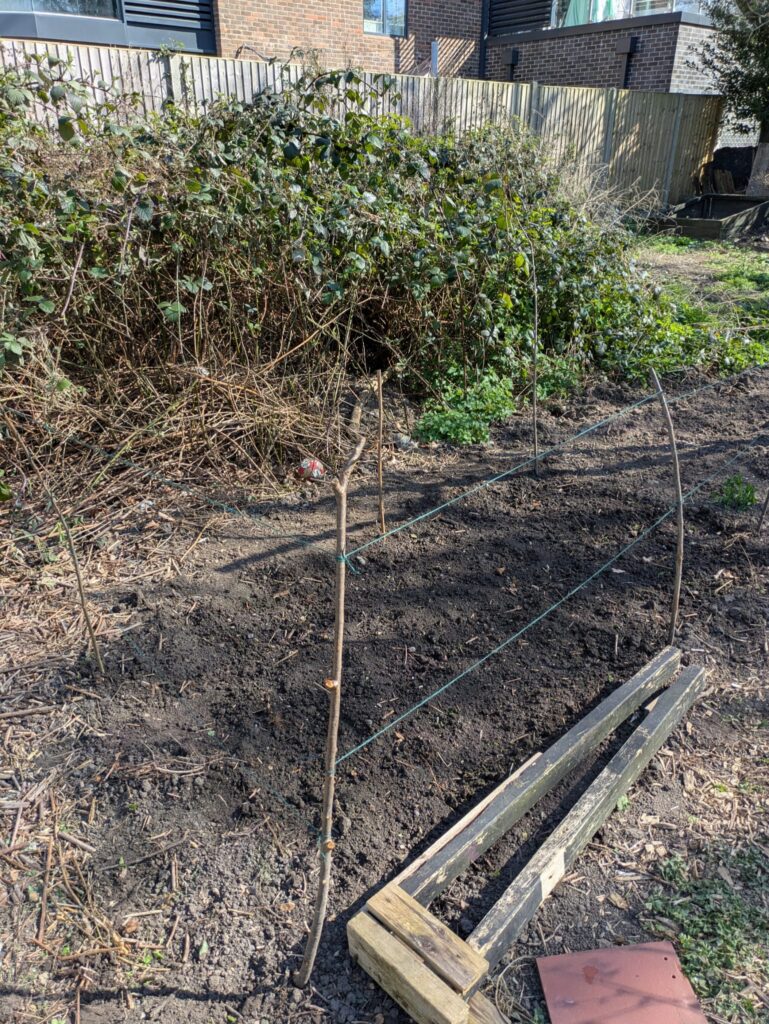
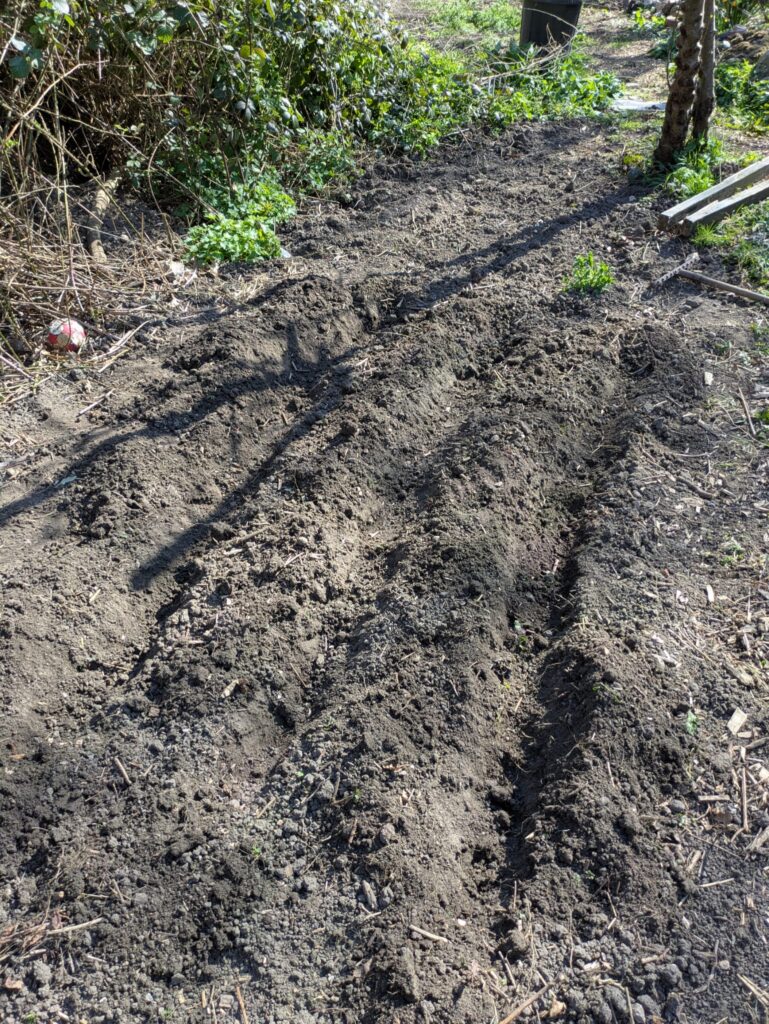
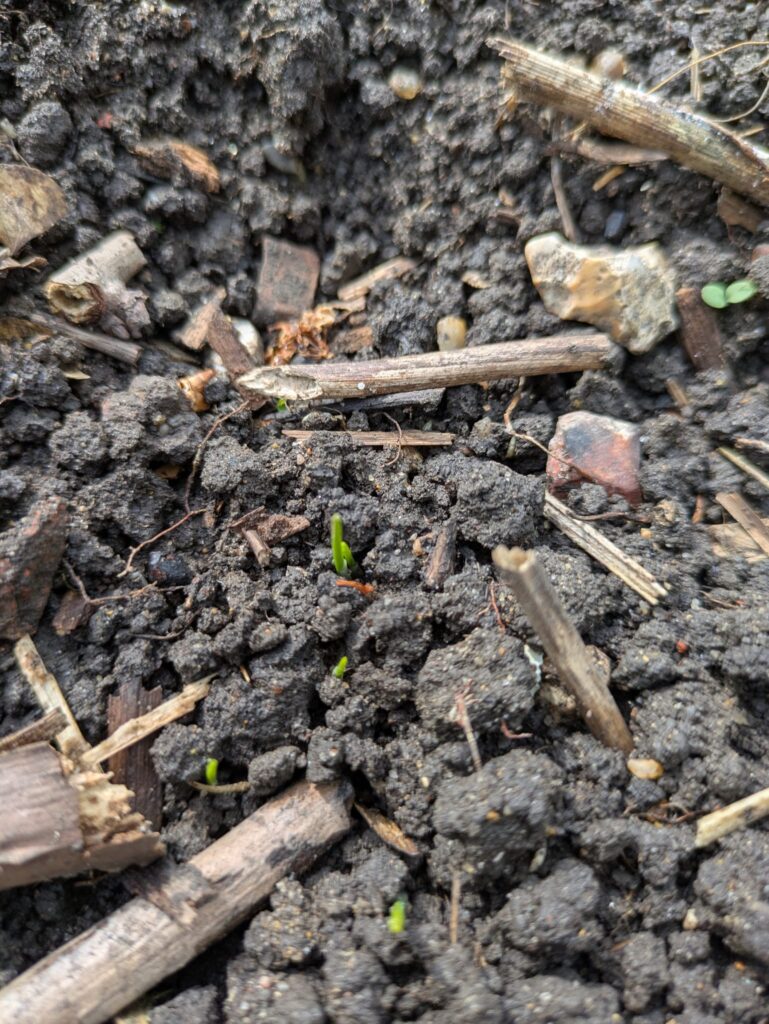
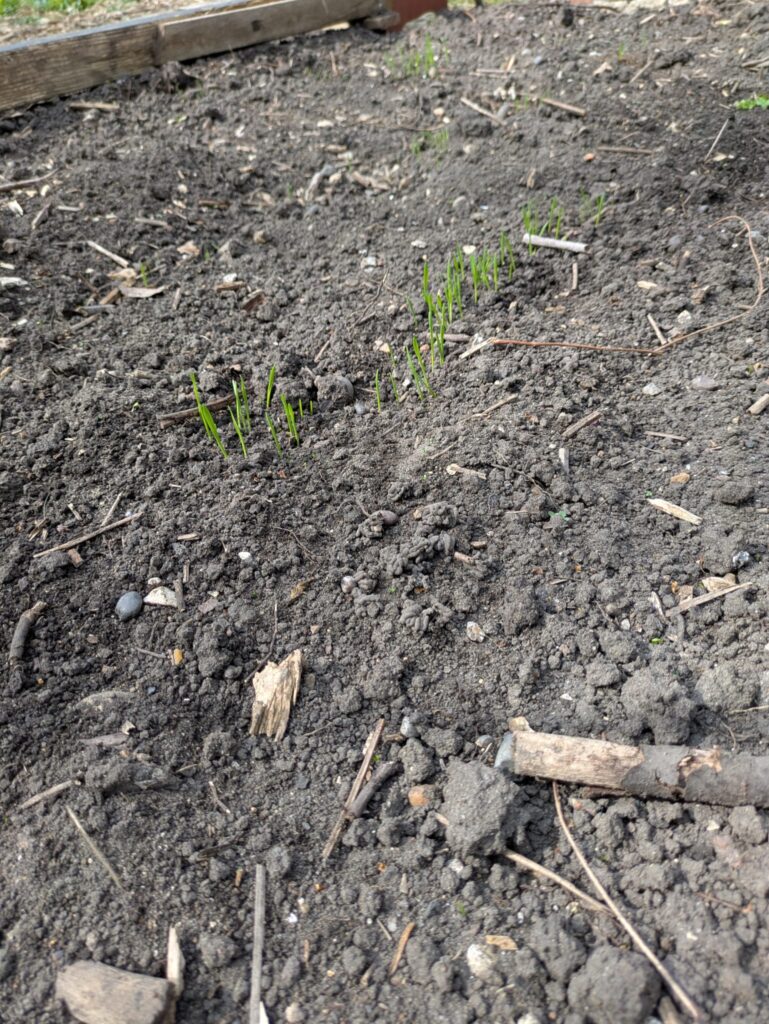
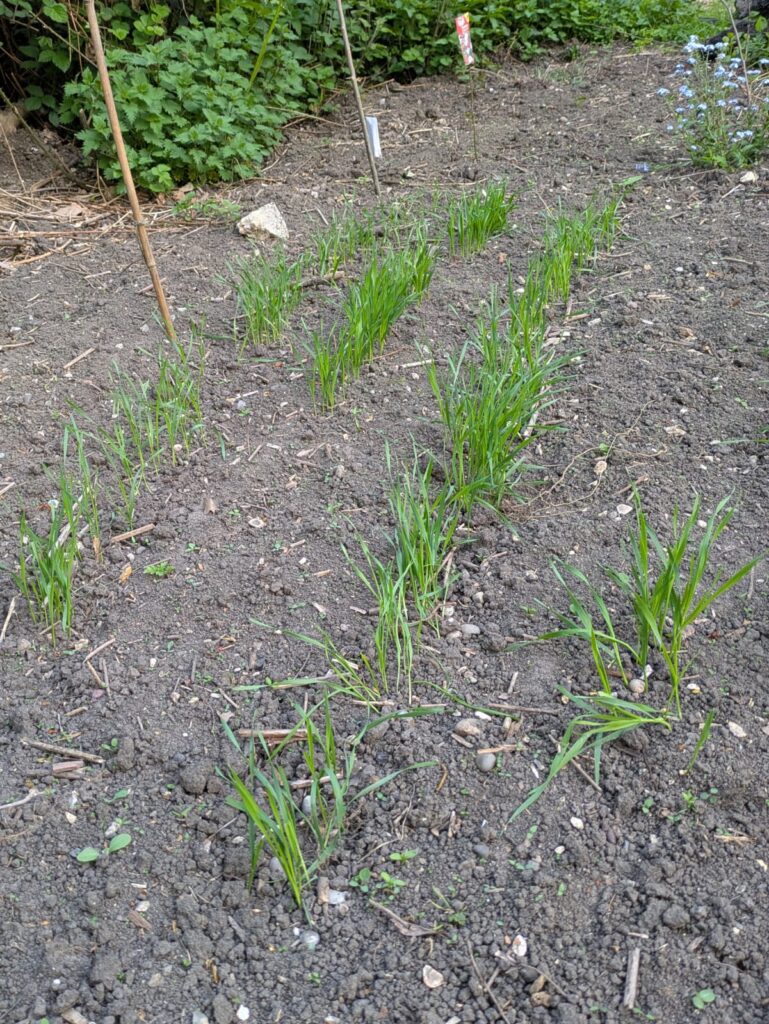
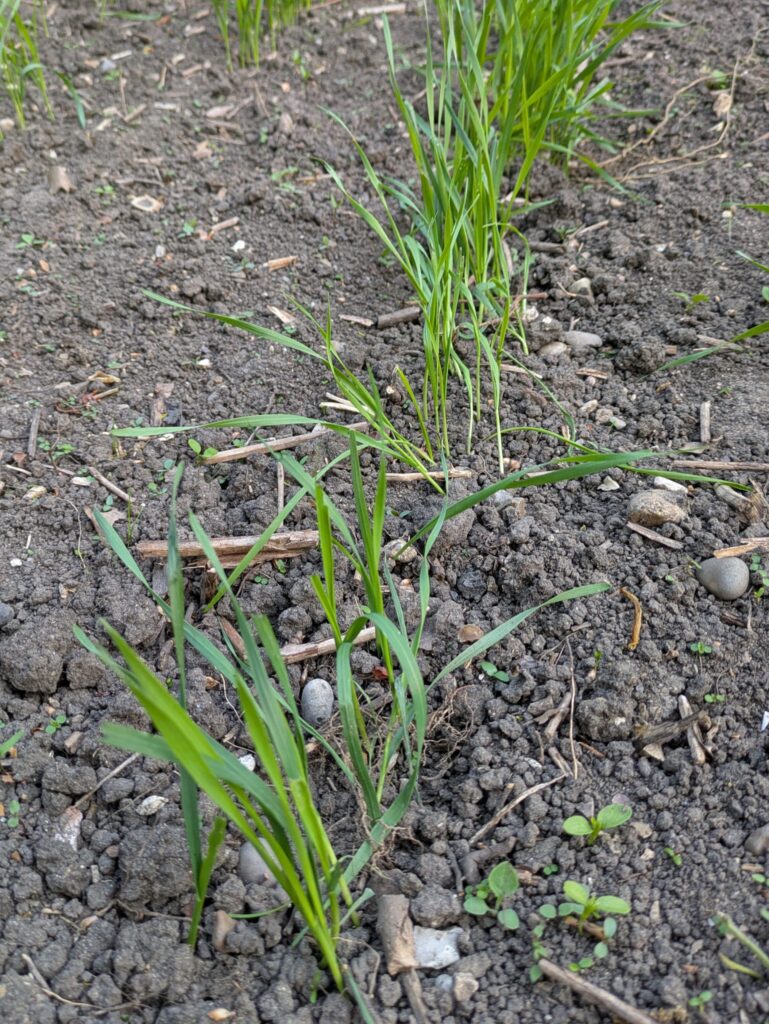
    We prepared an area that we had to clear to give our apple tree a bit more space and sowed our 2m2 of wheat in rows. Watered it twice to allow germination and now wait and see.

    Below are photos from the first 3 weeks of the wheat project. We will provide regular updates on our Community Garden Instagram.

    But do come by on a Saturday 11.00 till 13.00 (and often until much later – because once you are in the garden it’s hard to leave) and join us in sowing and planting for the next season.

    Find out more about the garden here.

  • Our first ‘live’ seed swap event!

    Our first ‘live’ seed swap event!

    On Saturday 5th February the Seed and Vegetable swap group had it’s first live seed swap event.

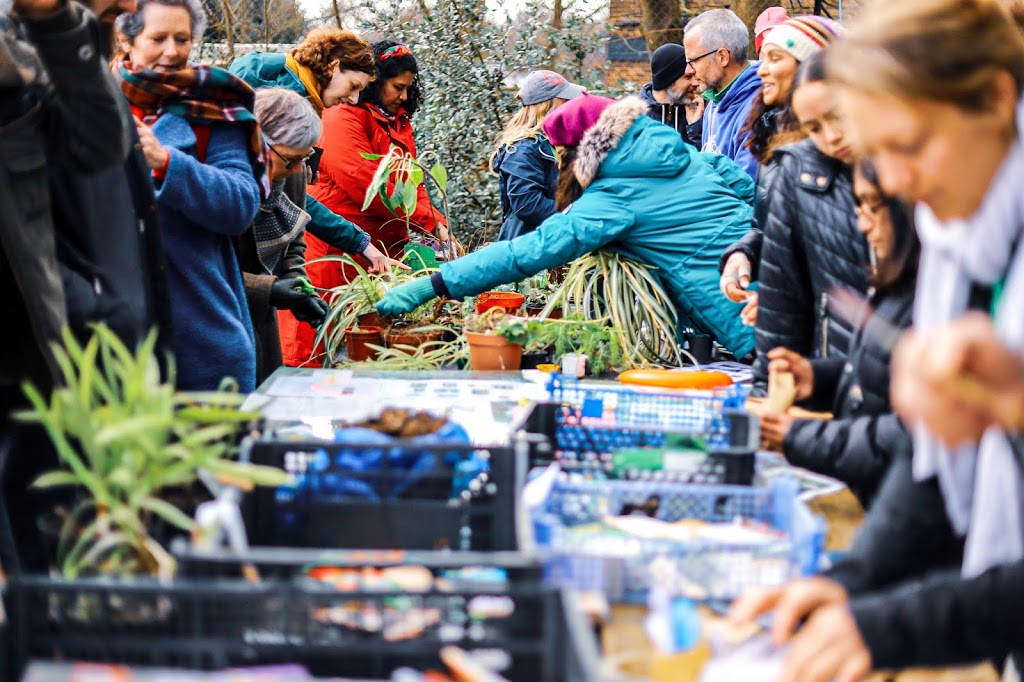
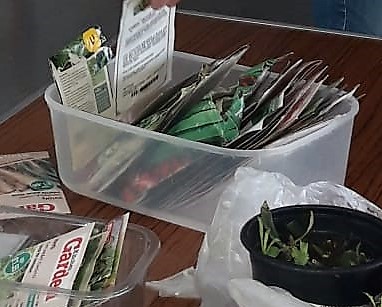
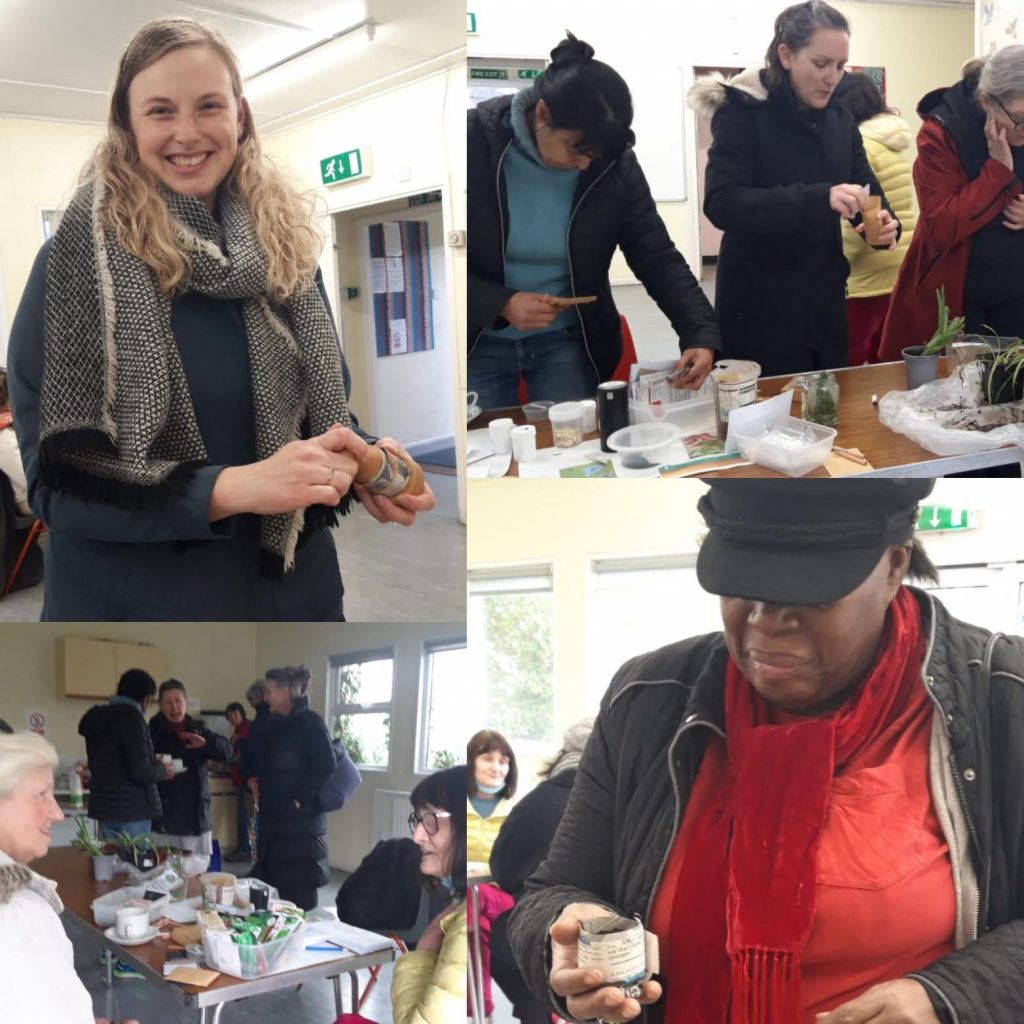
    This event was to enable local gardeners to meet, have a chat with each other, bring seeds to share with others and pick up seeds they would like to grow. They were also able to have a go at making newspaper seed pots. Most people had a go at this, and were able to take these home filled with the seeds of bee friendly wildflowers.  

    The event was well attended and people enjoyed the opportunity to meet other gardeners. People enjoyed having a cup of tea and biscuit and chatting to other gardeners. Some of the comments that participants made of the day were: 

    ‘an enjoyable afternoon, with a bunch of friendly people happy to share useful tips and knowledge’

    ‘really enjoyed meeting people yesterday at the seed swap’

    ‘my best part was meeting so many warm people who are also very knowledgeable and experienced gardeners whom we can learn a lot from’

    It was great to see people mingling so easily and having discussions about gardening. People were enthusiastic about having further events, so we may well be holding a summer or harvest party. Watch this space! 

    To join, please contact us transitiontowntooting@gmail.com with your phone number so that you can be added to the WhatsApp group. 

  • Lockdown Love, Episode 1 – FOOD!

    Lockdown Love, Episode 1 – FOOD!

    Lockdown has been in place here in the UK since the middle of March and had a huge affect on our activities. We had to improvise quick, like everyone, and adapt to a rapidly changing context of how we live, where we live. 

    Over the early weeks, our growing core group found our niches and put what energy we each had into developing outward facing projects to help our community, both near and far, using networks nurtured with love for over 10 years. 

    Over the next few days, we’ll be posting what’s live and how you can get involved. We’ll be sharing projects about public space and building community with more posts cooking up.

    Never know, Transition Town Tooting maybe fertile ground for collaboration with you!

    This episode is all about food and offers four projects: Vegetanuary! – an online group focused on celebrating and sharing vegetarian and vegan cooking; Foodival2020 begins! A callout to share food growing stories and a date for the diary as we stretch to imagine our annual food festival in September; Tooting Community Garden has been sharing the wonders of nature in Spring and looks to future projects and our Neighbourhood Seed Swap in direct response to a huge spike in interest in growing your own. Do read on…


    Vegetanuary! 

    Vegetanuary! was already an online group focused on exploring vegetarian and vegan foods during January each year. It was a no-brainer to re-imagine the group and apply to lockdown to share recipes, support each other and encourage experimentation for people’s wellbeing. Click here to join.

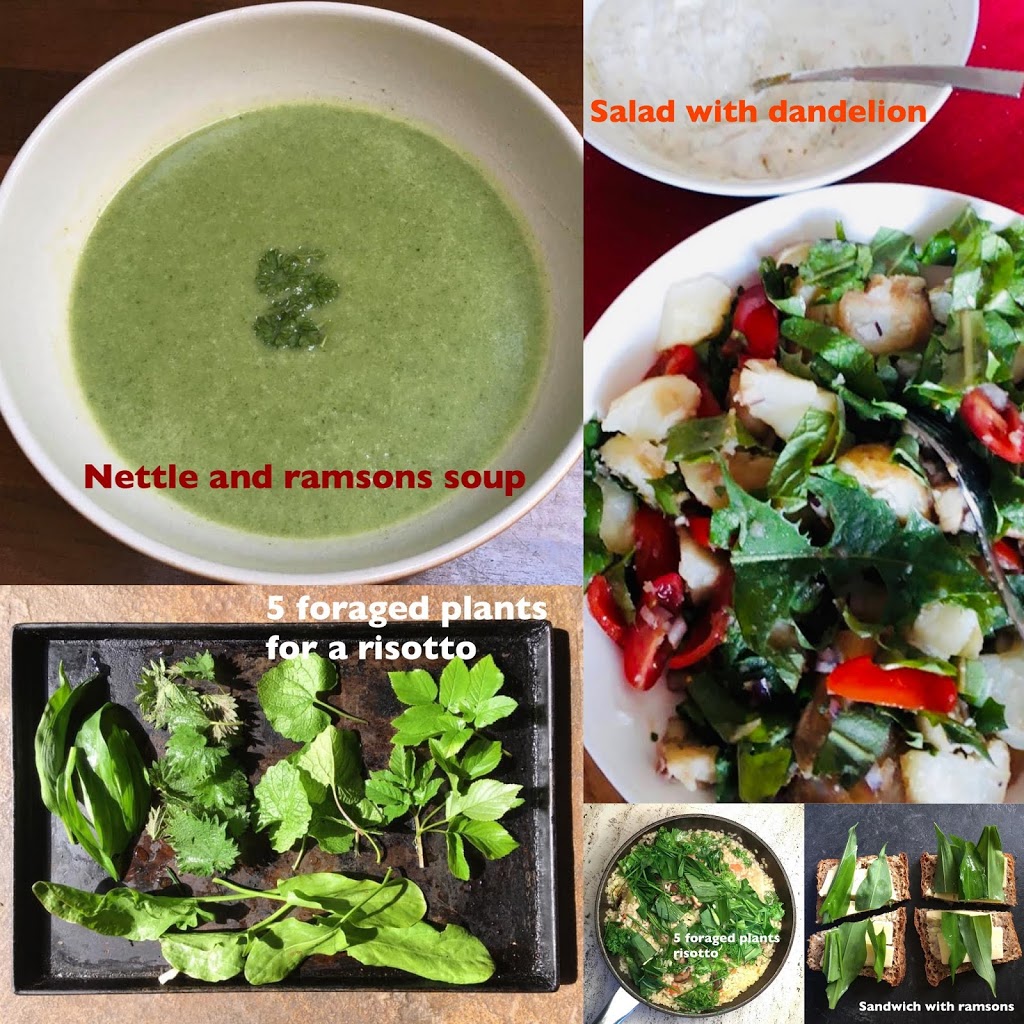
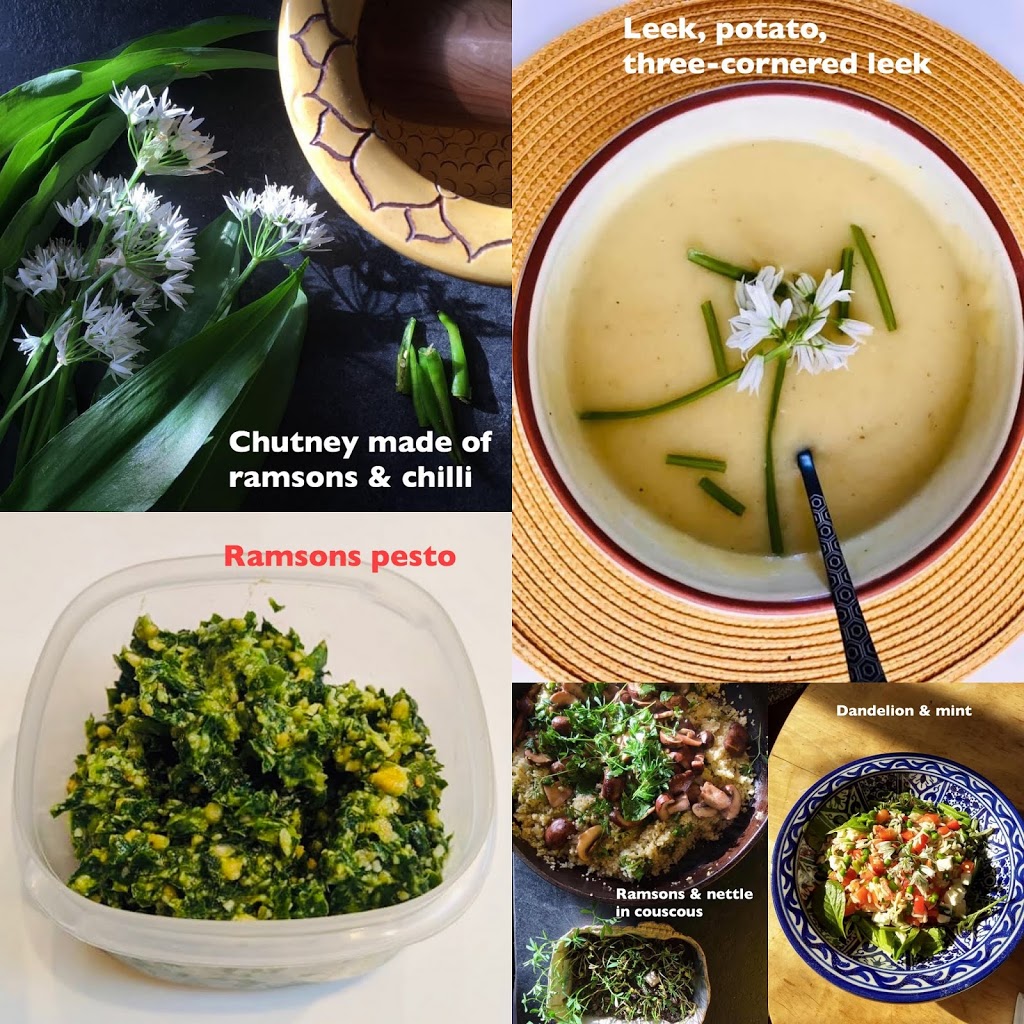
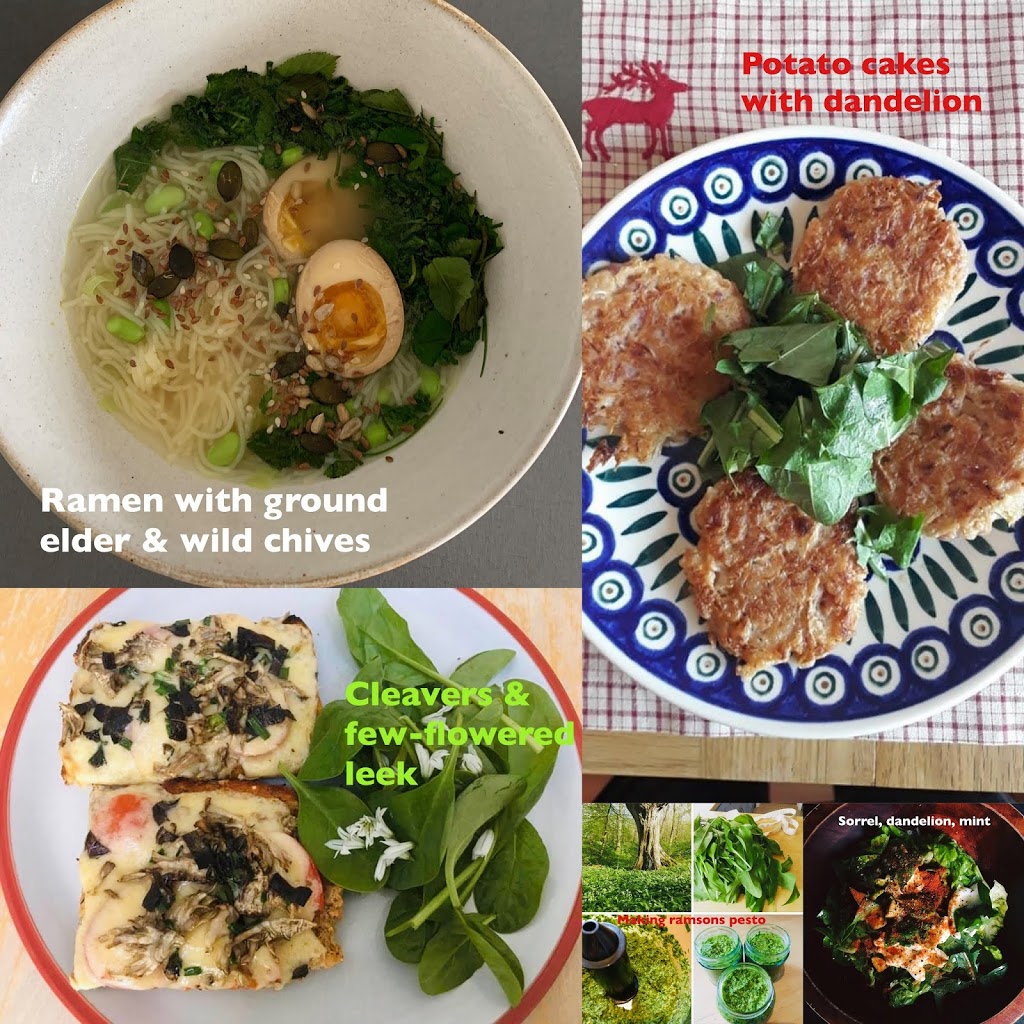
    Over the last 10 weeks, this group has grown from 150 to over 200 people from Tooting and beyond. We have contributors from Colombia, Sweden,  China the USA and more.  The pictures show 3 course meals with locally foraged ingredients. Anyone know what ramsons are? Answers in the comments please! 
    As lockdown eases in the UK this coming Monday, the group, based on Facebook, are sharing recipes for picnics and BBQs. Could be dips or pickles, bread or cakes, flans or tarts, salads or jelly, sweet or savoury. What would you make? 


    Foodival 2020

    The Foodival team are variously working as chefs, delivery drivers and mental health support workers in their spare time under lockdown. We are not yet certain what form the annual sustainable food festival will take, but Saturday 12th September is the date in the diary when we still hope to do something.

    There has been more growing and enjoying outdoor spaces over the last couple of months and we are particularly interested in hearing people’s growing stories.  Please connect with Tooting Foodival via the TTT email or on Instagram @tootingfoodival to share your story!     grow|cook|create|reduce|reuse|recycle

    Tooting Community Garden

    We’ve been gardening behind 5 North Drive for many years now and are hugely grateful to Naseem and Mushkil Aasaan for supporting our growing projects there. Pre-Lockdown, we always opened the space every Sunday, from 11am to 1pm, pretty much without fail. Personally, I loved hearing the stories fo “8 people from 8 different countries of the world” attending the space – a human representation of celebrating diversity found in nature. 

     
    Lockdown has meant the garden is tended by the core group, exercising physical isolation, but shared religiously every week. Here’s last week’s post, written from the heart:
    “Another weekend of spending time in the garden without our community- but lots of things

    to do and precious moments to enjoy.
    The sage is buzzing with bees. I would love to taste that honey. The sunflowers have gone in…waiting for the squashes to share the space with them. Lots of window sill planting… waiting to find a space in the garden.
    The first raspberry is out. If it weren’t so dry…let’s see if they make it.
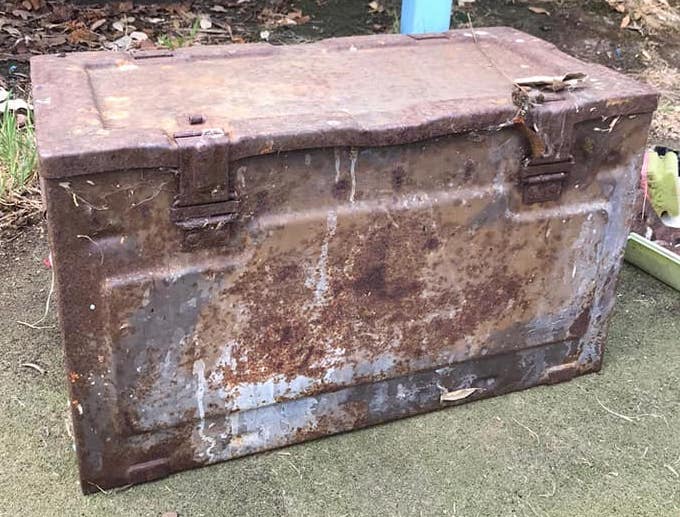
    And some tidying up jobs… finding a treasure box (of tools???) And a very tidy bottle shed.
    Compost sieved for more potting and we even tested the soil for acidity levels. And … there should be lots of brambles for those pies for later on. 

    Hope to see you soon” 


    The group is looking forward to hosting children groups in the Summer and needs help re-imagining the unsafe play equipment, might you want to join in? Get in touch via transitiontowntooting@gmail.com or the garden facebook group.

    Neighbourhood Seed Swop


    Tooting is quite a large area, consisting of neighbourhoods within it – Furzedown, Tooting Bec, Amen Corner… In light of lockdown and a huge surge in people wanting to grow their own, we started a hyper-local seed swop in Furzedown. Well, a seed, plant swop and gardening advise exchange actually, based on WhatsApp, allowing people close by to offer or request seeds or plants. Extraordinary plants have been exchanged, the champion of all being a Bangladeshi bottle gourd! 

    If you’d like to get involved in Furzedown or to find out how to set up a seed/plant/advice exchange in your area, get in touch transitiontowntooting@gmail.com


  • Tooting Speaks! The big dilemmas of local food

    30 passionate Tooting folk came to The Selkirk (thanks so much Ben and the team!) on Wednesday night to join our 4 fantastic speakers, Kemi Akinola, Robert Biel, Robyn Knight and Sue Sheehan, in wrestling with the big dilemmas of sustainable food systems and what we can do locally. Our title was “Local Food is an Expensive Luxury” and the discussion was hosted by TTT’s co-founder Lucy Neal. If you’re interested in these gatherings, they’re part of our monthly Green Drinks at The Selkirk on the third Wednesday of every month, details HERE.
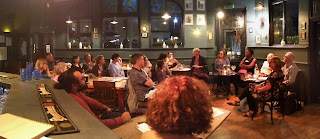
    Local Food is an Expensive Luxury

    But what was it that contextualised food as “local”? Our first speaker, Sue Sheehan (Incredible Edible Lambeth) opened the account with the hyper local – food grown by you as being an active form of protest – claiming the land and building personal resilience for healthy, home grown, cheap veg and against the power of advertising and convenience, after all, gardening is the most “therapeutic and defiant act as you can do” according to the ultimate Guerrilla Gardener, Ron Finley, watch THIS and “plant some shit”. Switch to our second speaker, Dr Robert Biel, Senior lecturer at University College London and author of Sustainable Food Systems – the role of the city and we learn as recently as 1985, with population at 56 million, the UK produced 95% of its food from within its shores… a poignant and powerful statistic, particularly given the risk of a no deal Brexit and the threat that presents of us not being able to feed ourselves, which you can read more about in a recent article by Jay Rayner HERE.

    Read on for LOADS more…

    Zooming up a level, local food systems were championed as methods for plugging the leaky bucket of global finance – keep money circulating more locally through fresh fruit and veg and prepare food, cooked with love and shared in local eateries. Our third speaker, Robyn Knight joined us from Sutton Community Farm who supply 250 vegboxes to customers spread from Kingston to Greenwich. The Farm emphasises the social and environmental benefits of growing by engaging 1500 volunteers who benefit from exercise and socialising for increased wellbeing.

    which brings us to our first major dilemma… MEASUREMENT AND  NARRATIVE.
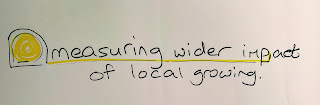

    Measuring impact in terms of monetary value alone compromises our ability to paint a more accurate picture of the role food plays in the beautiful complexity of life. And yet we’re required to do that to “make ends meet”, to be a “sustainable” business, to apply for and report back on funds. But how do we report back on the surrounding benefits, the positive impact on the wider community or even relieving pressure on the NHS through healthier, more active communities? Thinking beyond money, the language and metaphors become important, they can either “deliver us hope or foreclose possibility“, according to Robert Macfarlane, I’d much rather be opening the doors of possibility when ti comes to the future of food. The expense we talk about in the title of the debate could refer to the perceived prohibitively expensive farmers market produce, or could be juxtaposed next to the abundance of a well run allotment, garden, community garden or balcony, all requiring very little financial input, but a huge amount of time and love.
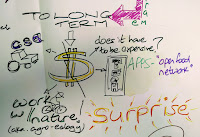
    Back to the debate and Robert Biel went on to talk about luxury as short, sweet, quick hits designed to make us want more. Can luxury be re-framed as being long term and slow, with richer, deeper rewards going beyond $£$money as the only factor in our food choices? Can Community Supported Agriculture schemes and online services such as  Open Food Network transform our food growing systems (maybe a truly long and slow project)? Can we learn to embrace “surprise” gardening – working with natural systems, in all their mess and chaos (from a human point of view) to produce abundance? Agro-forestry, permaculture and agro-ecology come to mind. Plenty to connect with in terms of your practice of growing food and which systems you may want to invest in for the weekly shop.

    This is all very well, but I was hugely grateful for the grounded view given by our fourth Speaker Kemi Akinola, founder of Be-Enriched and local Councillor (although she made clear the views she expressed were for the benefit of debate, the Devil’s Advocate had entered the room) and Co-Chair of both Lambeth food Partnership and Wandsworth food Partnership… Kemi gave a massive high five to Supermarkets, the way perhaps most of us shop for our food, for supplying consistently cheap, accessible food of huge variety and, in terms of the pressure on space in the urban landscape, super efficient. One shop does the lot. You can read more about the global food system HERE.

    Which brought us to our second major dilemma – LAND.


    For more on Land, check out Shared Assets


    In London particularly, land is seen as a driver for the housing crisis, and housing dominates conversation about land use in Town Halls across the Capital. Compare the use of land for food production against the use of land for a high density housing and you can see how challenging it is to fight for community gardens or inner city farms, in the context of the current capitalist regime. You only need to look across the Atlantic to see the effect of plummeting land value on opening up the possibilities for space use, let alone addressing urban food deserts which affect 26.5 million Americans, a staggering stat. Places like Chicago and Detroit, Michigan being recent examples of urban community farms re-valuing space for community benefit, addressing urban inequality and giving access to healthy food, community connection and exercise.

    Back to London and the definition of local that ran throughout the conversation. Scale became important, thinking about the productivity of local growing and the value of peri-urban agriculture. Imagine if it was the norm that we knew exactly where the food we bought was grown and that place was just down the road? However, its not just about local food being grown close to us. Knowing more about the food we eat is key in our decision making as food consumers. Ethical and sustainable choices are hard to make and often are a challengeable viewpoint at best. Would you support small local businesses over a globalised meat-free diet? How would you decide between packaging free and high provenance food choices? The Supermarkets may work to a globalised, season-less standard, but at least most food products are fully labelled as to where the food originates, empowering the consumer to make an informed choice. Audience member Jenny Teasdale even cited that lamb from New Zealand had a smaller carbon footprint than lamb raised in the UK, there’s an interesting article HERE outlining some of the research supporting this argument, I’d heard the same about apples (ah yes, the year round crop… fresh breaburns in January anyone?).

    Back to Tooting…  and we have just organised our 11th Annual Foodival, a celebration of what we can grow, cook and eat locally. David Thorne, one of the team of 5 who co-organise the event this year, reflected that this fundamental message behind Foodival was difficult to make stick with many of the 600 folks who attend. That’s not to belittle this fantastic event that brings all the communities of Tooting together in a spirit of celebration and food. Maybe some are just after a cheap plate of nosh.

    Which brings us to our third dilemma… CHEAP AND ACCESSIBLE VS “LOCAL” AND “SUSTAINABLE”

    This maybe a red herring and certainly harks back to Kemi’s point about Supermarkets. It wasn’t that long ago that Lidl and Aldi came over, offering substantially cheaper brands that we didn’t recognise and wonderfully random offers down at Lidl-de-Aldi-Lidl-Aldi-Lidl-de-Aldi dee. The reality of a lot of people’s lives right now is that the shopping needs to be quick, accessible, cheap. There are bellies to feed, demanding jobs to work and, some might say, equality to reach.

    But does local and sustainable need to be expensive and inaccessible?

    Our biggest dilemma of the night had entered the room… HOW DO YOU (S)MASH THE SYSTEM?

    We’d talked a lot about being active, one of NEF’s 5 ways of wellbeing, and most of the room had in

    some way taught or shared the joy of growing food with others. We’d talked about the multitude of benefits community gardening and local growing gives and the idea of communicating that, when measurement is challenging. And we’d shared another Foodival story of family food culture being expressed in a Top Tooting Cook entry using locally grown ingredients to make an award winning Indian dish – a true Tooting cultural mash-up. You could feel this sense of wanting to smash the silos and create a systemic shift towards true value beyond monetary cost, critically based in reality and meaningful for all.

    Finally, lets unpack that word “value”. Perhaps this word pushes against the “luxury” of our title, encouraging us to think more in the longer term using regenerative, circular practices rather than linear, wasteful ones. Value as regenerative refers to the social, economic and environmental – we heard about the value of social interaction at Sutton Community Farm, mirrored at Community Farms and gardens across the Capital and beyond. We heard about the value of exercise and connection to nature, so powerful some Doctors prescribe it for to aid Patient recovery. We heard about the value of organic food practices for the Earth, re-building soil layers so depleted by intensive, industrial scale agriculture (we are literally running out of soil, some would argue). Finally, we heard about the value of local food and the systems that support it – farms, shops and customers – meaning that money becomes a bit more sticky to neighbourhoods, providing more opportunity to stabilise local economies.
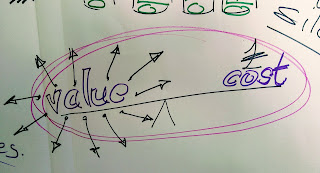
    And perhaps that’s the challenge at the heart of the debate, for us all to enact change based on the wider value of food for us, our Communities, and our future food systems. Kemi, Sue, Robyn and Robert were asked for their call to action and here’s what they said…

    Take responsibility in your choices, be informed and be active.
    Simply eat more vegetables than you do now.
    How are you spending your money? Spend it a bit more on food and bit less on stuff.
    Where are the growing spaces? Get involved in creating and supporting more.
    Work on the beautiful complexity by linking up social and environmental practice through projects.
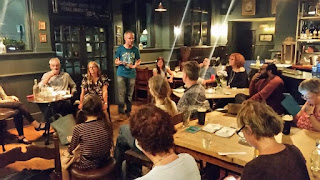
    Thanks for coming, folks!

    And finally… here’s some additional resources passed on from Robyn and Kemi:

    The Landworkers Alliance
    Community Food Growers Network
    Capital Growth
    Greenwich Community Development Agency

    Kemi can be found on Twitter here @BeeKemiA
    Sue can be found on Twitter here @GreenCChampion

    “I’d never seen a ready meal until I came from Austria to live in England in 2000”
  • Leo’s Garden – a green gem in the heart of Tooting. Plus: valuing our local green spaces in London.

    Leo’s Garden, the highly-valued and hidden-away balcony garden at South Thames College in Tooting held a celebratory event this week. STC staff and friends marked two years on from its opening (see our 2015 blog report here) and did some autumn planting.

    This kind of local oasis is so relevant to a new study published this week by the Mayor of London, the National Trust and the Heritage Lottery Fund. It’s called Natural capital accounts for public green space in London & is intended to help shape future policy and decision-making. All the info here. In turn the report is relevant to the Tooting Bec & Broadway Neighbourhood Forum’s work on developing a local Neighbourhood Plan.  

    Back to Leo’s Garden:

    A sunny November day…

    The photo shows, from left to right: 
    Peter Mayhew-Smith, Principal of South Thames Colleges (STC) Group,  
    Rosemary Scott, (STC Branch UCU member),  
    Angie Birtill (STC UCU H&S Convenor),  
    Kate Turney (STC UCU Environment Convenor),  
    Jamie StevensonDirector of Business Centre STC.

    Named in memory of STC Facilities Officer ‘Leo’ Mumuney Olusanya, the garden is a great example of a green space that’s developed because people in the team had the vision and perseverance to create it. 

    Angie Birtill said at the opening: 
    > “We wanted a place where workers could rest and enjoy our own garden right above Tooting Broadway: an area badly lacking in green spaces.

    > We know this garden isn’t going to get rid of our stress all by itself, but it will always be a lovely place for people to recuperate when they can find time to do so.

    > We know that Leo’s Garden won’t do away with the toxic air we breathe daily in London. However plants in Leo’s garden help restore clean air while offering us a place to rest. The tests that the University and College Union, Greener Jobs Alliance and Furzedown Low Carbon Zone have carried out directly outside this Tooting site show that the levels of Nitrogen Dioxide are over twice the legal limit. We need to continue campaigning on this.”
    Angie recognised contributions by many people:   
    “Artura West, ACL lecturer carved us a beautiful plaque in his own time. Staff from Tooting have contributed plants and bulbs ever since it was opened and Carlos waters the plants and keeps the balcony clean for us. Alan (another brilliant Facilities officer) offered to make us planters for us on his weekends and gave us the valuable link to the sale of planters on the internet. David and Kamil put the planters together. 
    Thanks to Peter too for supporting the union’s request that the college buy the planters.”

    Leo’s Garden in 2015
    What other special gardens and surprising growing spaces are tucked away locally, and what are their contributions to wellbeing, pollination, air quality, nature, habitat and learning?
    1. Have you visited Tooting Community Garden? This Sunday 26th November at 1:00pm  we’re enjoying some of our own autumn and winter produce: harvested, juiced, sliced, dressed and cooked on the spot into great vegan taster dishes.
    2. Have you been to the Share Community garden which is open to visit within Springfield University Hospital?
    3. Have you seen the first community orchard in the borough? It’s not far from Southside. Contact by email here.
    4. There’s Bramford Community Garden, Putney Community Gardens, Doddington & Rollo Community Roof Garden, Growhampton, the ROSE Community Centre in Nine Elms and Paradise Co-operative near Wandsworth Common.
    5. There are many great school gardens locally.
    6. There are many allotments, plus home gardens on balconies, terraces and in backyards – all worth celebrating. See Pollinator Paths Wandsworth for shared stories from 2017.
    7. Have a look in passing at the growing boxes and vertical beds created with young people from the Tooting refugee and asylum charity CARAS by their office at the corner of Blakenham Road and Derinton Road. 
    8. See the Greater London National Park City project’s brand new map of green spaces across London. You’ll enjoy how London’s landscape looks without any buildings marked: 49.5% of London is green or blue!

    1. All welcome to the Pollinator Paths Wandsworth Project Celebration, Sat 11th November

      We’re very pleased to invite everyone who loves urban gardening with insects and other wildlife in mind to our free Pollinator Paths Wandsworth Project Harvest Celebration. This is a celebration sharing ideas, experience, fun, citizen science and community.

      Here’s the basic info about the project which has been running all year, linking together dozens of local gardeners and four community gardens in the borough and led by the London Sustainability Exchange.

      We’ll be thanking participants, sharing experience, enjoying workshops and other fun activities, networking and celebrating.

      We’re also welcoming anyone – gardener, community garden or other group – who might like to join a future project aimed at enhancing London’s green spaces and biodiversity.

      Project methods will always be accessible, encouraging people to grow pollinator-friendly plants in gardens, planters or balconies.

      Plenty for families, friends and neighbours of all ages to do:

      • Enjoy the ‘Your Local Insects Need Your Love’ workshop 
      • Marvel at ‘Worm Composting For Salads and Herbs Indoors’
      • Design and build Plastic Bottle Ladybird Houses to take home
      • Play ‘Match the Pollinators to their Plants’
      • Design and make Insect Badges to wear with pride
      • Gasp at the Pollinator Paths project map

      Date: Saturday 11th November 2017
      Venue: The Penfold Centre, 1 Neville Gill Close, SW18 4TJ. The venue is right in the middle of the borough, on the west side of Southside Shopping Centre facing King George’s Park.
      Timing: 1:00pm to 4:00pm

      Delicious snacks and drinks provided

      Download the Harvest Celebration invitation and venue map here 

      Free entry: please register online here

      For more info: contact us by email here

      All welcome!

    2. Sowing the seeds in TTT’s ACE goody bags

      If you took home one of our TTT goodie bags and are wondering what to do with the packet of seeds in it, here are some simple planting instructions.

      Radish 

      You can grow these in the ground or in containers or window boxes.
      Sow thinly in soil and cover with 1.5cm fine soil. Firm down gently and keep moist.
      Seedlings should appear within 2-3 weeks.
      Thin out the plants if necessary and keep soil moist. Radishes should be ready to harvest in 4-6 weeks.

      Lettuce
      You can grow these in the ground, containers or even hanging baskets (good for evading snails!)

      Sow thinly in soil and cover with 1.5cm fine soil.

      Firm down gently and keep moist.
      Seedlings should appear in 7-14 days.
      Thin out seedlings if necessary and keep moist and weed-free.
      Pick and use when needed
      Peas 
      Grow these in the ground of a large pot. You will need to support the plants with netting or bamboo canes and string.
      Plant seeds 5cm apart and cover with 5cm of fine soil. Firm down gently and keep moist. Seedlings should appear within 10-14 days.

      Protect young plants from birds with twigs or netting and remember to support the plants. Keep moist and weed-free. Pick when ready.
      Send us some photos of your vegetable-growing successes!