This is a copy of the mail tot TTT mailing list of 30th August 2021. Open this mail in your browser

So yesterday’s IPCC’s latest report says human activity is changing the climate in unprecedented and sometimes irreversible ways. [BBC Report]. The Guardian gives its verdict on the climate crimes of humanity as “guilty as hell”. The report itself is likely to be conservative, having been signed up to by all the world’s governments based on a review of thousands of scientific studies.

As we know politicians are much better at talking than taking any meaningful action to halt the Climate Crisis. As we approach COP 26 in Glasgow at the end of October, it has never been more imperative for the world to find a way to stop burning fossil fuels as soon as possible.
While this seems highly unlikely, here in south London, we can continue to make our own small contribution to reducing the impact of humans on the planet.
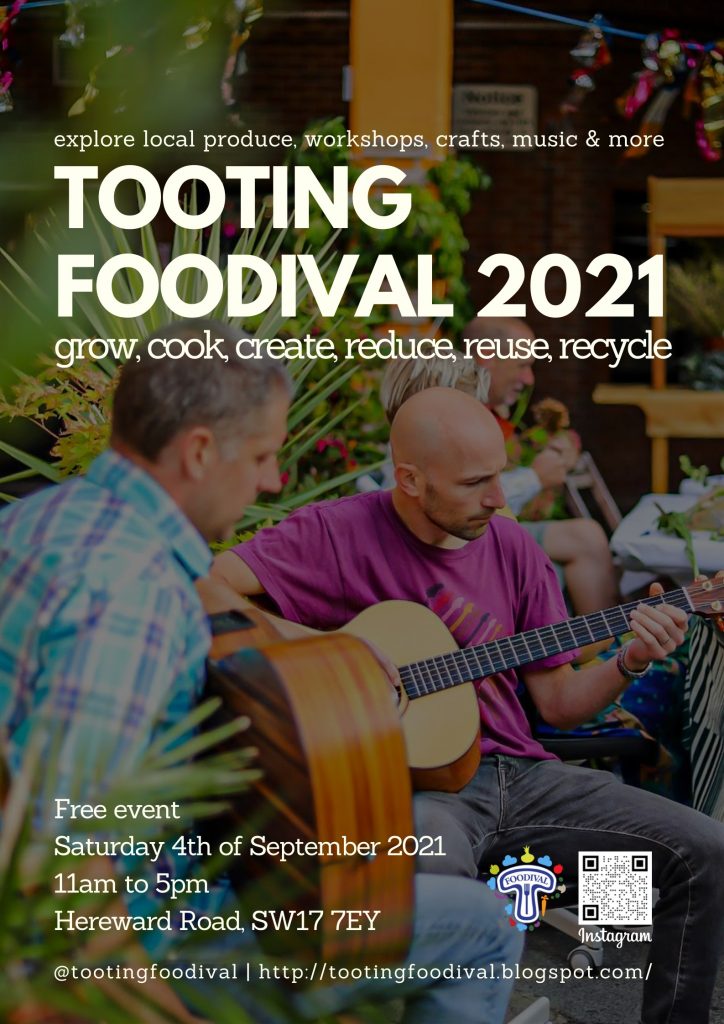
Coming up soon we have this year’s Tooting Foodival, our annual sustainable food festival taking place on 4th September 2021. We started this event in 2008 as a small way to combat the industrial homogenised food culture, to bring local and sustainable back into people’s consciousness. To get food miles to NEAR ZERO!
The premise of Foodival revolves around using home grown fruit and vegatables donated by local growers to create tasty dishes for all to sample. The event has been running since 2008 and always includes some new ideas and strands.
This year we are also focussing on some of the great initiatives that have emerged during lockdown that embrace sustainable living developed by local people such as recycling and upcycling, repairing, mending and re-creating.
Fast fashion for example has a huge environmental impact on the planet, leading many to think about buying less, caring more and making the clothes we love last longer. Why not get involved with our clothes upcycling event and maybe brave the catwalk with a repurposed creation?!
See our the Foodival blog and Instagram for more detail on this and other happenings at this year’s Foodival street festival.
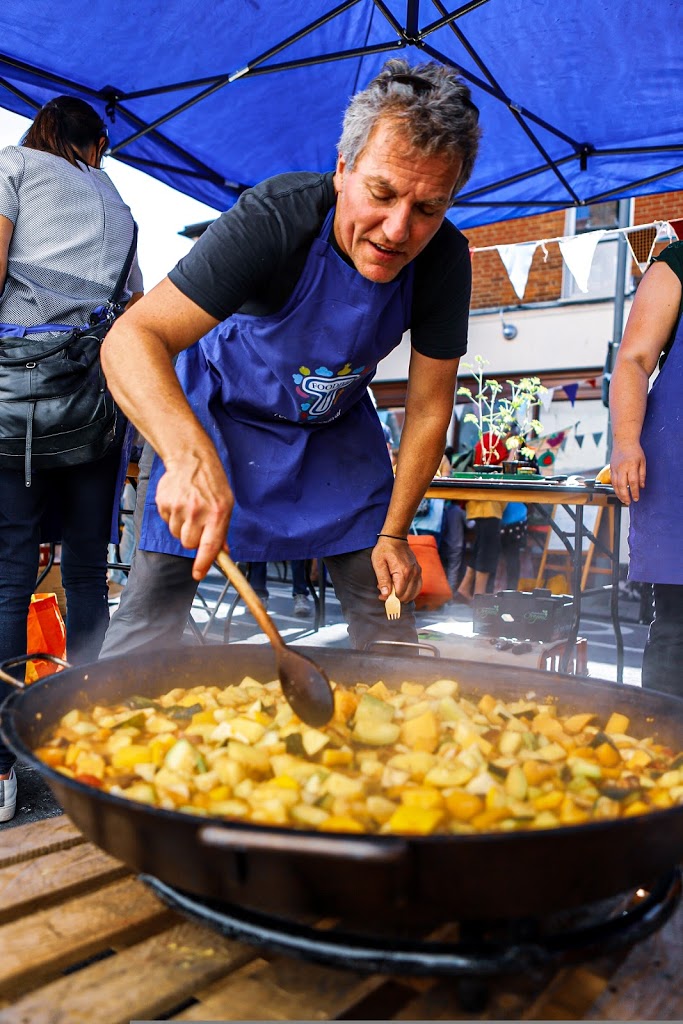
Lockdown has been in place here in the UK since the middle of March and had a huge affect on our activities. We had to improvise quick, like everyone, and adapt to a rapidly changing context of how we live, where we live.
Over the early weeks, our growing core group found our niches and put what energy we each had into developing outward facing projects to help our community, both near and far, using networks nurtured with love for over 10 years.
Over the next few days, we’ll be posting what’s live and how you can get involved. We’ll be sharing projects about public space and building community with more posts cooking up.
Never know, Transition Town Tooting maybe fertile ground for collaboration with you!
This episode is all about food and offers four projects: Vegetanuary! – an online group focused on celebrating and sharing vegetarian and vegan cooking; Foodival2020 begins! A callout to share food growing stories and a date for the diary as we stretch to imagine our annual food festival in September; Tooting Community Garden has been sharing the wonders of nature in Spring and looks to future projects and our Neighbourhood Seed Swap in direct response to a huge spike in interest in growing your own. Do read on…
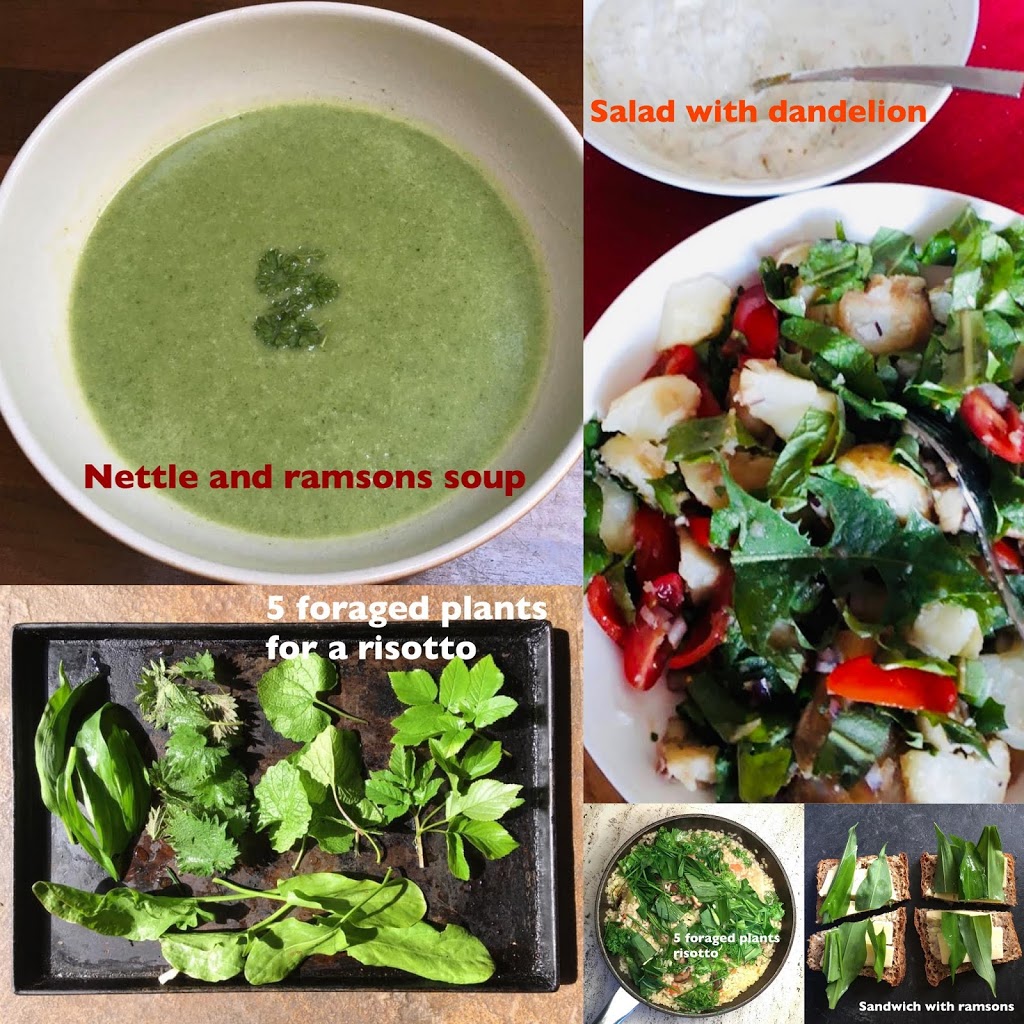
Vegetanuary! was already an online group focused on exploring vegetarian and vegan foods during January each year. It was a no-brainer to re-imagine the group and apply to lockdown to share recipes, support each other and encourage experimentation for people’s wellbeing. Click here to join.
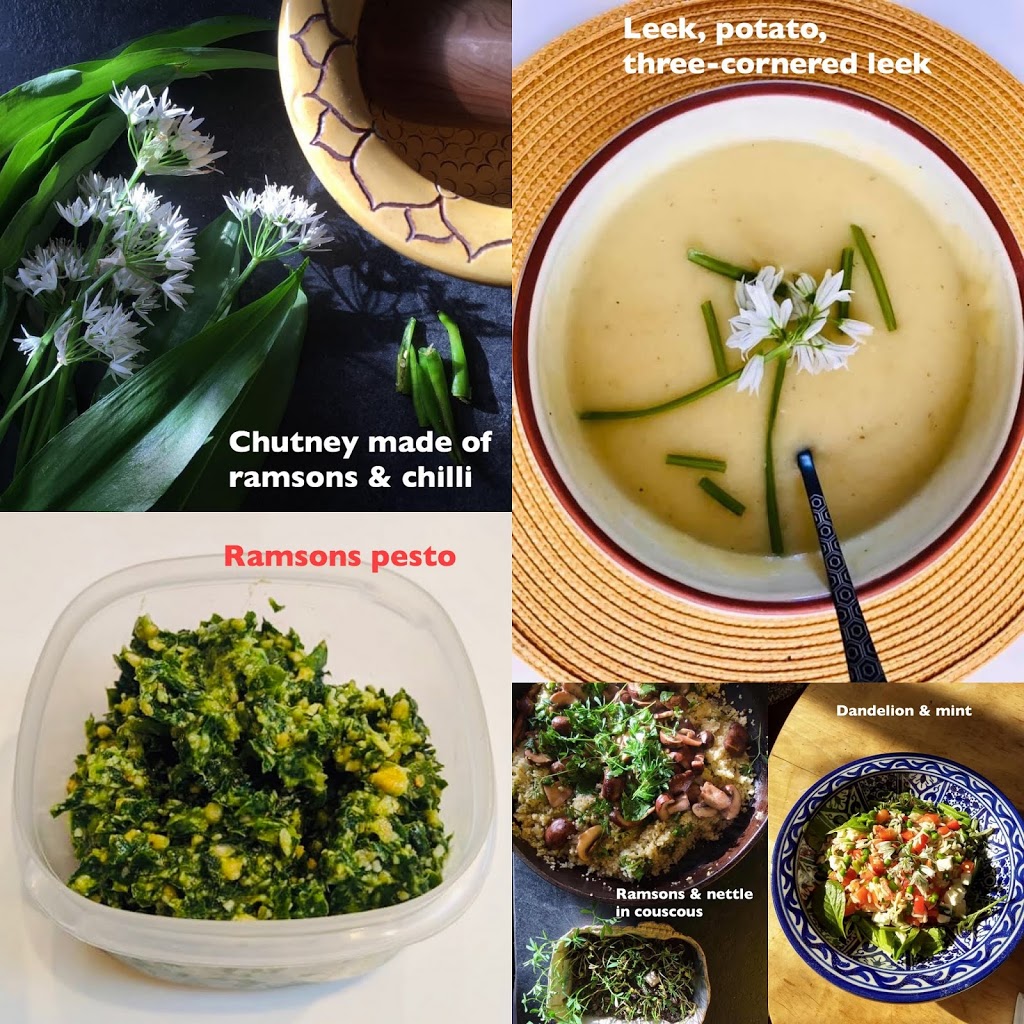 Over the last 10 weeks, this group has grown from 150 to over 200 people from Tooting and beyond. We have contributors from Colombia, Sweden, China the USA and more. The pictures show 3 course meals with locally foraged ingredients. Anyone know what ramsons are? Answers in the comments please!
 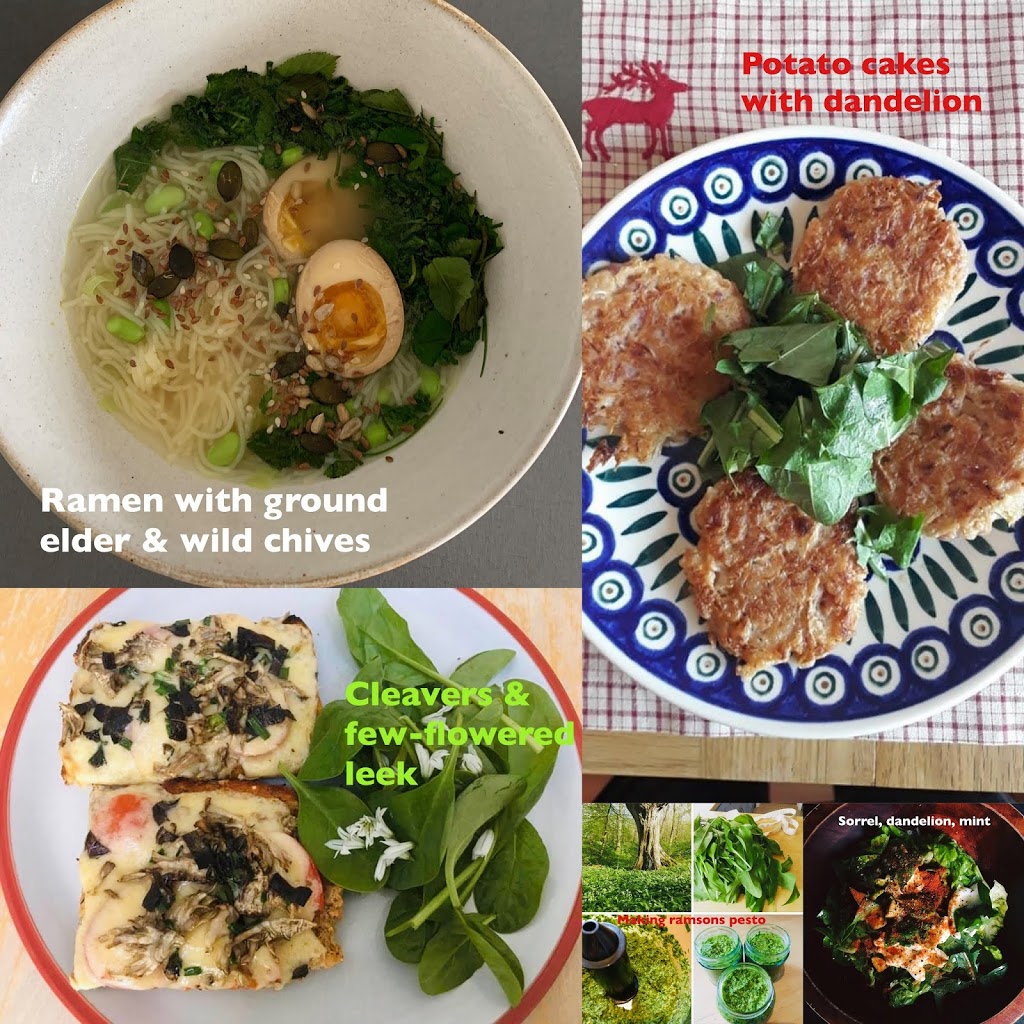 As lockdown eases in the UK this coming Monday, the group, based on Facebook, are sharing recipes for picnics and BBQs. Could be dips or pickles, bread or cakes, flans or tarts, salads or jelly, sweet or savoury. What would you make?
 The Foodival team are variously working as chefs, delivery drivers and mental health support workers in their spare time under lockdown. We are not yet certain what form the annual sustainable food festival will take, but Saturday 12th September is the date in the diary when we still hope to do something.
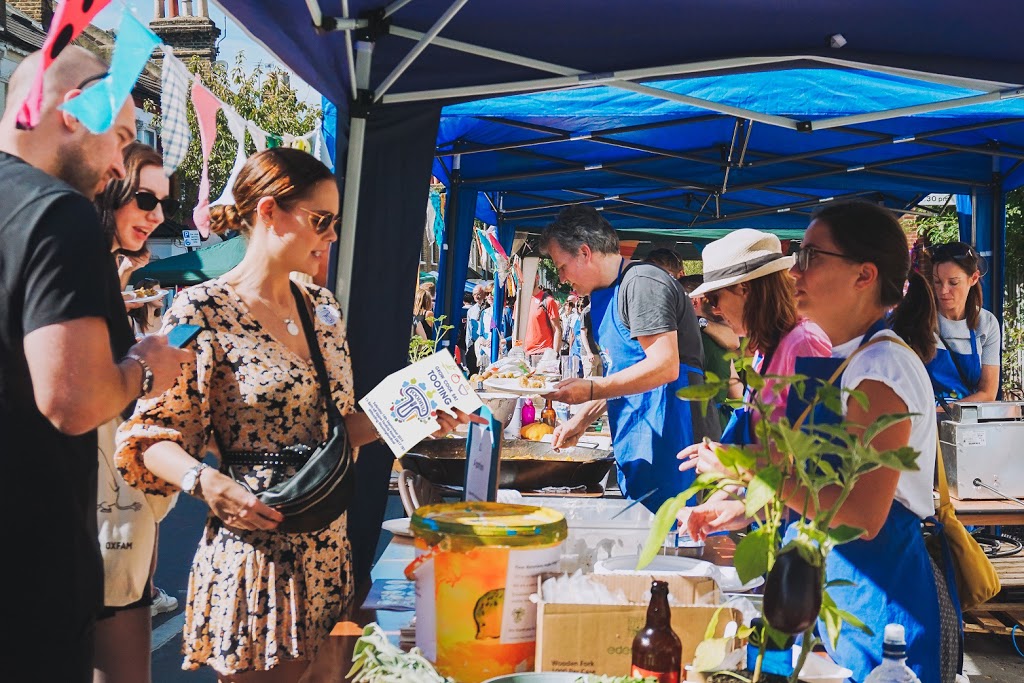
There has been more growing and enjoying outdoor spaces over the last couple of months and we are particularly interested in hearing people’s growing stories. Please connect with Tooting Foodival via the TTT email or on Instagram @tootingfoodival to share your story! grow|cook|create|reduce|reuse|recycle
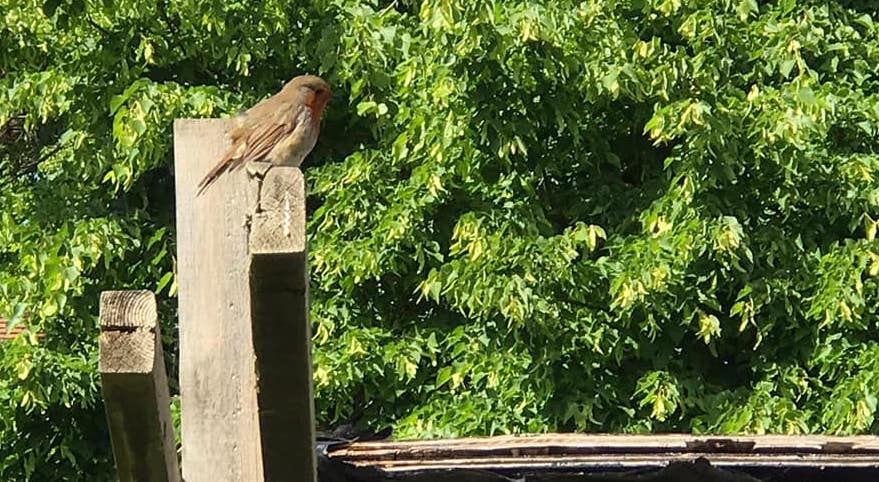
We’ve been gardening behind 5 North Drive for many years now and are hugely grateful to Naseem and Mushkil Aasaan for supporting our growing projects there. Pre-Lockdown, we always opened the space every Sunday, from 11am to 1pm, pretty much without fail. Personally, I loved hearing the stories fo “8 people from 8 different countries of the world” attending the space – a human representation of celebrating diversity found in nature.
to do and precious moments to enjoy.
The sage is buzzing with bees. I would love to taste that honey. The sunflowers have gone in…waiting for the squashes to share the space with them. Lots of window sill planting… waiting to find a space in the garden.
The first raspberry is out. If it weren’t so dry…let’s see if they make it.
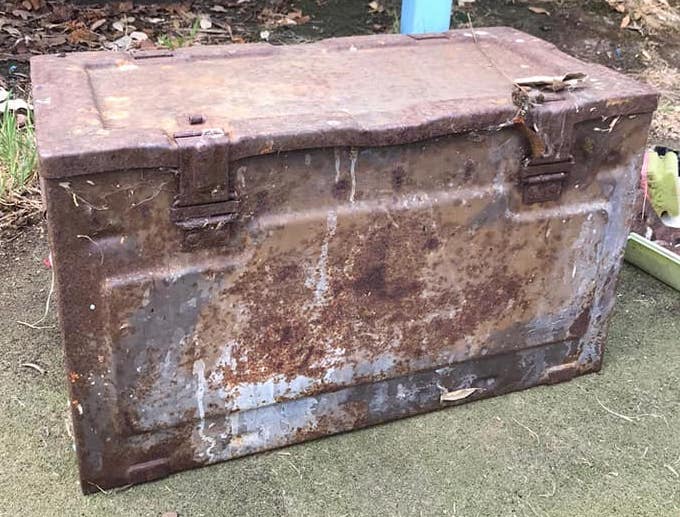
And some tidying up jobs… finding a treasure box (of tools???) And a very tidy bottle shed.
Compost sieved for more potting and we even tested the soil for acidity levels. And … there should be lots of brambles for those pies for later on.
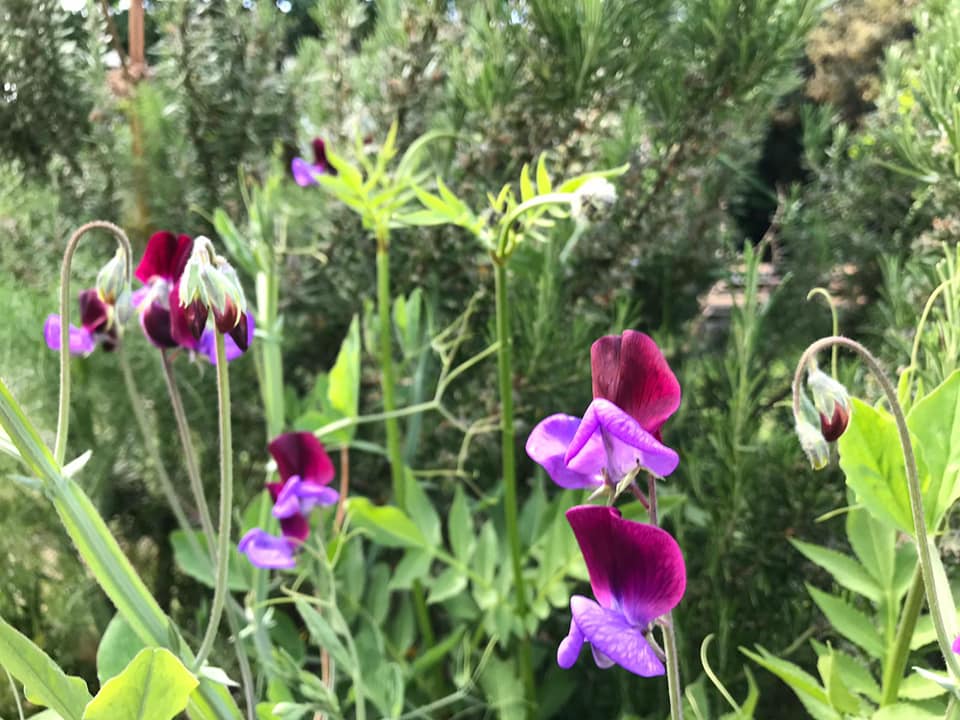
The group is looking forward to hosting children groups in the Summer and needs help re-imagining the unsafe play equipment, might you want to join in? Get in touch via transitiontowntooting@gmail.com or the garden facebook group.
Tooting is quite a large area, consisting of neighbourhoods within it – Furzedown, Tooting Bec, Amen Corner… In light of lockdown and a huge surge in people wanting to grow their own, we started a hyper-local seed swop in Furzedown. Well, a seed, plant swop and gardening advise exchange actually, based on WhatsApp, allowing people close by to offer or request seeds or plants. Extraordinary plants have been exchanged, the champion of all being a Bangladeshi bottle gourd!
If you’d like to get involved in Furzedown or to find out how to set up a seed/plant/advice exchange in your area, get in touch transitiontowntooting@gmail.com

Most of this year’s Tooting Foodival growers are here immortalised in the traditional I Grew This montage!
Thanks everyone for creating a memorable Tooting Foodival No.12 last weekend. We hope we have not forgotten anyone!
Venue Hosts:
Naseem & Mushkil Aasaan thank you as ever for the provision of your special community space for us
Brian & BJ Hardware, thank you for the use of your yard, power and handyman skills!
Residents of Hereward Rd thanks for lending us your streetscape for the day
 |
| Volker, Sarah & Isla preparing vegetables |
Donors:
David & Malsara, Ramsden Rd: marrows, tomatoes, sage, rocket, thyme, oregano, mint, St John’s Wort
Ben, Endlesham Rd: many cooking apples
Rod & Jane, Streatham: apples
Sarah, Balham Park Rd: beetroot, carrots, tomatoes, borlotti beans
Chuck, Becky & Becky, Kay, Ryan, Katherine, Rosalind, Anuja & all at Tooting Community Garden: Picasso potatoes, pumpkin, tomatoes, leek, garlic, cucamelon, Jerusalem artichoke, herbs, pattypan squash, runner beans, kale
Susie & Mike, Earlsfield: tomatoes, snake squash, butternut squash
Maggie, Burntwood Lane: mint & nasturtiums
Debbie, Nimrod Rd, Charlotte potatoes, apples, Gris de Provence and Dinizza squashes, rhubarb, courgette, leeks, apples, potatoes
Becky, Tooting High St, carrots
Kath, Garratt Park alloments: 2 wonky courgettes, runner beans, rainbow chard
Lea, Price Close: salad greens, chilli, tomatoes, cavello nero
Rachel, Ruislip Close: baby peppers, aubergines, cucamelons, courgettes, cucumbers, beetroot, chillis
Jenny, Larry, Erin & Harley, Moffatt Rd, apples
Poppy & Teo, Streatham: tomatoes and beans
Elisabetta, Dahomey Rd: apples, chard, beetroot, carrots, beans
Hilary, Trevelyan Rd: plums
Fio, Dahomey Rd: apples
Jane, Tamworth Allotments: marrow, cucumber, courgette
Ian, Cotefford St: cucumbers, apples
Rose, Balham: bay leaves
Libby, Tamworth allotment: apples
Nikki, Tooting: potatoes, apples
Special thanks to local not-for-profit veg supplier Local Greens who donated butternut squash, courgettes, onions and potatoes.
 |
| Emily and Annette front of house |
Chefs
Volker of Essential Ingredient for co-ordinating cooking in the street with help from local chefs Manisha from Pooja, Rick of Rick’s Dining Room, Elisabetta from Minestra and gluten-free chef Sarah.
Volunteers
Richard, Sharon, Hilary, Ben, Jenny, Mita, Emily, Annette, Larry, Millie & Lewis.
Tooting Community Garden Team
Anuja, Barbara, Becky H, Becky K, Katherine, Kay, Rosalind & Ryan.
Creative Activities Team
Annie, Chuck, Nicola, Nikki, Matt, Paul & May from Butterfly Conservation. Beata & Think Outside tucked in with us.
Enterprises who were donors to the creative activities included Brindisa, Flashmat, Get Juiced, Milk & Work & Play Scrapstore.
Everyone who spoke on the Soap Box with special thanks to Mermaid Jasmine for her eye-catching performance and ocean plastics talks. Also special thanks to Millie & Erin for their help with the creative activities & their impromptu speeches.
 |
| Kay and Ryan hosting the Community Garden Table |
Top Tooting Cook
Thank you Sophie @thecornerplot for co-ordinating and judging with co judges Sarah and Mark. And thanks to all those who entered the competition!
Music
Thanks to Dermot for co-ordinating his meltdown and to his support team of Stave, Howard and Tye. To all the performers including Dermot himself, Resina Chowdhury, Natyalaya Academy of Tamil Art, Dan Caleb, Friend’s Circle Group, Ranjit’s Karaoke, Vincent Burke, Pensa & Reid, Georgia Maria, The Troubadors de L’Avenue Verte and Alex Wonderland
PhotographersBryony & Franco, the latter taking all images in this post.
Logistics
St Anselm’s Catholic Primary School for gazebos, Volker & Charlie’s Catering Hire for catering equipment, Furzedown Network for the PA, Miss U Stationers for printing, The Phantom Knitter for the Foodival banner and Jane for knitting an edit to show this year’s date!
Thanks also to all stall holders and Foodival visitors who made this a memorable day in the sun.
Love from the organisers, see you in 2020!
Chuck, David, Mal and Volker
Thank you to everyone who donated fruit and vegetables last night. We seem to be doing well for apples, but could do with more squash!

Head down to Hereward Rd off Tooting High St, by Mushkil Aasaan (see map) from 11-5 TODAY to see what our chefs cook up, tuck into the Community Feast, enjoy the music, stalls and creative spaces at Tooting’s sustainable food festival. Late entrants to Top Tooting Cook accepted!
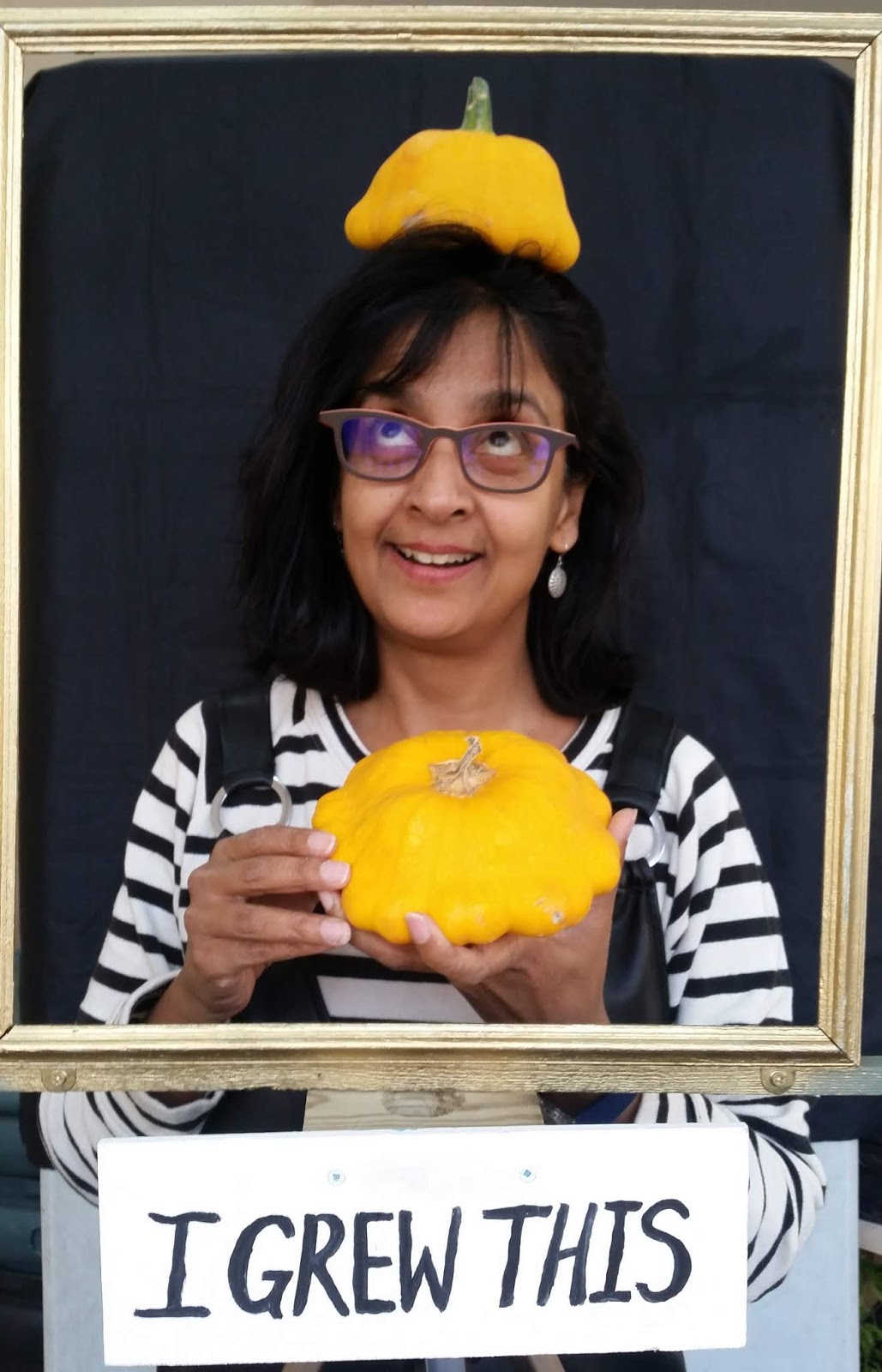 |
| A Grower 2018 |
This year’s Tooting Foodival includes some new features alongside some familar favourites. We start this coming Friday evening with donations of fruit and vegetables from local growers. Can you spare anything from your allotment, window box or garden? These donations are used by our chefs to cook up a great sustainable feast in the Hereward Rd on Saturday 14th.
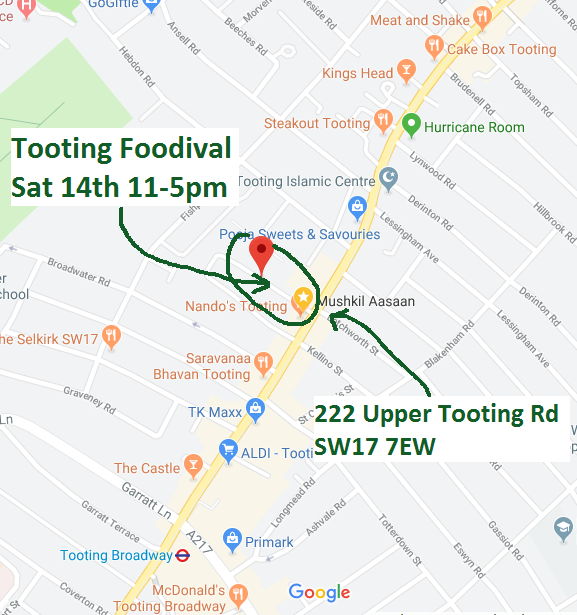 |
| Here’s where to find the Foodival |
The Top Tooting Cook Competition is an annual keenly fought tussle between local cooks to rustle up the best home made locally sourced dish. Follow the link to find out how to enter.
This year we have several special guests including May Webber from Butterfly Conservation and Ocean Plastic Warrior Mermaid Jasmine Seales. Don’t miss the chance to catch a selfie in a sea shell!
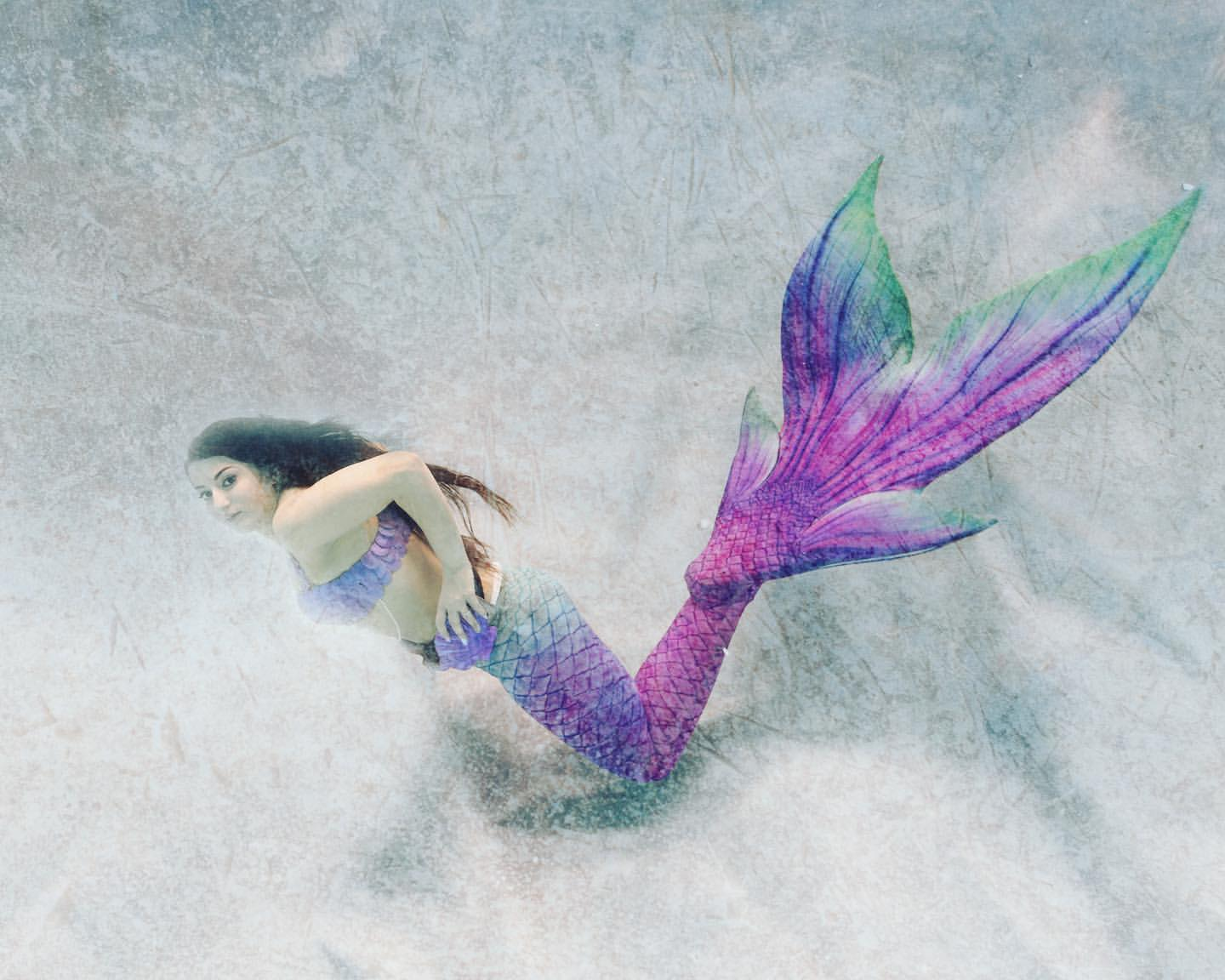 |
| Mermaid Jasmine Swims By Foodival |
Of course we have a good array of sustainable and foodie stalls plus a long rosta of dance and music action via Dermot’s Meltdown.
 |
| Dermot Melting Down |
In a late change to the running order we expect to hear Dermot himself opening the show with his eclectic trug of homegrown songs and lovingly plucked instrumental covers!
So we look forward to seeing you this Saturday for what should be a great event. Friday evening for the much needed produce donations at Mushkil Aasaan 222 Upper Tooting Rd, SW17 7EW.
A full schedule of events will be posted shortly.
There’s a lot to share about all that’s happening at the Tooting Foodival on 14th September, so we’ll cover all of these in separate blog posts.
We hope you enjoy the info about our creative offer for adults and young people. All invited to our base in the large yard part way down Hereward Road.

11:00-12:30 We’ll be micro-observing with Annie, Nikki & Chuck using magnifying glasses and a microscope, drawing and creating the first small worlds which we’ll post on Instagram with the hashtag #createfoodival. We started with posting a first example today – have a look.
We can’t wait to encourage visitors to be drawn to nature!
We’ll continue these activities all day in parallel with the timed special sessions below.
12:30-1:30 We welcome May Webber from the UK national charity Butterfly Conservation
May will bring specimens of insects for us to explore with the help of her expertise and enthusiasm. With May and Nicola we’ll draw and realise that what’s good for insects in London is also good for people.
MAYBE we will be able to run moth-trapping locally on Friday night, and bring the catch in unharmed to observe and draw.

1:30-3:00 Nikki and Matt will be creating Microbrellas – our spin-off from this spring’s Jellybrella project which created big jellyfish-sculptures using scrap umbrellas and linked sea life with ocean plastics.

Making beautiful detailed microbrellas also aims to highlight how minute nano-plastics in the oceans are as damaging pollution challenge as large-scale waste.
We may have a visit from Jasmine the Mermaid and her stop ocean plastics campaign!
3:00-4:30 Paul will lead us to create easy-to-use small home planters out of re-purposed materials. You can take these home and keep growing fresh food this autumn.
All day Think Outside will join us in the creative yard with excellent outdoor learning activities complementary to #createfoodival – thanks for joining us, Beata & Think Outside

We’ll display what you make on this inspiring sea turtle table made by Jamie Pattinson – it’s a wonderful object with a plastic waste message.

 St Marks United Reformed Church in Balham festooned with vine leaves, fairy lights and candles, offered the perfect backdrop for a magical festive evening at TTT’s Christmas Dinner last night. The invite to “Norah’s Magical Feast” promised a festive culinary celebration and what a feast it proved to be! Norah won the overall Top Tooting Cook competition at Tooting Foodival in September scoring not only for the taste and look of all her entries to three categories, but also for her exceptional use of locally sourced ingredients including fruit, vegetables, eggs and honey.

In true MasterChef style, Norah delighted the guests with a sumptuous three course meal starting with a platter of sharing plates of courgette and haloumi fritters and three different kinds of homemade vegetable dips. Generous mains of roast salmon, lamb shank or a winter vegetable tagine followed. Dessert was a splendid affair of sticky fig pudding with salted caramel & coconut topping, roasted fruits with black cherry sorbet or a selection of artisan sheep & goats cheeses served with a variety of chutneys and oatcakes.

Aided by her assistants Dani and Chris, Norah gave us a Christmas dinner to remember for years to come. If you want to sample the delights of Norah’s Kitchen please get in touch with her here.
Thanks to Bryony Williams #findmeintooting for her photos.
 |
|
30 passionate Tooting folk came to The Selkirk (thanks so much Ben and the team!) on Wednesday night to join our 4 fantastic speakers, Kemi Akinola, Robert Biel, Robyn Knight and Sue Sheehan, in wrestling with the big dilemmas of sustainable food systems and what we can do locally. Our title was “Local Food is an Expensive Luxury” and the discussion was hosted by TTT’s co-founder Lucy Neal. If you’re interested in these gatherings, they’re part of our monthly Green Drinks at The Selkirk on the third Wednesday of every month, details HERE.
 |
| Local Food is an Expensive Luxury |

But what was it that contextualised food as “local”? Our first speaker, Sue Sheehan (Incredible Edible Lambeth) opened the account with the hyper local – food grown by you as being an active form of protest – claiming the land and building personal resilience for healthy, home grown, cheap veg and against the power of advertising and convenience, after all, gardening is the most “therapeutic and defiant act as you can do” according to the ultimate Guerrilla Gardener, Ron Finley, watch THIS and “plant some shit”. Switch to our second speaker, Dr Robert Biel, Senior lecturer at University College London and author of Sustainable Food Systems – the role of the city and we learn as recently as 1985, with population at 56 million, the UK produced 95% of its food from within its shores… a poignant and powerful statistic, particularly given the risk of a no deal Brexit and the threat that presents of us not being able to feed ourselves, which you can read more about in a recent article by Jay Rayner HERE.
Read on for LOADS more…
Zooming up a level, local food systems were championed as methods for plugging the leaky bucket of global finance – keep money circulating more locally through fresh fruit and veg and prepare food, cooked with love and shared in local eateries. Our third speaker, Robyn Knight joined us from Sutton Community Farm who supply 250 vegboxes to customers spread from Kingston to Greenwich. The Farm emphasises the social and environmental benefits of growing by engaging 1500 volunteers who benefit from exercise and socialising for increased wellbeing.

Measuring impact in terms of monetary value alone compromises our ability to paint a more accurate picture of the role food plays in the beautiful complexity of life. And yet we’re required to do that to “make ends meet”, to be a “sustainable” business, to apply for and report back on funds. But how do we report back on the surrounding benefits, the positive impact on the wider community or even relieving pressure on the NHS through healthier, more active communities? Thinking beyond money, the language and metaphors become important, they can either “deliver us hope or foreclose possibility“, according to Robert Macfarlane, I’d much rather be opening the doors of possibility when ti comes to the future of food. The expense we talk about in the title of the debate could refer to the perceived prohibitively expensive farmers market produce, or could be juxtaposed next to the abundance of a well run allotment, garden, community garden or balcony, all requiring very little financial input, but a huge amount of time and love.
 Back to the debate and Robert Biel went on to talk about luxury as short, sweet, quick hits designed to make us want more. Can luxury be re-framed as being long term and slow, with richer, deeper rewards going beyond $£$money as the only factor in our food choices? Can Community Supported Agriculture schemes and online services such as Open Food Network transform our food growing systems (maybe a truly long and slow project)? Can we learn to embrace “surprise” gardening – working with natural systems, in all their mess and chaos (from a human point of view) to produce abundance? Agro-forestry, permaculture and agro-ecology come to mind. Plenty to connect with in terms of your practice of growing food and which systems you may want to invest in for the weekly shop.
This is all very well, but I was hugely grateful for the grounded view given by our fourth Speaker Kemi Akinola, founder of Be-Enriched and local Councillor (although she made clear the views she expressed were for the benefit of debate, the Devil’s Advocate had entered the room) and Co-Chair of both Lambeth food Partnership and Wandsworth food Partnership… Kemi gave a massive high five to Supermarkets, the way perhaps most of us shop for our food, for supplying consistently cheap, accessible food of huge variety and, in terms of the pressure on space in the urban landscape, super efficient. One shop does the lot. You can read more about the global food system HERE.
 |
| For more on Land, check out Shared Assets |
In London particularly, land is seen as a driver for the housing crisis, and housing dominates conversation about land use in Town Halls across the Capital. Compare the use of land for food production against the use of land for a high density housing and you can see how challenging it is to fight for community gardens or inner city farms, in the context of the current capitalist regime. You only need to look across the Atlantic to see the effect of plummeting land value on opening up the possibilities for space use, let alone addressing urban food deserts which affect 26.5 million Americans, a staggering stat. Places like Chicago and Detroit, Michigan being recent examples of urban community farms re-valuing space for community benefit, addressing urban inequality and giving access to healthy food, community connection and exercise.
Back to London and the definition of local that ran throughout the conversation. Scale became important, thinking about the productivity of local growing and the value of peri-urban agriculture. Imagine if it was the norm that we knew exactly where the food we bought was grown and that place was just down the road? However, its not just about local food being grown close to us. Knowing more about the food we eat is key in our decision making as food consumers. Ethical and sustainable choices are hard to make and often are a challengeable viewpoint at best. Would you support small local businesses over a globalised meat-free diet? How would you decide between packaging free and high provenance food choices? The Supermarkets may work to a globalised, season-less standard, but at least most food products are fully labelled as to where the food originates, empowering the consumer to make an informed choice. Audience member Jenny Teasdale even cited that lamb from New Zealand had a smaller carbon footprint than lamb raised in the UK, there’s an interesting article HERE outlining some of the research supporting this argument, I’d heard the same about apples (ah yes, the year round crop… fresh breaburns in January anyone?).
Back to Tooting… and we have just organised our 11th Annual Foodival, a celebration of what we can grow, cook and eat locally. David Thorne, one of the team of 5 who co-organise the event this year, reflected that this fundamental message behind Foodival was difficult to make stick with many of the 600 folks who attend. That’s not to belittle this fantastic event that brings all the communities of Tooting together in a spirit of celebration and food. Maybe some are just after a cheap plate of nosh.
This maybe a red herring and certainly harks back to Kemi’s point about Supermarkets. It wasn’t that long ago that Lidl and Aldi came over, offering substantially cheaper brands that we didn’t recognise and wonderfully random offers down at Lidl-de-Aldi-Lidl-Aldi-Lidl-de-Aldi dee. The reality of a lot of people’s lives right now is that the shopping needs to be quick, accessible, cheap. There are bellies to feed, demanding jobs to work and, some might say, equality to reach.
But does local and sustainable need to be expensive and inaccessible?

We’d talked a lot about being active, one of NEF’s 5 ways of wellbeing, and most of the room had in  some way taught or shared the joy of growing food with others. We’d talked about the multitude of benefits community gardening and local growing gives and the idea of communicating that, when measurement is challenging. And we’d shared another Foodival story of family food culture being expressed in a Top Tooting Cook entry using locally grown ingredients to make an award winning Indian dish – a true Tooting cultural mash-up. You could feel this sense of wanting to smash the silos and create a systemic shift towards true value beyond monetary cost, critically based in reality and meaningful for all.
Finally, lets unpack that word “value”. Perhaps this word pushes against the “luxury” of our title, encouraging us to think more in the longer term using regenerative, circular practices rather than linear, wasteful ones. Value as regenerative refers to the social, economic and environmental – we heard about the value of social interaction at Sutton Community Farm, mirrored at Community Farms and gardens across the Capital and beyond. We heard about the value of exercise and connection to nature, so powerful some Doctors prescribe it for to aid Patient recovery. We heard about the value of organic food practices for the Earth, re-building soil layers so depleted by intensive, industrial scale agriculture (we are literally running out of soil, some would argue). Finally, we heard about the value of local food and the systems that support it – farms, shops and customers – meaning that money becomes a bit more sticky to neighbourhoods, providing more opportunity to stabilise local economies.

And perhaps that’s the challenge at the heart of the debate, for us all to enact change based on the wider value of food for us, our Communities, and our future food systems. Kemi, Sue, Robyn and Robert were asked for their call to action and here’s what they said…
 |
| Thanks for coming, folks! |
And finally… here’s some additional resources passed on from Robyn and Kemi:
The Landworkers Alliance
Community Food Growers Network
Capital Growth
Greenwich Community Development Agency
Kemi can be found on Twitter here @BeeKemiA
Sue can be found on Twitter here @GreenCChampion