Tag: Re-use

  • Insect Hotel: Looking back, looking forward – re-using all the way

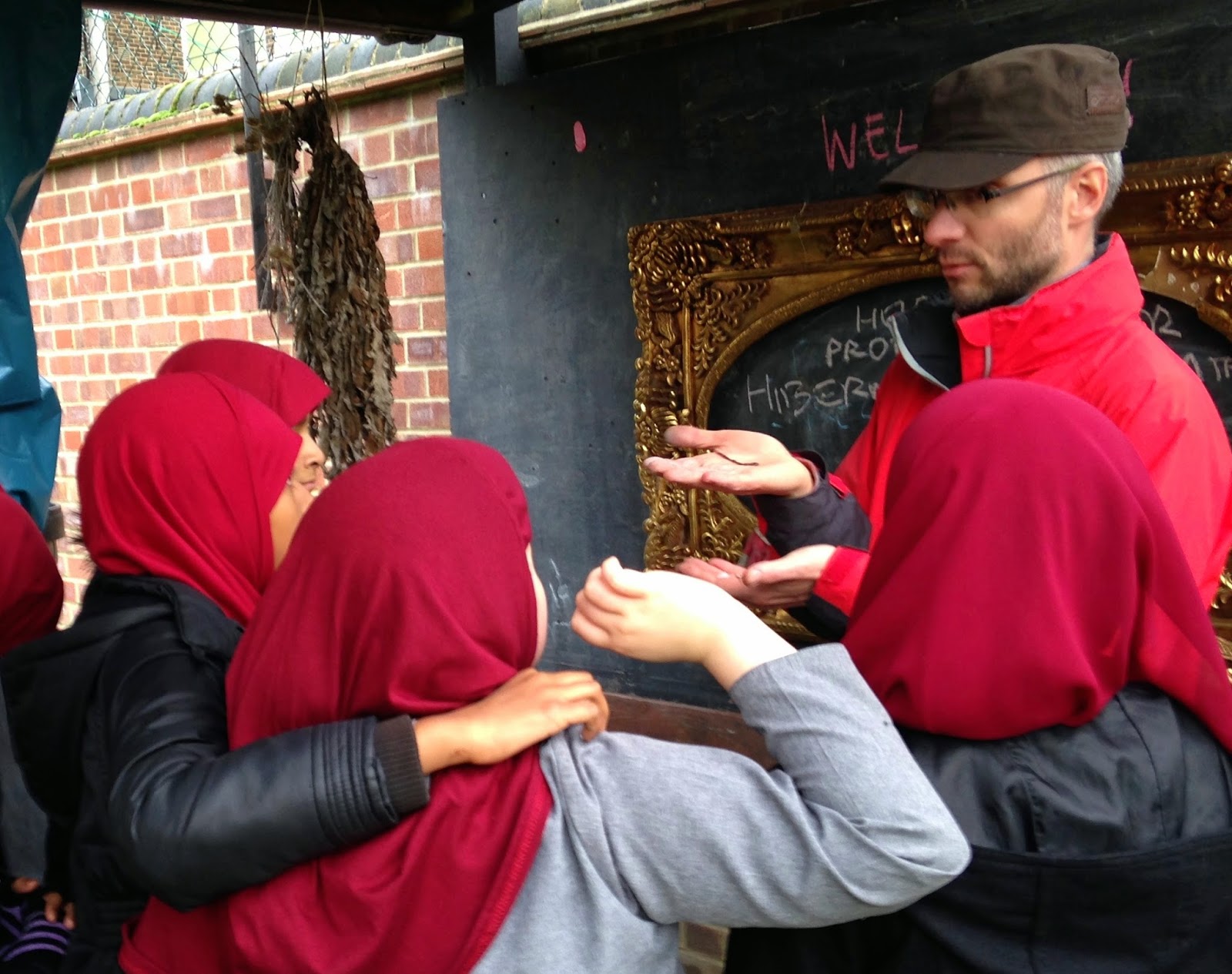
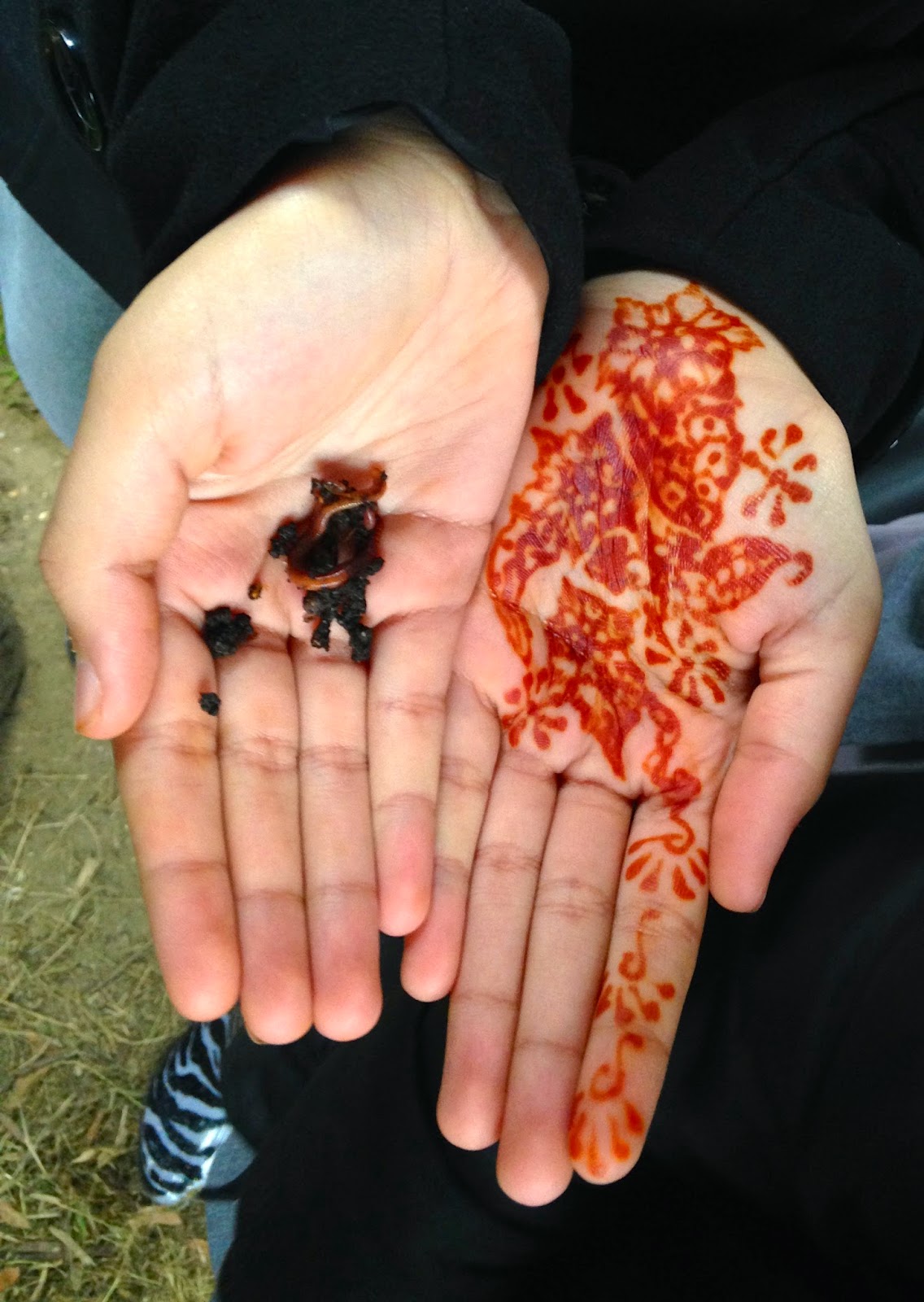
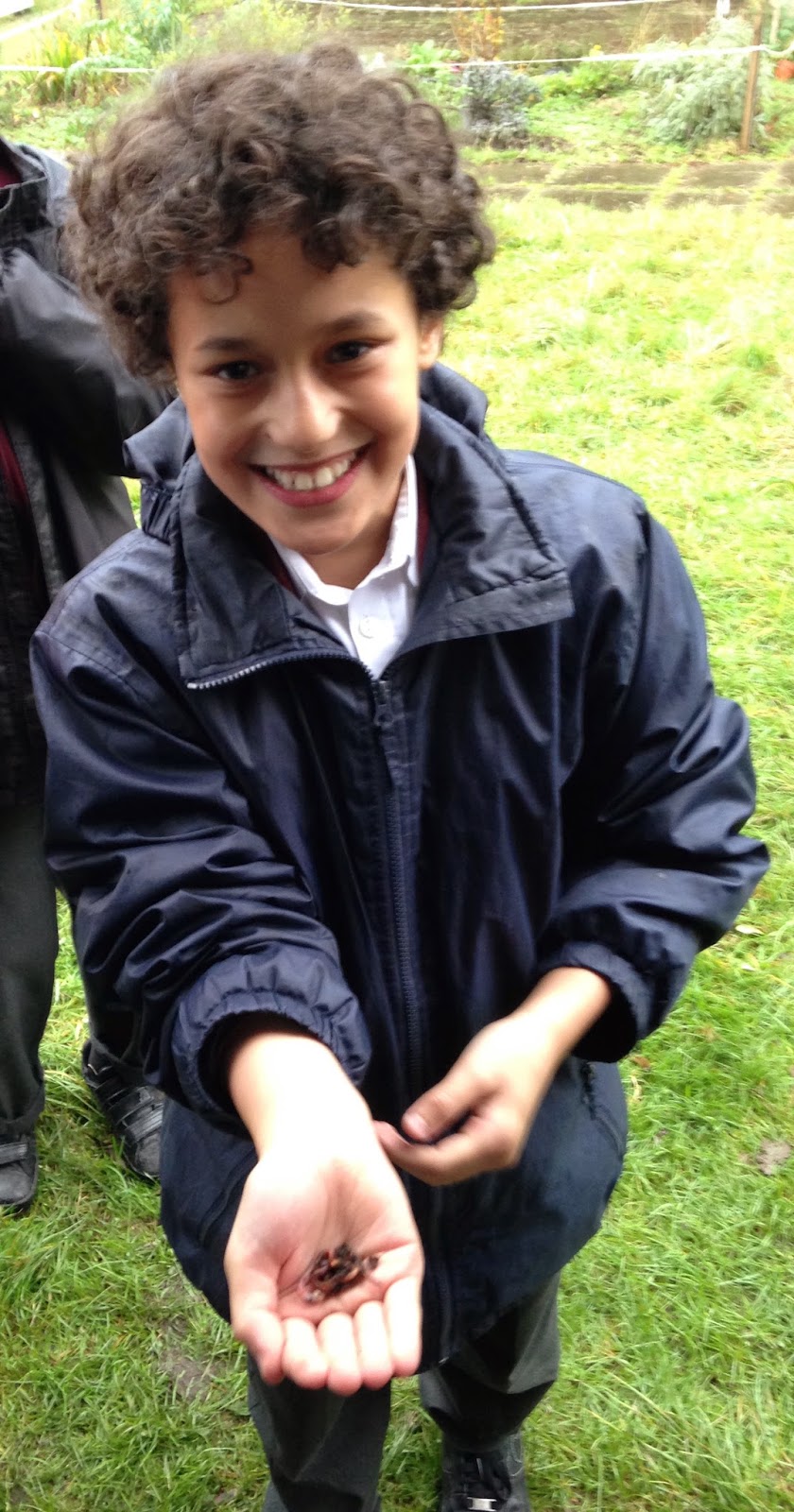
    It’s been 4 1/2 weeks since we started the Insect Hotel build. In the Tuesday sessions with Gatton Primary, we have welcomed 40 students to the garden. We have shown them flint tools found at the site from thousands of years ago, the growing beds created only a few years ago and the Rainwater Catchment constructed with last years Year 6 group.  We’ve asked why an insect hotel?” , measured and cut the structure of the Insect Hotel and made 4 experimental habitats. Not to mention handled a number of the mini beasts who might take up residence – to great hilarity.
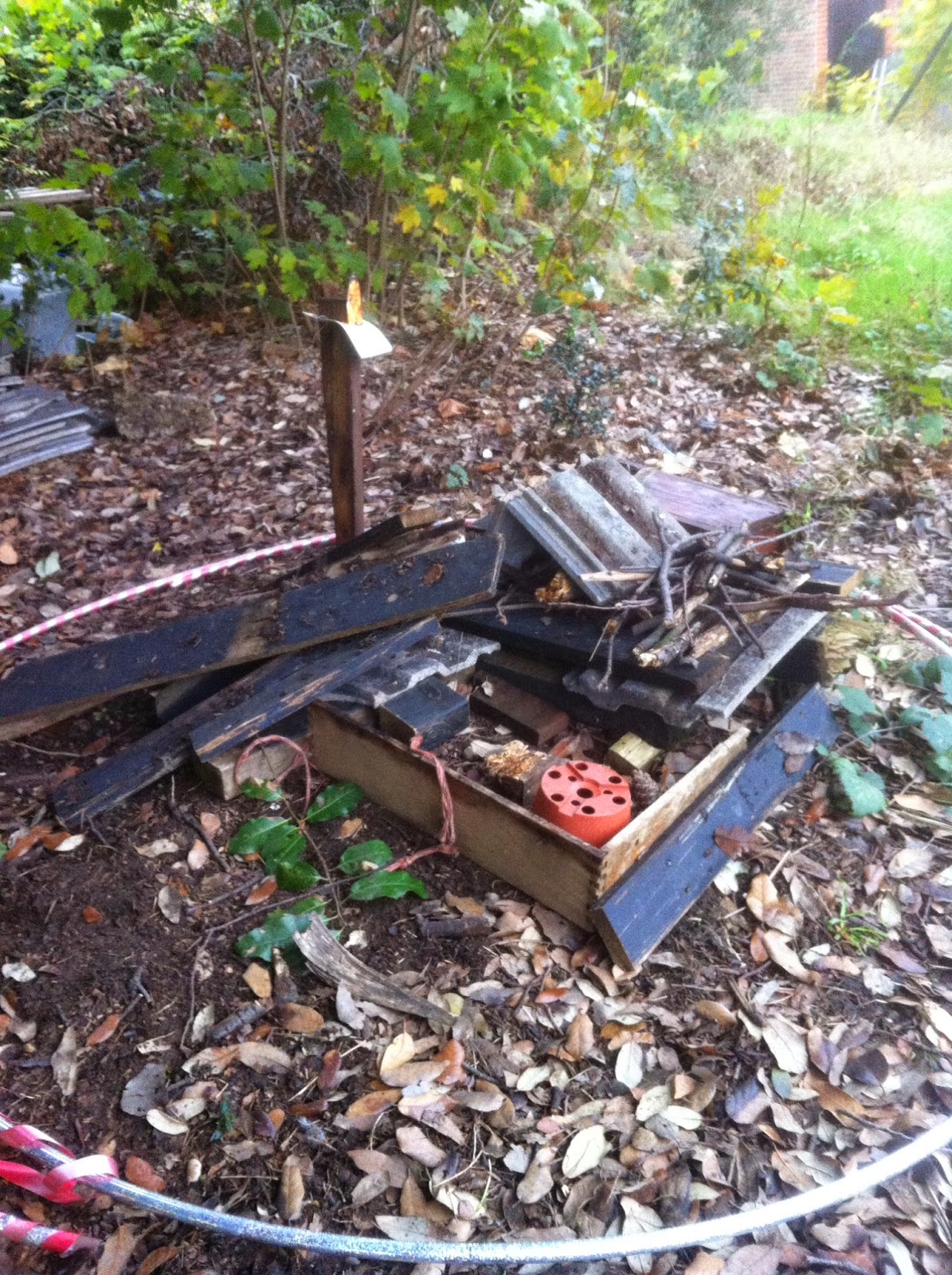
    So far, the Insect Hotel is 100% made from re-used materials – timber from a fallen fence, paving slabs discarded as extras. We’ll continue to endeavour to do this, trying to reduce waste and show what is possible, with a little effort and energy.
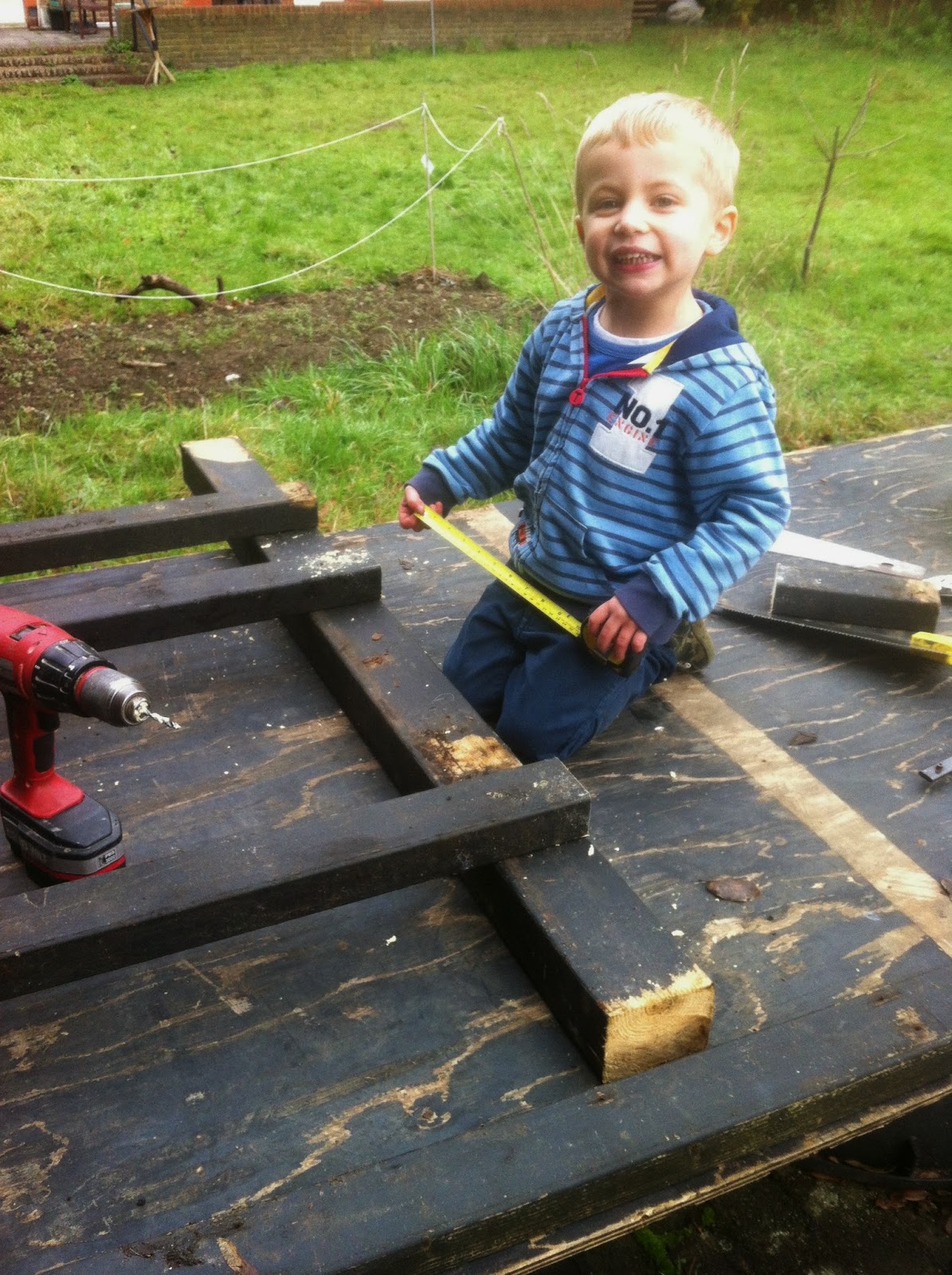
    We’ve seen how TTT volunteers are essential to any projects success and
    prove how together we can go further.

    Watch this space – this week will see the roof going on – topping out! A big moment in any construction project. Following that – we pack it full of enticing habitat and wait for the guests to arrive…
  • Insect Hotel Wk3 – The Rising!

    Often with our work with Gatton, we’ll augment the sessions with the students with extra hours to maintain momentum as well as keep us on track. These augmenting sessions usually happen during normal garden hours on a Sunday, 11am to 1pm. So come down if you specifically want to contribute to this project. Send a message via transitiontowntooting@gmail.com

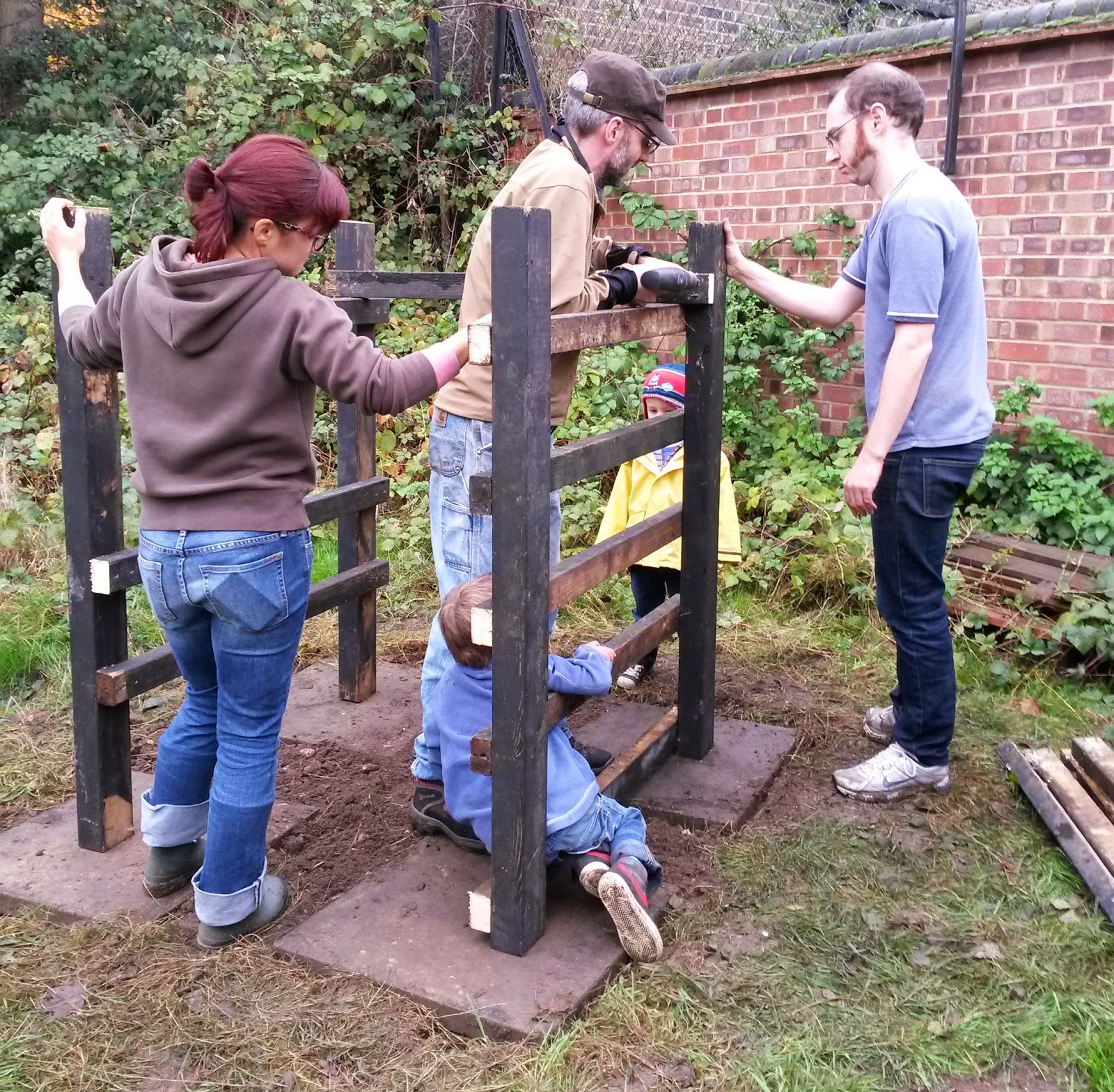
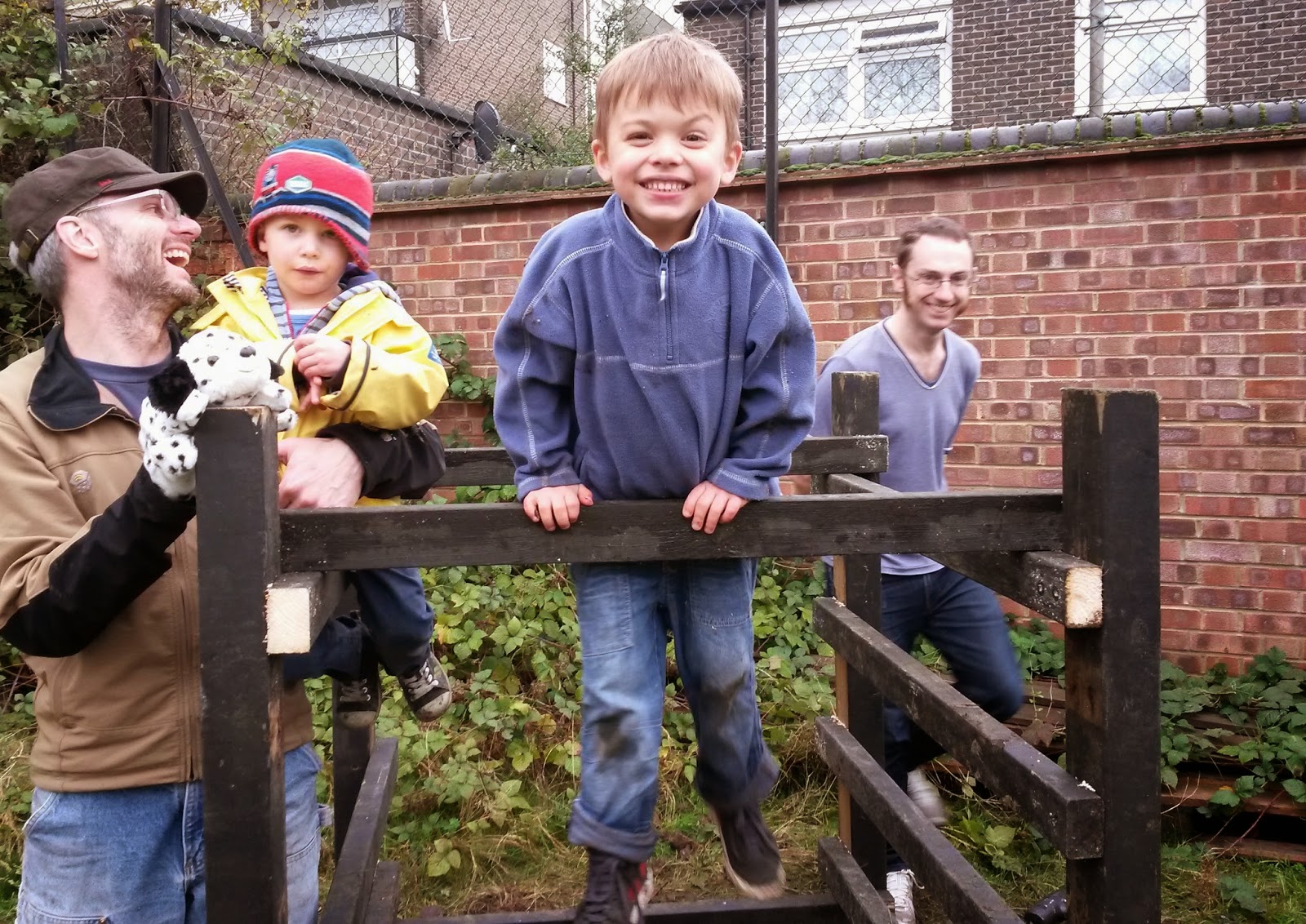
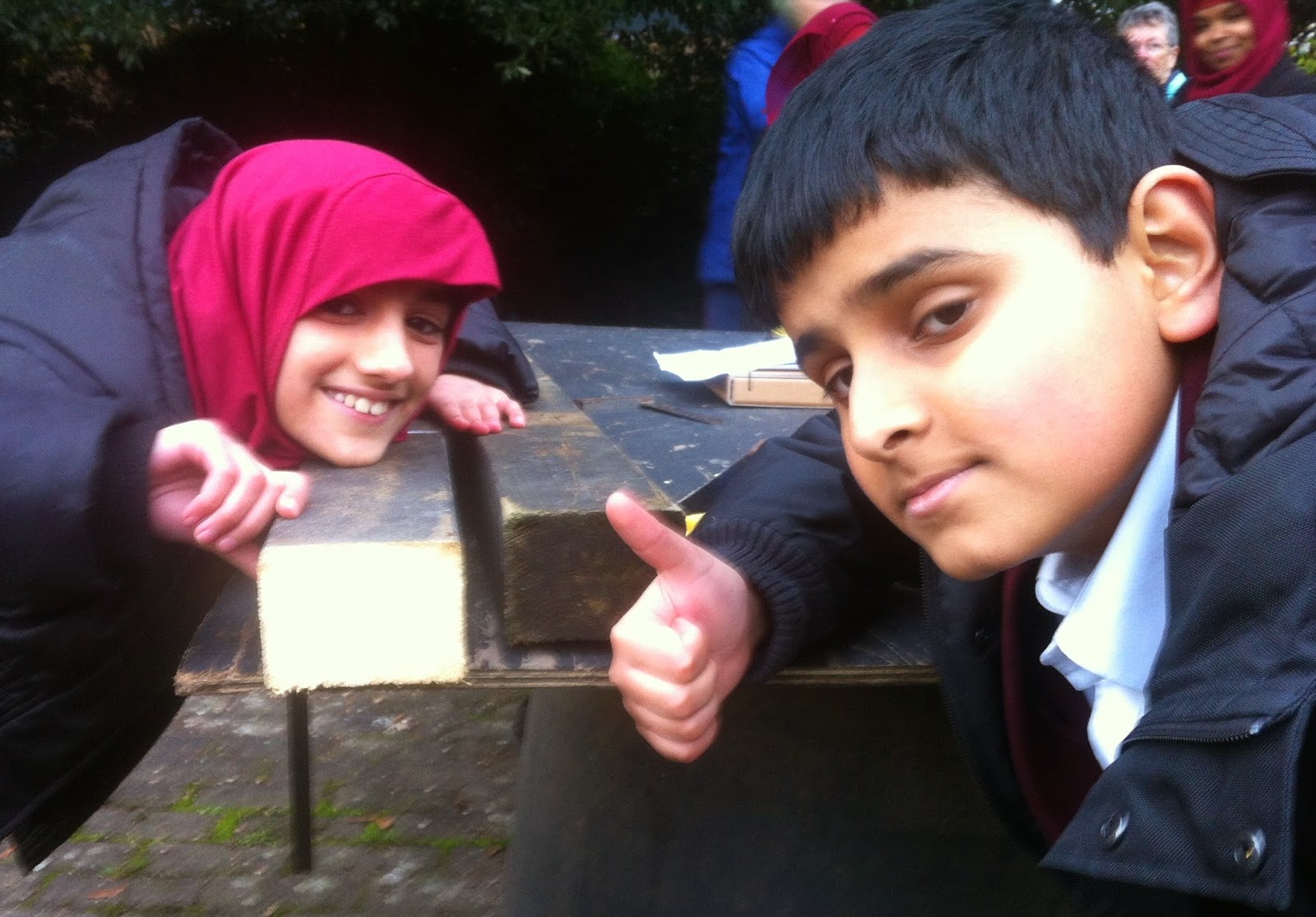
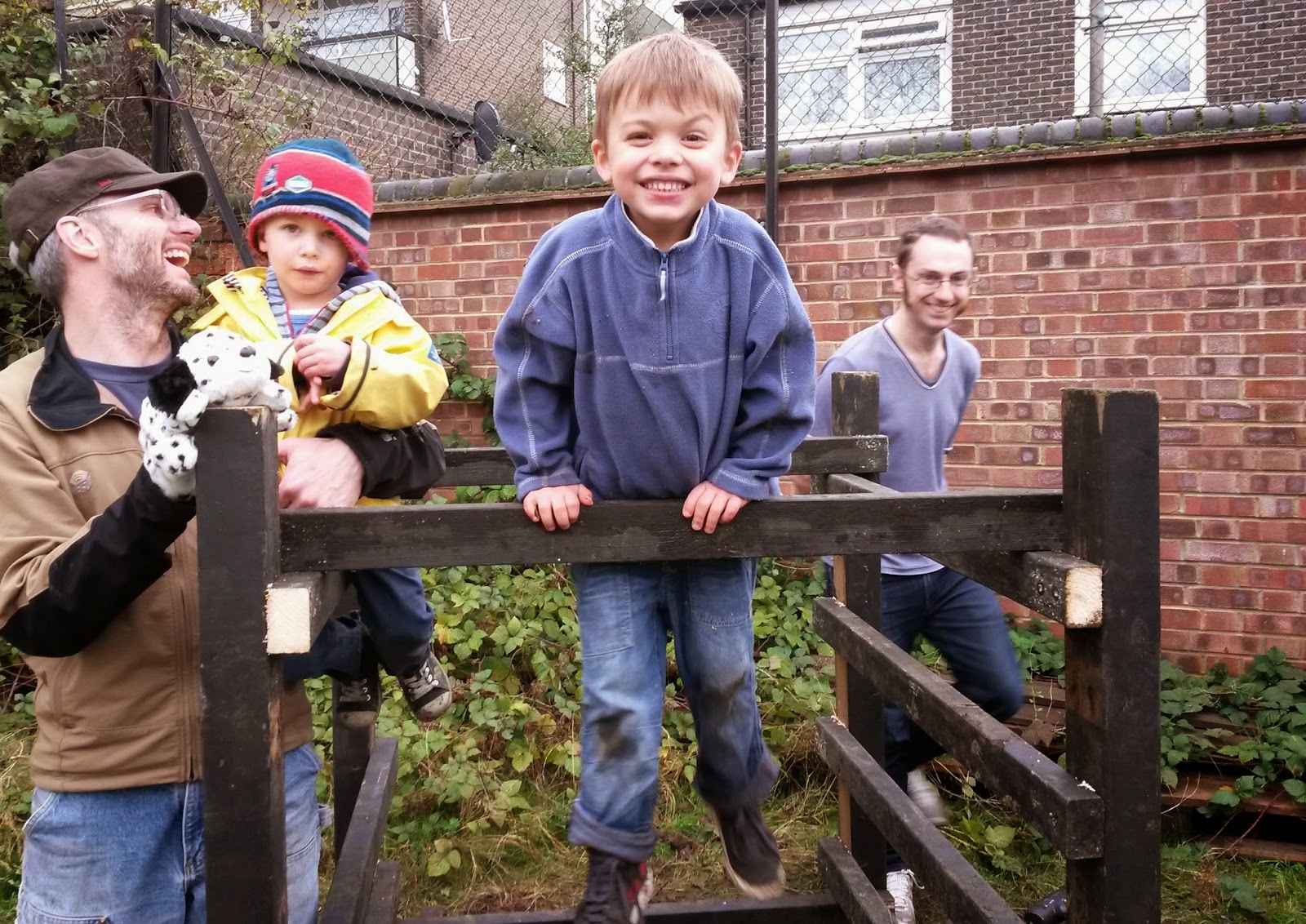
    Week 3 saw the Insect Hotel rise-up from raw timbers to an upright structure – a great moment. Luckily, we had a couple of load testers to immediately make sure it was suitable for grubs to climb up!

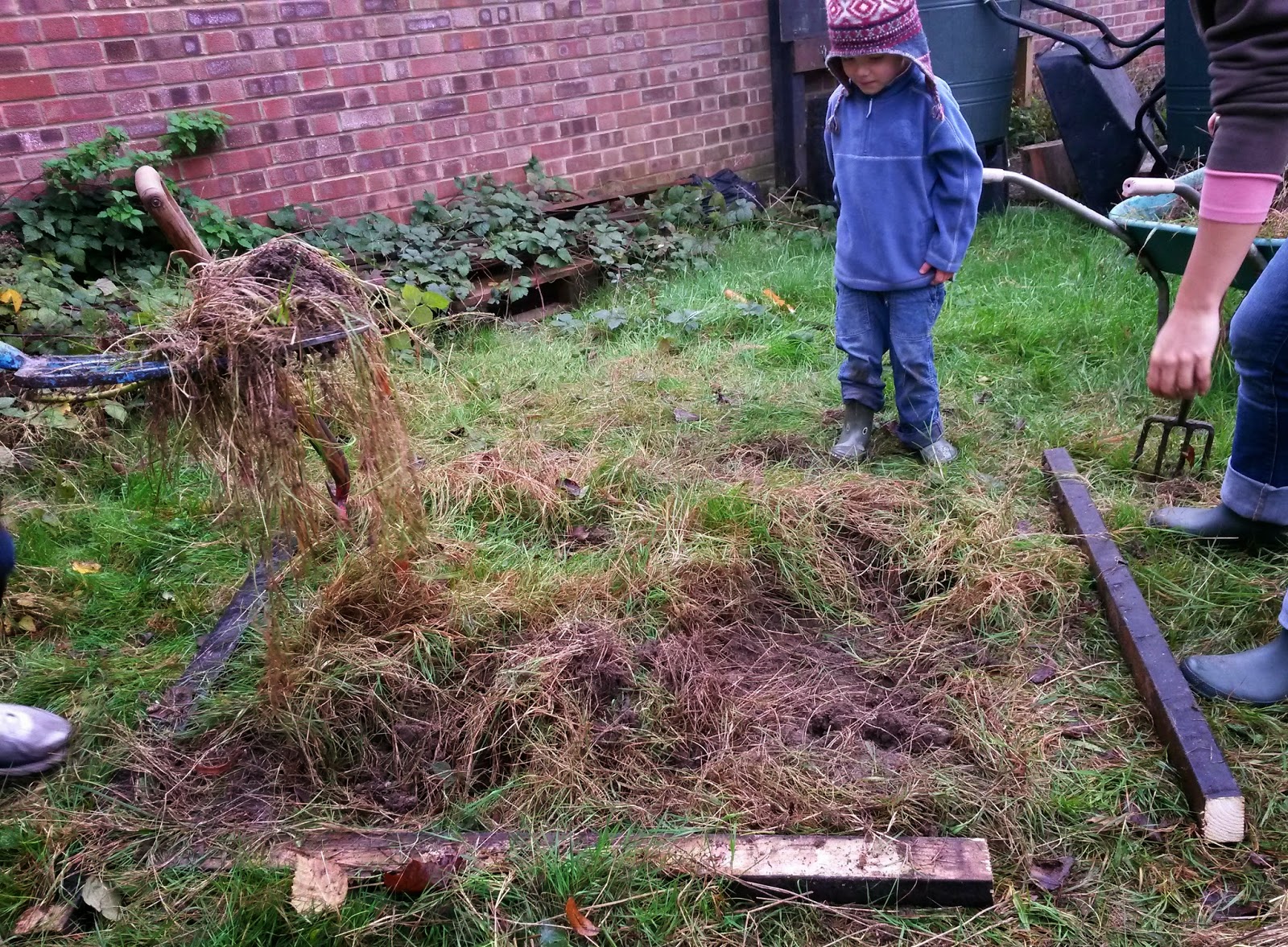
    1. Preparing the ground  

    2. Building the frames
    The timbers used were the
    ones Gatton School had
    cut in preceding weeks
    3. Laying flag stone foundations

    4. There she rises! With two eager 
    climbers waiting in the wings

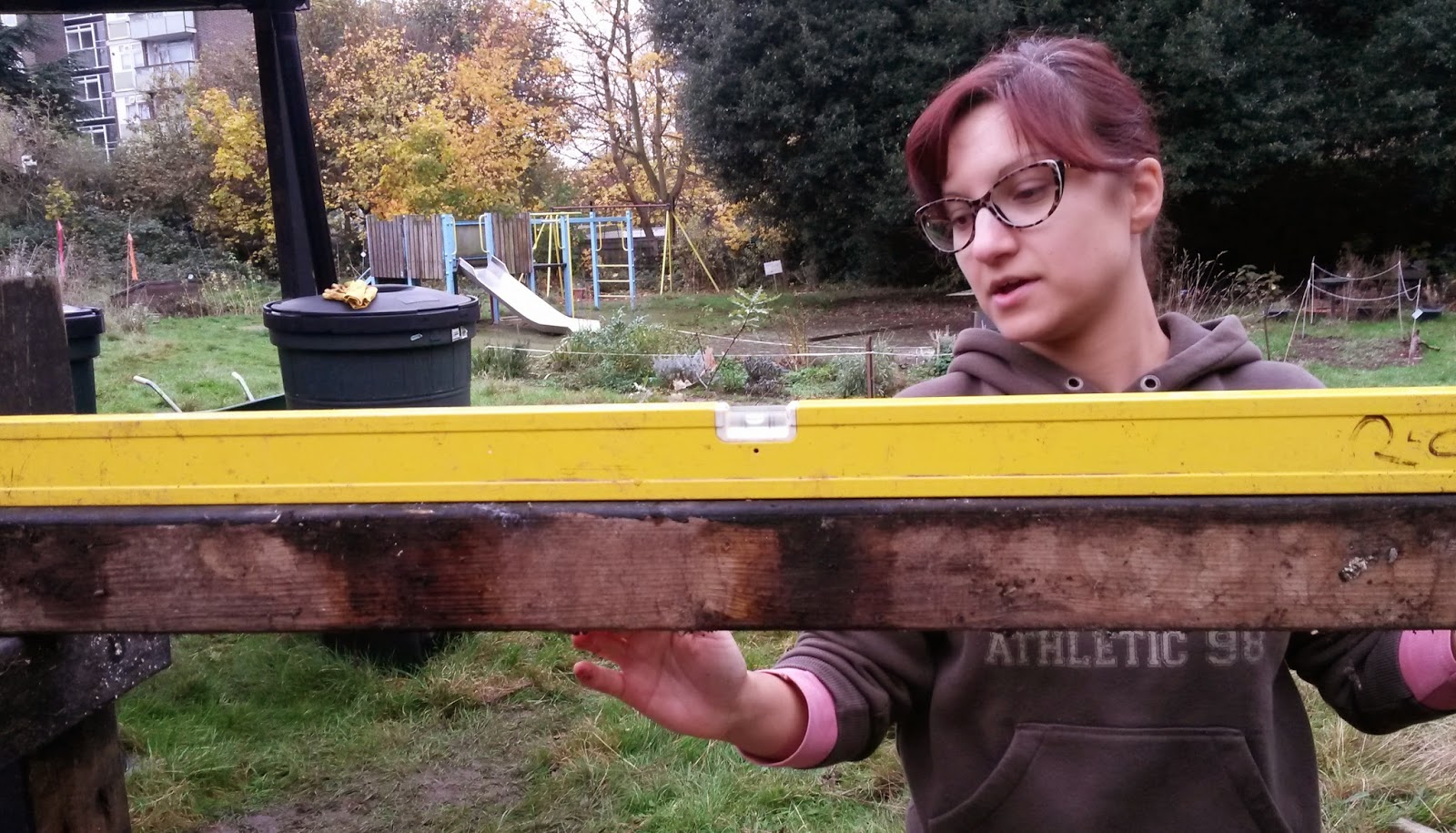
    5. Bang on level…

    The timbers used to be a fence that passed across the site – a  priority for us is to re-use as much as possible.

    The team on the day was Diana (with the level), Gerard (with the sideburns) Benji with the yellow coat and Dominic with the smile! Jenny is on the camera and that’s me in the hat!

    6. Here come the load testers

    Click below to read about how Gatton continued the build…

    7. Shelf building

     The following Tuesday, Gatton returned and the  students cracked on with making the shelves  that will go into the structure. 

     For us, having these two sides to a project is  very interesting and valuable. The sense of  teamwork is palpable. With the three Year 6  projects of the Rainwater Catchment, the Cold  Frame and now the Insect Hotel, we really do  achieve more than we could on our own through  sharing the project.
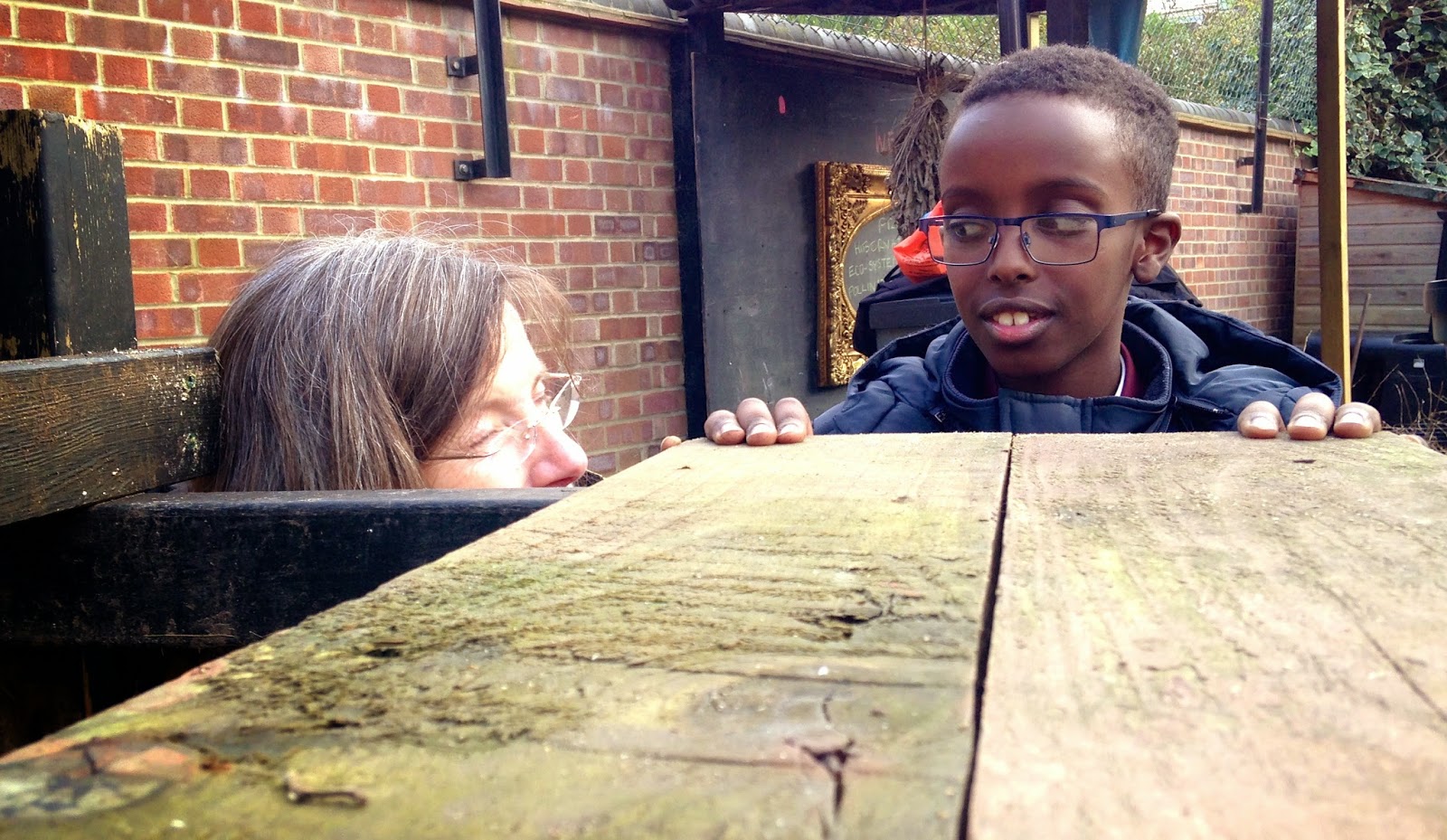
    8. What do you think??
    Meanwhile, our experiments with insect habitats continued. This week, we looked at habitats for the solitary bee, as well as other critters. Using an old oversized drainpipe, we cut up some old bamboo and stuffed it full. The solitary bees crawl in there and make a nest for their young, stacked along the tubes – pretty cool and very easy to make… they like a sunny, warm, dry spot – which they’ll get in the final hotel.
    A first home
    Meanwhile, for the solitary bees…
  • Week 2 of the Insect Hotel

     On Tuesday 11th November, we enjoyed the second session of our Insect Hotel Project at the Community Garden, with Year 6 from Gatton Primary School in Tooting.
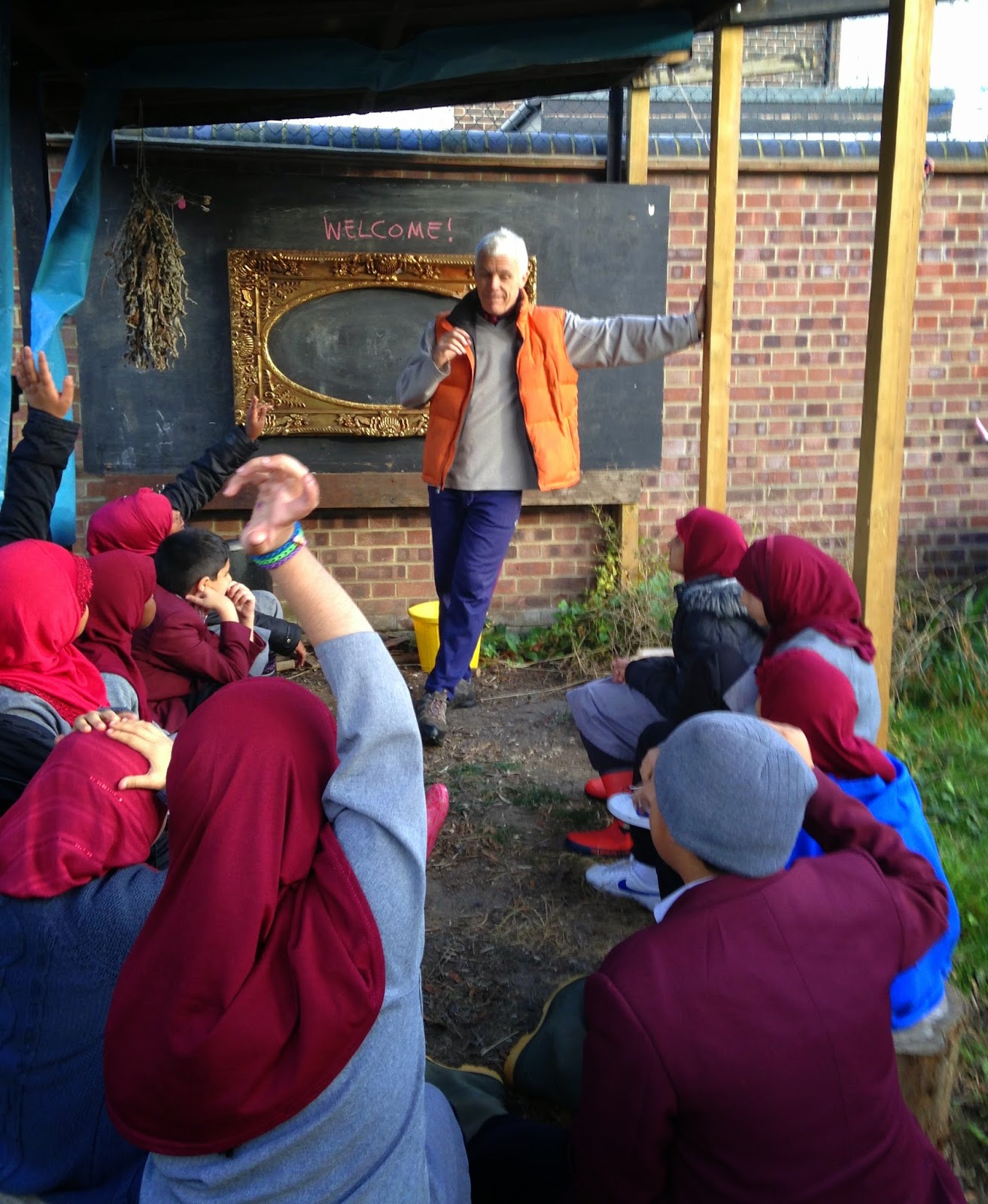
     Each week there is a new group of 10 students from the two classes of Year 6, so it’s always good to welcome them to the garden before cracking into our project work. Charlie showed the 4000 yr old flint tool and the sea urchin fossil – found when the original veg beds were dug, only 3 years ago. Come along to witness them yourself.

    Can you spot the eco-system Engineer?

    It’s always good to ask the simple questions for any TTT project we undertake and our schools work is no different.

     So why build an Insect Hotel? This week’s group thought it would help the insects, give them protection and shelter and be a place to hibernate – all good, thoughtful points we reflected on for the rest of the session.

    Cutting the corner posts for the Hotel

    The measure…
    …the cut…
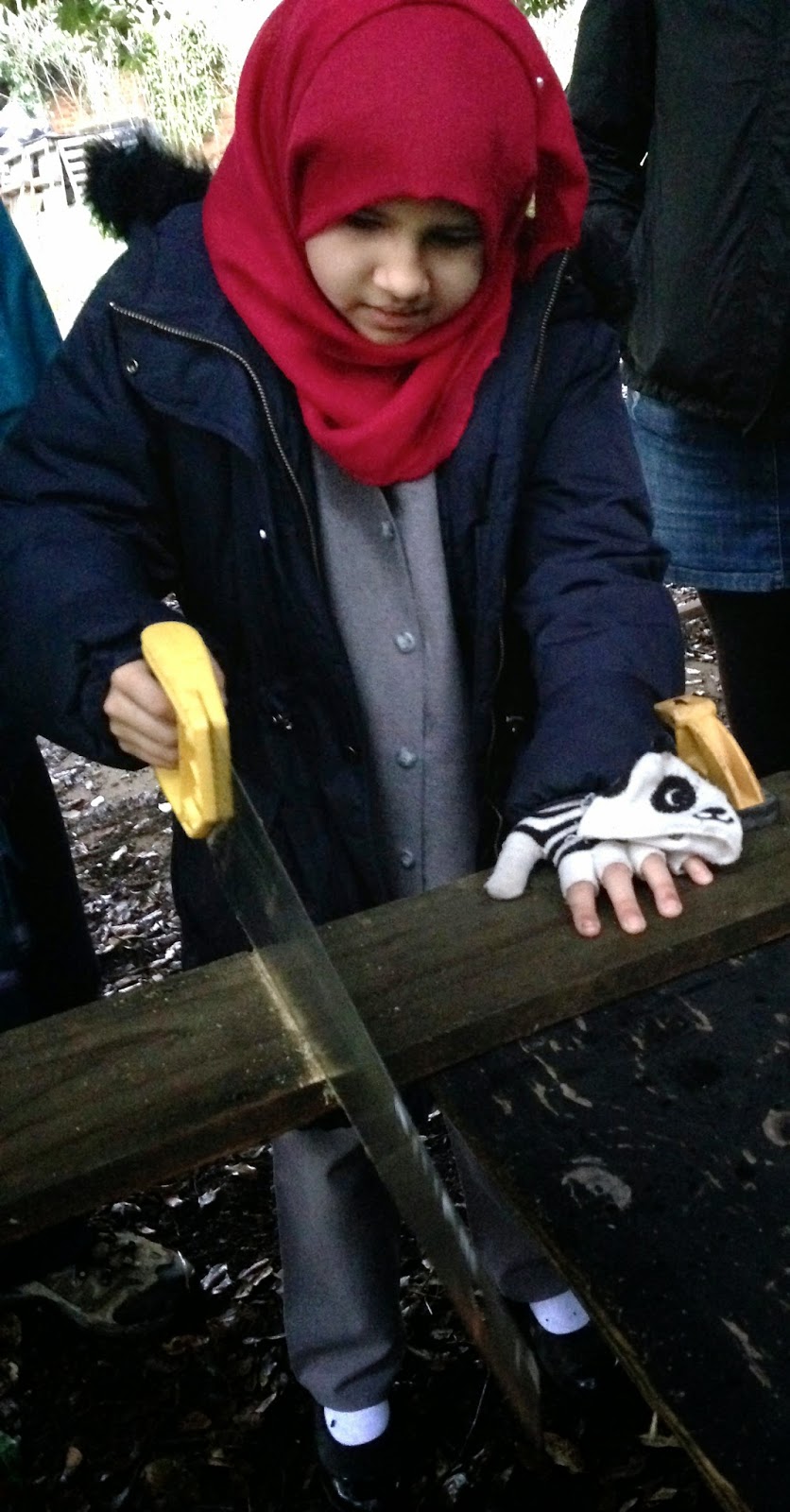
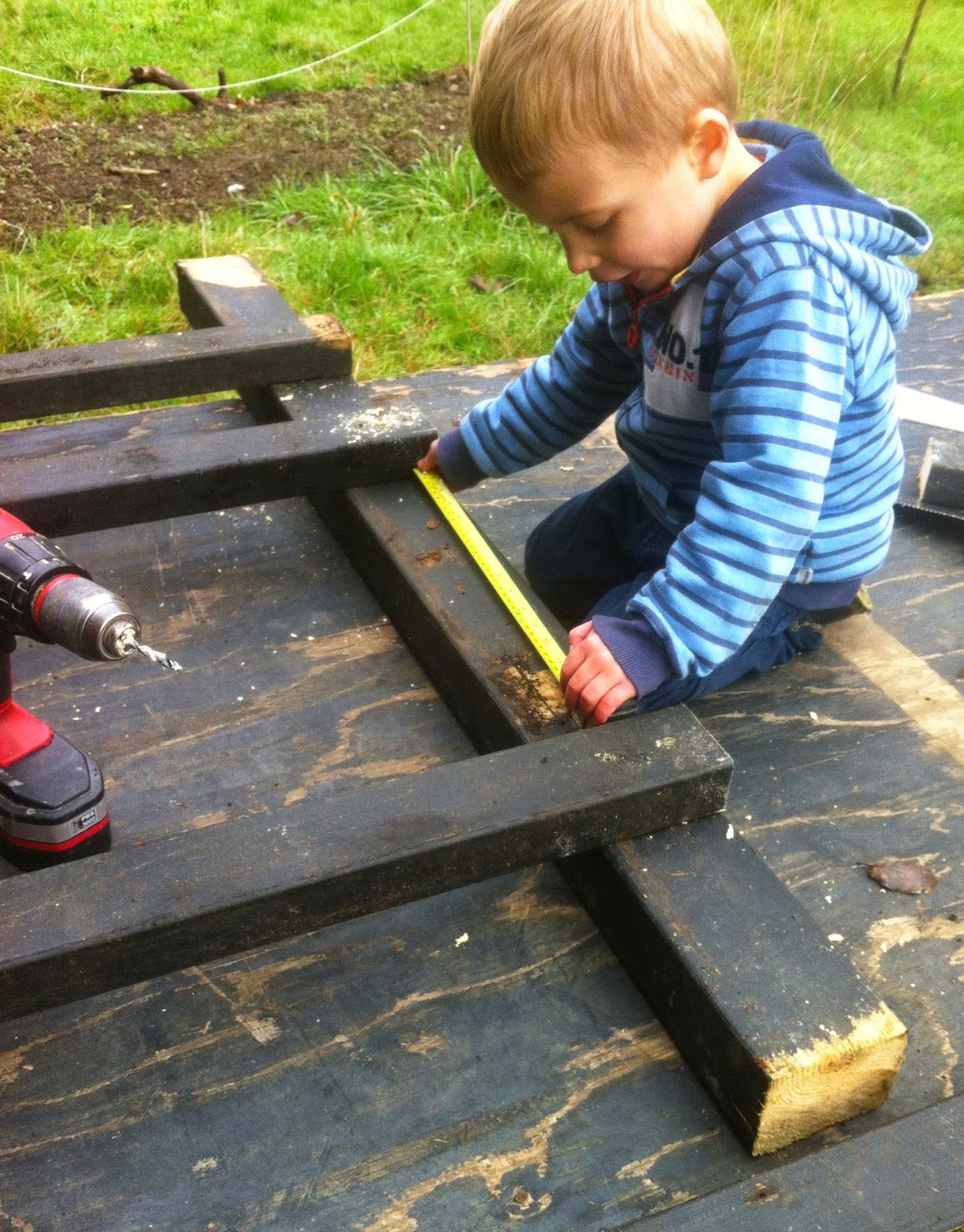
     Each group of 3 students figured out how to mark out before cutting. In the session, we completed work on our 4 main supporting posts, made from re-purposed fence posts. 
    …success!
      This engages maths, logical  thought and, of course, safe tool  use with every child using the  saw.

     Our group were brilliant –  engaged and enthusiastic  throughout.

    St.Bug’s Hotel!
    Exploring Insect Habitat 
     Each week, we’re playing with habitat by making a quick and dirty floor level hotel to inform the habitats we will place in the final structure. This weeks theme was crevices – nooks and crannies to encourage invertebrates and ladybirds – and was mostly built with tiles, twigs and an earth mound for our master ecosystem engineers – the humble worm. 
     So come along to the community garden, see the Insect Hotel emerge and explore the temporary accommodation the students of Gatton are creating! The Garden is open every Sunday, 11am to 1pm at 5 North Drive, Tooting, SW16 1RN.
  • Construction Begins on the Insect Hotel!

    This week we embarked on our next garden-based project with Year 6 students and teachers from Gatton Primary School in Tooting. This follows the Rainwater Catchment and Cold Frame projects of last year, as reported in this blog and on the education page of Issue 6 in the Transition Free Press.

    What is an Insect Hotel?

    Over the next 7 weeks we will be making an Insect Hotel! Why? This particular project is interesting to us and the school because it turns our attention to creepy crawlies, master pollinators, mini beasts, ecosystem engineers! Essential members of the garden food chain, both up and down!

    We’ll be encouraging solitary bees, worms, ladybirds, invertebrates, centipedes and millipedes to move in – still doesn’t tickle your fancy? How about spiders and wood lice, lacewings and stag beetles not to mention fungi and bacteria. All essential for enhancing biodiversity in the garden as well as the health of our wider ecosystem – something we all need.

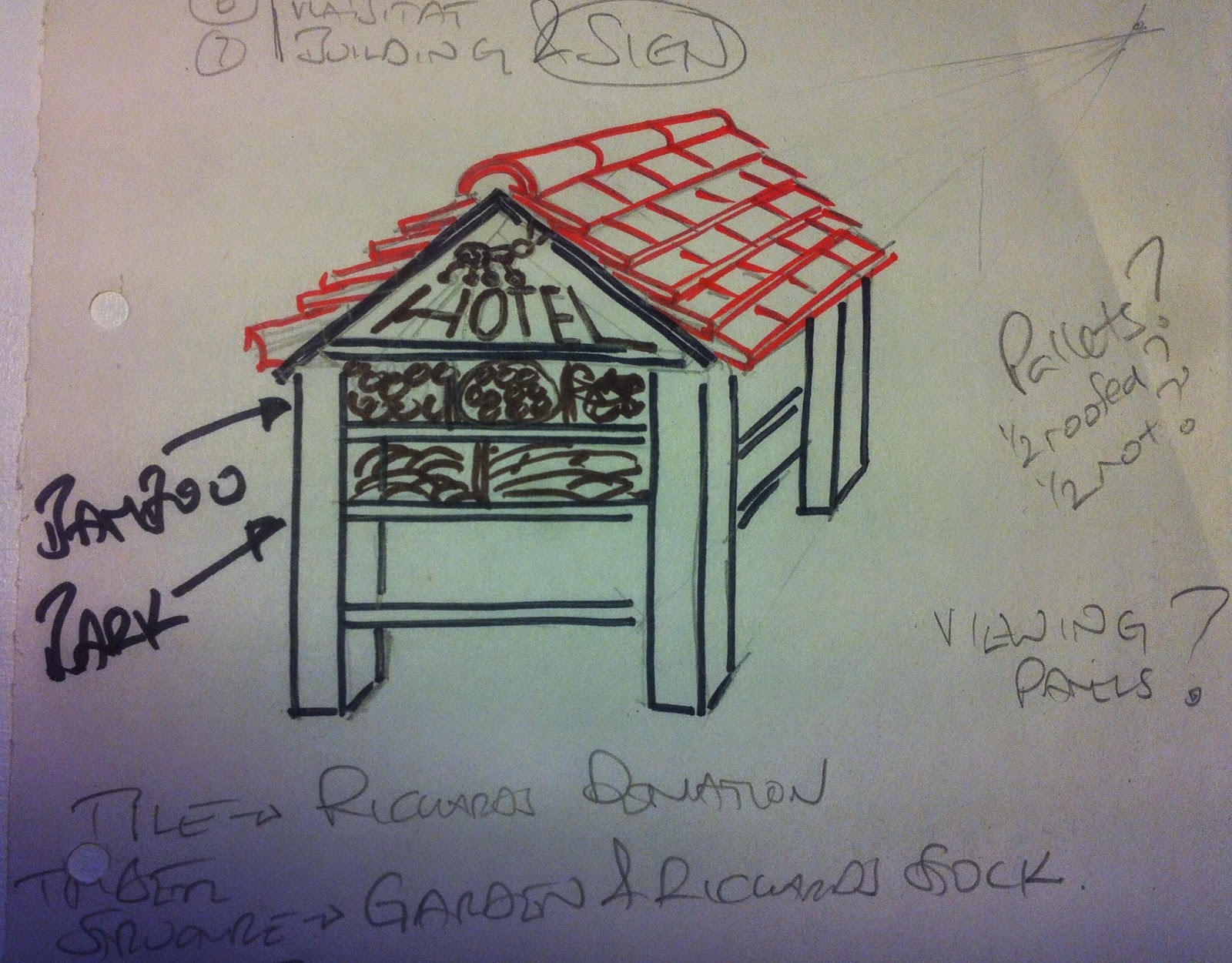
    It might look like this!

    How will we do this? We’ll focus on creating the habitats that they love to make a 5 Star, concierged, en suite bug palace. Who wouldn’t want to move in!

    The project engages carpentry skills, exploration into bug habitats, study into ecosystems, recycling and re-using of materials and will be an ongoing learning resource at the garden.

    This first week, our main task was to start cutting the uprights for the structure of the hotel, defining its height. For this, we’re re-using fencing timbers donated from our site at 5 North Drive.

    You can find out more at Inspiration Green’s Insect Hotels article and The Wildlife Trust Building an Insect Hotel Habitat

  • Re-used & Reclaimed: Carbon Conversations Meeting 3

    Our third meeting in the current Carbon Conversations series was all about exploring and reducing our carbon footprint in the things we purchase. That’s a big topic which ranged from ‘why do we buy stuff anyway?’ to re-use and ‘upcycling’.
    Richard is a participant and has been researching an apect of consumption: re-using building materials, He recommends a couple of interesting projects below:

    Hi all, I’m researching ways we can enable re-use of materials that come out of domestic scale renovation/extension work. This is something dear to my heart having been involved in making projects with Transition Town Tooting and at home using reclaimed timber – you guys will remember the water catchment project, (which was all reclaimed except for 5 lengths of timber that needed to be longer than the available) and the cold frame project that was 100% reclaimed materials.

    Re-upholstered chair with funky echeverias.
    Anyway, during my research I’ve found some really cool initiatives from around the world, and I thought I’d share them with you.
    Have a look at the vimeo clip from the Portland, Oregon based organisation called “The Rebuilding Center” and tell me if you give it an English chuckle or join in with the tears at the end!

    The Rebuilding Center also has done projects using bicycles to transport the materials they salvage form demolition jobs – hardcore! They also have lots of project ideas.

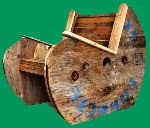
    Handmade cable drum chair

    Yooz is up in Scotland and integrates re-training in its business model.

    Ok, there’s two. Hope you like ’em and it inspires how we can better re-use the copious amounts of useful material going into skips up and down the land.
    Richard

    And thanks a lot, Richard! For more about this meeting series, click on CARBON CONVERSATIONS at the top of this blog page. All welcome to the next series we run.
    And maybe you have ideas for Made in Tooting re-use and reclamation?
    Do get in touch.

  • Work & Play Scrapstore in Tooting

    I made a visit to the recently re-opened Work and Play Scrapstore in Blackshaw Rd this week. Running for over 20 years, the Scrapstore promotes the re-use of resources for environmental and community benefit and has a great collection of card, trimmings, fabric, plastics, carpet pieces and costumes.  The Scrapstore is a registered charity and provides resources to  schools, community groups and local artists – TTT’s art making group SMArT visits regularly.  

    Many thanks to Scrapstore volunteers Alison, Elizabeth, Lucy & Susan (all pictured) for showing me around.  The ethos of the Scrapstore seems a good fit with Transition ideas, and would be a great resource for future events.  

    Meanwhile can anyone out there assist the Scrapstore with donations?  I was given a wishlist of desirable items so please do take any of the following down there on a Tuesday if you are able. dt

    Wishlist:
    finer fabrics, felt, metal bottle tops, coloured card and paper, ribbon, laces, haberdashery, buttons, sewing tape, zips, elastic, knitting wool, plastic offcuts, plastic foam in sheets (2mm thick and up), wine corks, paper cups and plates.

    Find out more at http://workandplayscrapstore.org.uk