Author: Transition Town Tooting

  • Report of WEF meeting on local impact of the Green New Deal

    Several of us from Transition Tooting attended this months’ excellent WEF Open Meeting and WEF Co-Chair Jon Irwin has very kindly written up the details of the meeting for those who were not able to attend.

    Green Deal – Notes from the Open Meeting 3rd November 2011
    John Alker, Policy Director of the Green Building Council (GBC) introduced the Green Deal, as Justine Greening MP was delayed in arriving.

    Background to the GBC:
    It is a charity funded by it’s members (building organisations, local authorities number amongst them). They are apolitical and can be viewed as part trade association part NGO. They form part of an international network of other green building council’s with a presence in 80 countries.
    25% of UK energy use is by UK housing stock. On average there are between 25-30k deaths each winter that are attributable to the cold.

    Green Deal:
    GBC has been involved in 2009 proposing a “pay as you save” scheme. The ideas from this have been taken up in the Green Deal. The charge for work done under the green deal is attached the the property over a 25 year period. Key element to the Green Deal is the Golden rule. Only measures that result in cost savings through energy efficiency over the lifetime of the deal can be included in it.

    Energy efficiency should be part of market valuation of properties, to provide greater incentives for home owners to invest, and for buyers to take into account the energy efficiency of their potential future home.

    There is the possibility for the green deal to include much more than insulation / double glazing. Boilers / lighting could also be included in time, providing that they satisfy the golden rule.

    Key challenges:
    1 Uptake
    2 Assessment – needs to be robust
    3 Industry capacity and skills to do the work
    4 Interest rates & Golden rule
    5 Access for SME’s

    Needs to be strong uptake for it to work. Assessment of homes needs to be good so that the improvements work. There need to be skilled people who can do the work. Interest rates are key, because of the financing nature of the deal. If interest rates soar, then that could limit what could be done. Access for SME’s, a lot of people in the building trade are working in SME’s, they need to have access to it as they do the majority of refurbishment work in people’s homes.

    By 2018 rental properties need to meet level E of energy efficiency. By 2016, tenants will be able to ask their landlords to make improvements to meet that energy rating, and the landlords will need to make the necessary improvements.

    Possible incentives:
    In x number of years time all properties need to meet a certain energy efficiency level.
    Stamp duty rebate – if people improve their properties within a certain time frame after buying the property a rebate could be offered on the stamp duty.
    Change VAT on services to make buildings more energy efficient match levels on goods which result in increased energy efficiency.
    Green Investment Bank could help provide the finance behind the deal.

    Justine Greening MP
    Commented that the Green Deal won’t be good for everyone, as it will depend on each individual’s circumstances and needs. Local provision of services is key, as is affordability. An accredited surveyor would put together a package for that building. Accredited people do the work, they invoice the energy supplier. The “debt” is attached to the property, and would be paid off through the energy bills. The principal is that, from the month after a person has Green Deal work done in their homes, their energy bills will be less, and will continue to decrease. By next Autumn, the Green Deal should have started.

    Comments raised by audience:
    Hassle particularly for older people having other people coming into their homes – The assessor would work with the individual to create a personalised green deal for them and their property.

    Cllr Jonathan Cook mentioned that Wandsworth Council is doing a trial with 1500 houses in Furzedown / Graveney, with work to improve those properties in partnership with local suppliers.

    Consumer protection is key – accreditation of suppliers as well as product warranties.

    Clean Air Act – radical changes to homes has happened before. In 1950’s over a 10 year period some 100,000 homes were converted in Wandsworth to stop burning coal.

    Switching energy suppliers – that would still be possible. The “debt” would be attached the the property, and the “repayments” would be taken as part of your energy bill from your new supplier.
  • Vision & Pathways

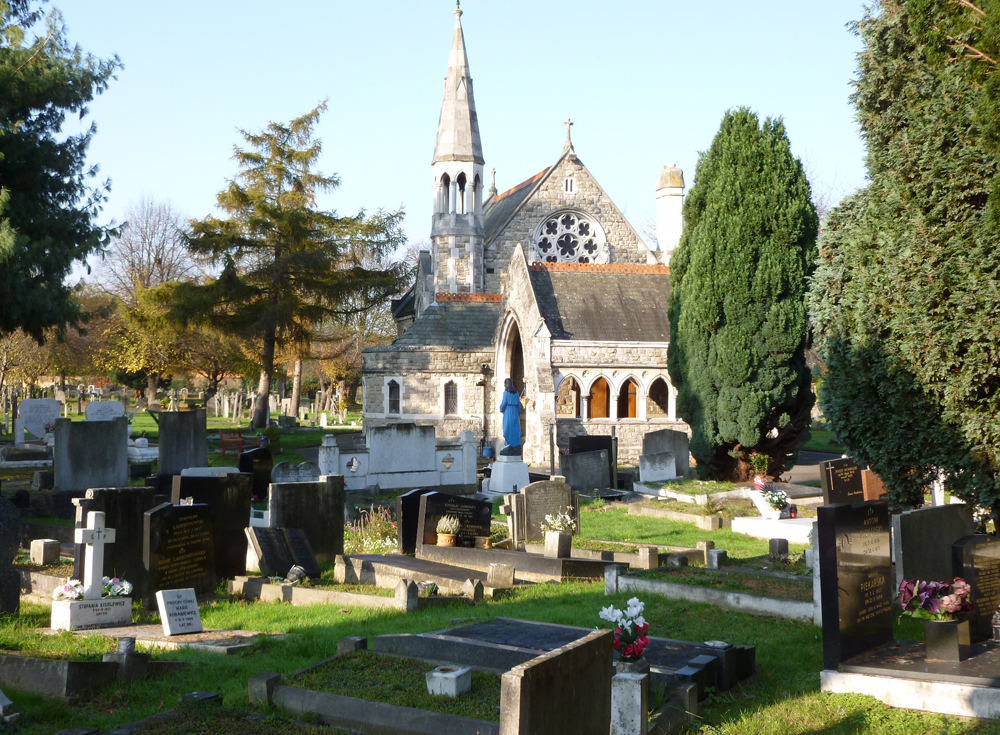
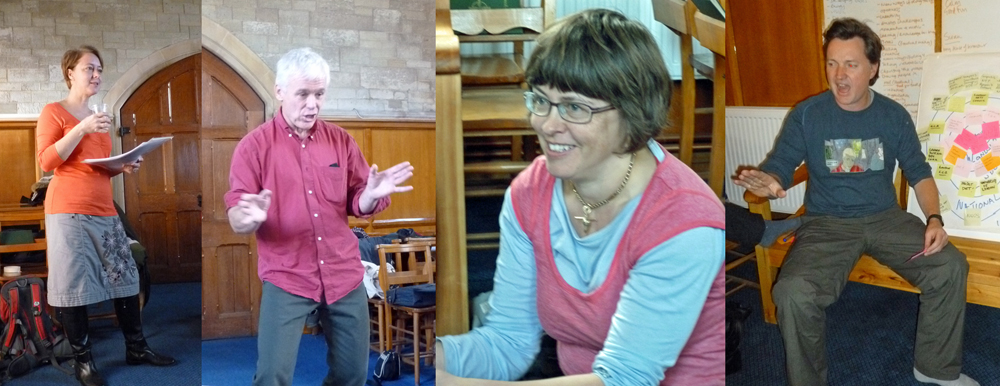
    We had an inspiring Vision & Pathways all day event at the amazing Streatham Cemetery (in Tooting) today, covering the past, present and future of TTT.  Hopefully we’ll have a write up in due course, but meanwhile here is some photographic evidence!

     This bucolic rural idyll is in Tooting; no seriously it is …
    These people have vision or are at least on a pathway …
    And this year’s Turner prize nominees are …

    More photos here:

  • Local Economy & Currency

    At the First Tuesday event on 1st November 2011 members of the local community came together to discuss the issues facing the local economy and what could be achieved by developing a community currency.  Could a Tooting Pound become a reality?  With one of highest levels of independent small businesses in the country, people like Tooting’s quirky feeling of energy, which we would not want to lose in favour of tidiness or an influx of chain stores.

    Encouragingly the group felt that a community currency might help facilitate connections in the local economy, while also boosting the sense of community, causing people to explore new places to shop.  Perhaps the successful night time economy could help drive the daytime economy and maybe the currency would enable small businesses to feel connected, resilient, and therefore stronger together.

    Thanks to Alex from TT Brixton who gave us a fascinating account of their experience of developing, implementing and maintaining the Brixton pound, to Chuck for bringing his money facts and extensive collection of bank notes from round the world and to Tim for running the evening and continuing to champion the concept.

    We are definitely encouraged to put more time into developing a community currency with the caveat that ultimately the success or failure of the project rests with local people and businesses who might use it. It is obvious that if people in our community feel important, valued and included in the project, then the currency is more likely to succeed. After all is said and done, it will become their money!

  • Experiencing the camp at St Paul’s

    This past week, two TTT supporters have made separate visits to the ‘Occupy London’ camp outside St Paul’s Cathedral. We asked them both to blog on our site to share their responses, and we hope you find their personal comments interesting and thought-provoking:

    Jesse’s experience:
    On Saturday I decided to see what all the fuss was about and spend some time at the Occupy London Stock Exchange Camp outside St Paul’s. As has been commented on in the mainstream media it is difficult to simplify and describe; I thought it would be good to share my experience and let everyone know how they can get involved if they’re interested.
    Firstly, I feel the comments that have been made that the camp is ‘incoherent’ and ‘don’t know what they want’ are missing the point. Protests such as strikes and marches often have demands but the Occupy movement is different, it’s about participation and opening up space to have a conversation about the type of world and society we want to live in, talking to one another and working on solutions together. It made me think that Transition Towns are, in a way, also about ‘occupying’ our communities positively to help build resilience.

    If, like me, you don’t think we can solve our environmental problems without addressing issues of social justice then I think the coming together of environmental activism with calls for social justice is a very positive step. I have been back today to listen to a talk by Richard Wilkinson, co-author of The Spirit Level: why equality is better for everyone: essential reading on the effect of inequality on social cohesion and a huge number of other issues from levels of trust to crime rates.

    The other Transition-related part of the camp it is that I was very impressed by how they have created a low carbon community from scratch. Great public transport links, communal veggie cooking, low heating bills and an excellent waste management system. I heard a rumour that they have single-handedly increased the City of London’s recycling levels!

    If you want to get involved at the camp discussing how environmental and economic justice are linked, the environment working group meet at the info tent outside St Paul’s on Wednesday and Sunday at 5pm. There is also a working group dedicated to recycling and waste management at the camp. I’m not sure when they meet, but as I said it’s about participation – so go along and find out!
    I’d be interested in your thoughts about the Occupy movement – do add comments below.

    All the best, Jesse

  • Jane’s experience:

    I had been meaning to offer solidarity to the St Paul’s Camp for days and decided to spend last Wednesday there with the tenters. I arrived from the Tube fired up that someone is making a visible statement, to cry out against the extreme levels of inequality in our society. It has been too long.
    From the hedonistic values and consumer culture of the ‘there is no such thing as society’ eighties, is main stream society now getting the message of social justice? Has the financial crisis seen a phoenix begin to arise from the violent ashes of recession?

    I went down the alley close to the Cathedral via the cash point, reflecting on the fact I had ready cash, and saw the tops of tents around the side of the site. I was anxious in case there was an aggressive police presence; remembering three hours of kettling on the Student March last November.

    But it was fine! Relaxed, wet, a bit miserable…tents of children painting, tents for faith groups, tents for bags and supplies. Posters asking for volunteer first aiders and night guards for the kitchen. My favourite banner was ‘Compost Capitalism’, and a beautiful small embroidery saying ‘liberation’ hanging on the official wire fencing. A row of recycling bins…boy they are good!

    One tent was selling cakes and teas, like a church fete. I wanted to make a donation so asked a guy who to speak to – he guided me, and as he went repositioned tents on the way, ones which the rain and wind had blown over. There was nothing to stake the tents to …some had bags of rubble; others, a wing and a prayer.
    We all look after each other’ he said as he fiddled with the guy ropes …great, I thought, a tight group. I had read in the paper about their voting system and how hand signals were used for the group to indicate the need to talk, the need to shut up and to give someone else a go, and how to agree or disagree. Well organised.
    My guide, who I was worried about being cold, was handing out leaflets to passers-by. It was a bit of a cattle market with tourists taking pictures… but what a great location to spread the word!
     
    I went to the Info Tent (good organisation), with info on the day’s events: a discussion on the Tobin tax; faith tent mediation (shame I missed it). The tent had hand-sewn fabric pigeon holes for the different groups for messages; I clocked the ‘outreach group’ one.
    There were huddles of young people standing around, talking about issues. After donating I wandered freely …reading the posters and looking at the art and messages woven into the wire fencing by the wind and rain. There was also a donation spot for food.
    I took a bunch of ‘Occupy London’ flyers and started to hand them out, and wandered back to Evensong at Southwark Cathedral, distributing I went. Walking cross the Millennium Bridge I reflected on the camp and its Statement of Consensus reached on different issues, which were printed on the reverse of their flyer. I agreed strongly with each one. I felt exhilarated and wondered what would be useful support to keep those guys warm in the cold and wet over the coming days and hopefully months.

    What will happen next, who knows? But it is true that anything is possible, even in our ordered British society. You just don’t know!
    Jane

  • Local Economy & Community Currency Event

    What can we do together to support the local economy?
    What’s the value in developing a Tooting community currency?

    Many local businesses are in direct competition with national chains, the internet and large suburban shopping centres. When ‘big business’ wins, another local shop closes or a small business goes bankrupt.

    If you, like us, are concerned about the local economy and wish to talk to other like minded people our Local Economy & Community Currency event on Nov 1st might be just for you! We will be discussing how to strengthen our local economy, build new relationships, and how we spend our money. We will ask if we want a thriving local economy, or are we happy with our money going elsewhere? Do we want extended supply chains or short ones? How would this benefit us? Would a community currency help?

    Venue: Mushkil Aasaan, 222 Upper Tooting Rd 7-9 pm.  All Welcome.

  • Gaia – the Cabaret

    At short notice, Peter Horton of Gaia’s Company is offering an extra night of his current cabaret tour of songs, sketches and curiosity.  Transition Town Tooting is delighted to support Gaia the Cabaret at the Wheatsheaf in Tooting Bec next Tues 25th Oct at 8pm.  Come along!

  • “Common Knowledge: Drawing Tooting”

    Sunny weather brought 15 local people, including several Transition Tooting friends, onto Tooting Common to join a Wandsworth Arts ‘Big Draw’ event on Saturday 15th Oct:

    “Explore the hidden ecology of Tooting Common
    with artist Jacques Nimki through drawing, talking and walking.”
    We practiced ‘measured drawing’, collected leaves and seeds in paper boxes which we made on the spot, and tried drawing in tiny sketchbooks – no excuses for not having materials with us!


    We looked at the Common through our own varied and personal experience of the space – including searching for stories in the apparently random paths we followed (Jacques calls them ‘desire lines’). We felt this drawing and observing both plants and social meaning should be continued – all part of valuing what makes Tooting special.

  • Foodival & Roots

    More photos from Foodival now online – thank you Chuck!  Keep ’em coming if you have any good ones!

    Meanwhile congratulations to Tim for the successful first run out of a Tooting currency at Foodival with our prototype pound, already known on the streets of south London as a “ROOT” (rather than a quid). Go to the ROOT’S NEW WEBSITE (fast work there Tim) – it’s the destination of choice for anyone out there even vaguely intrigued by the idea of helping put the Root in Tooting.

  • Fun at Foodival!

    It was a great afternoon at the Tooting Foodival with local fruit and veg turned into delicious Tooting dishes by local restaurants and purchased by the Tooting public using a prototype Tooting currency the Tooting Root, all in our local Tooting Market!  Thanks to all who helped out including restaurants Meze, Al Mirage, Lahore Karahi, Rick’s Cafe, Pooja and Spice Village not to mention the fabulous Brick Box for hosting the event.  More details and photos on the Foodival pages soon.

    Queuing for food, “Tooting Roots” in hand
    “I’ve never seen it so packed round here”