Tag: Sustainability

  • Foodival Poster 2018

    TTT is running its 11th sustainable food festival – the Tooting Foodival – this September!  This year’s Foodival poster celebrates the core elements of growing, cooking and eating!  If you are a connoisseur of any of these activities we urge you to get involved in this year’s festival either as a grower donating some home grown produce, a cook helping to produce tasty locally sourced meals for the masses, entering the Top Tooting Cook Competition, or as a taster of these wonderful dishes on the day.  Perhaps you could be all three?!!

     
    If you interested in finding out more about Tooting Foodival 2018 EMAIL US or check out the links below:

    Download poster here
    Latest Press Release here
    Stalls Application Form here
    Foodival Website here

  • Is Capitalism the best system for a sustainable future? Tooting speaks!

    Is Capitalism the best system for a sustainable future? Tooting speaks!

    On Wednesday 18th April, Tooting Green Drinks played host to our first debate! Why run a debate? This was an experiment to engage more people and look beyond our (albeit wonderful!) usual hard working suspects. And it was to explore some of the more divisive areas of sustainability.

    It worked! 40 people (ish) came along to join in our first debate on…

    “Capitalism is the best system for a truly social, economic and environmentally sustainable future”
    Standing Room only!

    The evening showed there is huge energy for ideas exchange in Tooting. We’ll definitely be planning more debates in the future, hoping to engage head, heart and hands by way of an invitation for us all to become active in Tooting.

    What would you like debated? Answers in the comments below please!

    Did we assemble a room full of raging anarchists, ready to march on Westminster? Or were the challenges of sustainability just another problem to solve by Capitalist innovation, motivated by profit? Read on for the lowdown on how the evening unfolded…

    Oli Griffiths, a Green Drinks regular, spoke for the motion and laid out a strong case for Capitalism being a tried and tested system around the world, lifting populations out of poverty, decreasing mortality rates, increasing access to education and even being the system that underpins the 5 most “happy” Countries… He cited the inefficiency of State actors to find solutions to societal problems affordably and the efficiency of the open market to scale up renewable energy, develop electric vehicles and even massively reduce the cost of reaching the International Space Station through Elon Musk’s gang at SpaceX!

    Dave Darby, founder of Low Impact , started with the big guns, literally, “any system that makes profit out of war has to be bad”… and went on to outline the ecological destruction at the hands of Capitalism, the power of the solidarity economy and the democracy of the co-op movement. He leveed the fundamental idea of Capitalism perpetuating more stuff and persuades us to be greedy in the face of hugely powerful advertising, and that, he argued, was fundamentally un-sustainable.

    Both speakers spoke with passion and belief, but it got most interesting when we opened questions to the floor. In the hugely appreciated, but pretty warm and stuffy, upstairs room of The Selkirk Pub our engaged and smart bunch of Tootingites insisted on firing in the questions and comments for an hour, prizing apart the Speakers arguments, testing their knowledge and airing their concerns.

    For me, the open questions highlighted the challenges we can all work on for a sustainable future, either within the current system of Capitalism or in preparation to supersede it…

    • How do we stem the tide of greed endemic to Capitalism? When is individual wealth enough?
    • The solidarity economy maybe hugely desirable, but can it operate at Global Scale? 8 billion people big? And would it even be suited to providing some of the Global Scale solutions for a sustainable future?
    • If profit isn’t the motive, as it is in a privatised economy, then what is? Why is it that State actors don’t perform with the same drive and urgency as the open market?
    • What role for the State, National or Global, given the complexity of the issues around Climate Change and the cleverness of Corporation to work around tax law, international agreements and “Externalities”??
    • How can a finite planet support perpetual economic growth, an underpinning mantra for Capitalism???
    I’ve come across the expression “appropriate technology” recently, in a book my good friend Chuck Whitehead, who posts here regularly, has lent me – “Rekindling Community“, a Schumacher Briefing by Alastair Macintosh. Appropriate Technology, for me, challenges us to think about what is appropriate for what circumstance. It is, I would argue, appropriate for our High Streets to be populated by local businesses with a strong relationship to the community they serve, providing social connection and avoiding the “leaky bucket” of shareholder-owned businesses. Considering the Global Scale, however, I wonder how the solidarity economy can scale up enough to provide wholesale replacement, for example, of fossil-fuel vehicles with low carbon alternatives, or operate train networks and all the infrastructure that goes along with it. I might well pose that question to folks who know a whole lot more about alternative business models and how those models would fit into a network or governance regime that would support them as well as keep them in check for the planetary good. It feels to me that something has to change from the current system that we have created for ourselves where owning more stuff is the norm, laying fake grass makes sense, throw-away fashion and umpteen holidays a year are all expected.

    In an exchange after the debate, Dave encouraged Oli to keep working on reigning in Capitalism (although I’m not sure Oli offered to do that…) while Dave keeps on building the solidarity economy. Dave suggested it needs all of us to work towards a better future in the best way we think, proving, perhaps, that the biggest winner in this debate, if indeed there had to be one, was the notion of that which we have in common is far stronger than anything that divides us. Build Bridges not Walls, as the saying goes, and keep talking with an increasingly diverse group of people – perhaps the principle reason for offering debates in the first place. Do come along to the next one… Richard Couldrey

    Useful Links: We asked for links from both speakers, this is what came through. Please do add links on this topic but commenting on this blogpost.
    For more on the “leaky bucket”, check out this from the New Economic Foundation: Plugging the Leaks
    To help build the solidarity economy: www.noncorporate.org
    For more on the current Mass Extinction Event: Biological Annihilation
    For lobbying for a stable economy: www.steadystate.org
    Fro building community business in the solidarity economy: Collaborative Credit.

    PS. We forgot to take a vote at the beginning, but in the end we had 10 votes “for”, 12 votes “against” and 12 abstentions… I recon there was a few more people in the room though…
  • Can Capitalism be Sustainable?

    On Wednesday evening this week at the Selkirk, Tooting Green Drinks presents a thought-provoking debate on whether:
    “Capitalism is the best way to achieve a truly social, environmental and economically sustainable future”

    In the UK we all live in a capitalist system,
    “An economic and political system in which a country’s trade and industry are controlled by private owners for profit, rather than by the state”. Source OED

    This system may currently provide us with all sorts of lifestyle advantages, but does it do so at the expense of the environment, democracy and human rights?

    Dave Darby
    Oli Grffiths


    Dave Darby founder of of lowimpact.org, will seek to persuade you that there are alternatives to an economy driven by profit. Chartered engineer Oli Griffiths will seek to support capitalism’s sustainable credentials.  More on our speakers here.

    Please come along!  Weigh up the arguments, ask a question, meet others who are interested in discussing what a sustainable solution for humankind might look like. We look forward to debating with you!


  • Capitalism Debate April 18th

    TTT & Tooting Green Drinks proudly present:
    “Capitalism is the best way to achieve a truly social, environmental and economically sustainable future”

    Find yourself in an echo chamber tailored specifically for you? Does your Facebook feed reinforce your opinions, back you up every step of the way and leave you dumbfounded when life doesn’t play out the same?
    Capitalism is the underpinning formula for much of what we enjoy today, particularly in the so-called “developed” world. Our basic human needs of shelter, food and water are met with a competitive market giving us the best service at the best price, driving industrial creativity to come up with solutions to all our problems at a scale that can soak up all the pressures of population increase, freak weather events and a changing political landscape. Even the challenge of climate change is met square on by industrial innovation in the shape of giant wind turbines, sucking carbon emissions out of the air and non-fossil fuel cars that fire you down the High Street in style. Meanwhile saving for the future in a global capitalist market structure maximises your investments whilst the cost of stuff just keeps on coming down …
    But … hold on … a truly sustainable future is about more than just economics isn’t it?  Who gets left behind in capitalism’s raging wake? Top-down hierarchies mean we need “a nation of doers, not thinkers”. Leave it all to the market and will you actually get cheaper and better? Zero-hours contracts and the threat of a privatised health service indicate life could be much worse for many. And what about the environment? Global resources are there to serve the markets, surely? And if economics is the prime driver, does anyone care about the waste that a linear system produces?
    On Wednesday 18th April, Transition Town Tooting will be holding a debate on Capitalism. Is it really the best way for us to reduce our impact on the environment and adapt to an already changed global climate? We have 2 wonderful debate Captains in Dave Darby (lowimpact.org) and Oli Griffiths and will be running it like a proper debate with opening statements, rebuttals, an opportunity for you to make your points and challenge Dave and Oli before closing statements., all in the wonderful confines of the upstairs room at The Selkirk in Tooting.
    We challenge you to be challenged! Encourage you to speak with opposing points of view! Reinforce your standpoints or have the courage and humility to change!
  • Visit to Ecobuild 2018

    Ecobuild was on this week at London’s ExCel and as usual showcased the latest developments in sustainable approaches to the built environment. As well as the stands for the latest in high performance building materials, renewable energy sources and innovative design, a few more specifically environmental issues were also represented from WWF and the Woodland Trust to Airlite pollution neutralising paint, UN Sustainable Develpoment goals & Population Matters.

    Man’s impact on the Planet (Population Matters)
    Particularly enjoyed this graphic sculpture of human impact and a thought provoking seminar with architect Dr Walter Stahel (see http://www.product-life.org/en/node) on the Circular Economy. Stahel promotes a different way of thinking about resources that incorporates all the costs from cradle to cradle with re-use and recyclability embedded in building and product development from the start. He thinks of human labour as the “ultimate sustainable resource” which can replace mechanised energy consumption to reduce the human resource footprint. “We should design objects that don’t end up as plastic waste on a beach in Hawaii”. I think we could all agree with that. 
    Meanwhile locally Adam David Ge-Saelis creates buildings, furniture, lighting and interiors using a minimum of 95% recycled waste. He helped create Ecobuild’s Waste Zone this year and will be showcasing some of his work to the public in Brixton in April.  
    Adam has a lot of great ideas and has made some impressive structures with re-used materials. See http://ongean.org/ for more details.
  • Exploring Food and Travel in your carbon footprint – stories from May’s ‘Carbon Conversations’

    TTT’s 10th local Carbon Conversations series continues – the free weekly local facilitated meetings where participants can explore their own practical options for low-carbon living.

    The sessions are not only about ‘counting carbon’ and understanding our carbon footprint; they are also about exploring our own values and preferences in a safe and facilitated setting with a small group. Understanding the meaning of our choices…. the ‘why’ as well as the ‘what’…. means we are more likely to take steps which we can sustain over time.
    Quoting one of the participants in this series:

    “The beauty of Carbon Conversations is 
    the optimism, creativity and ideas
    that are shared and emerge”


    Each of the six meetings has a theme – for example home energy, or waste. We reported on the first two sessions in this blog – read it here, and below two more participants describe the discussion points and feelings raised by the third and fourth meetings: about food and travel.


    1 Food: probably the issue that goes to the core of our identities more than any other.
    We did an activity reflecting on all the aspects of food production that worry us most. One of the group shared a really heart-rending story of playing a game with a child where they had to mime different animals. They wagged their tail like a dog, pranced like a horse, but when asked to enact a chicken they curled up into a ball on the floor. This child only knew a chicken as a dead body wrapped in clingfilm on a supermarket shelf. It was a poignant moment…

    We also played a board game to figure out the carbon emissions embedded in all the different stages of the food production process: growing, processing, packaging, transport.

    It was illuminating, but it also made us realise the complications of solely judging things based on carbon emissions. What is something is ‘really low carbon’ but harmful in other ways? There are lots of factors to take into account.
    It also made us reflect on the foods we eat. As one group member said: ‘it does make you think….what ARE we eating?!’

    2 Travel: The slow and rewarding journey
    As I cycled to the little flat in Tooting where our intimate group meets every week to talk through the labyrinthine emotions and values of our relationships with carbon, I was reminded of my first year after graduating from university with a degree in Geography. I wanted to live overseas and make the world a better place. That year alone I took 18 flights. 
    “Take a couple of minutes to think of your favourite journey to date – and also your nightmare journey – to share with the group.” This is how Ben introduced the session of Carbon Conversations with the theme of travel. 

    There was a surprising and reassuring synchronicity to everyone’s answers about their favourite journeys. A cycle trip with friends across Europe, a train ride, a walking pilgrimage to a friend’s cottage, a botched ferry booking requiring troubleshooting cycle journeys to make it to Portsmouth on time. In nearly all the examples, the journey was more memorable than the destination. 

    And why are these journeys so memorable? It’s the slowing down, the views from the windows, the conversations with strangers, the human pace. But then one participants looks confused. “But you can’t do it to all the people all the time”.. she says, half asking, half hoping, about talking to strangers. True that. 

    So if the journeys are the most memorable, why do we all fly everywhere so quickly? Why do we insist on so many destinations?  One participant suggests that it’s ‘constructed desire’. “I don’t want to go to Vietnam”, she says, “but sometimes I feel like maybe I should.”
    And it is complex. Families are spread around the world, jobs require meetings in far flung corners of the globe, billboards promise escape on golden beaches, and that super amazing permaculture training course I’ve had my eye is in the South of Spain. So is it possible to live in the world today while maintaining sustainable modes of travel?


    Since moving back to the UK, I’ve decided to live as locally as I possibly can. I only cycle, I dumpster dive for much of my food, I grow veg in a community garden, I switch off my lights when I’m not in the room, oh and I’ve cut down on international travel, to the extent that I’ve missed a friend’s wedding for the sake of reducing my carbon footprint. 

    And here’s the moment of truth. Ben hands me my carbon footprint calculation. The USA average is 20 tonnes of carbon per person by year, followed by the UK at 15. The world average is 4.5 tonnes while the sustainable world average is 1.5 tonnes. Tanzania’s average is 0.1 tonnes. I’m feeling optimistic.   

    I look at the sheet.
    19.18 tonnes. 


    It’s the two flights I took this year. Both of them to destinations which meant a lot to me. 

    ‘Tonnes of carbon’ is shorthand used to refer to the tonnes of CO2 and other ‘greenhouse gases’ released into the atmosphere. The impact that air travel has on our carbon footprint is undeniably unsustainable! Yet our lives are so scattered around the world already that it’s near impossible to imagine reining them in.

    The beauty of the Carbon Conversations program is the optimism, creativity and ideas that are shared and emerge. The lengths that some participants go to to find solutions is admirable. So is the faith that every change each of us makes as individuals will slowly but surely contribute to a change in emissions and in the global carbon culture. 

    So if you’re looking for alternatives, then two easy things you can do are:
    Oh and one more thing.. if the journey is just as interesting and exciting as the destination, then I think we can make the journey towards a carbon neutral world also just as rewarding. It can be slow, full of surprises, and of course, include conversations with strangers – which is just what Carbon Conversations gets us to do!


    We’ll share the stories of the last two sessions in this series. And if you like the sound of the content and style of these meetings, keep in touch and look out for the next series of Tooting Carbon Conversations.  

     – Charles

  • TTT 2016 Gardening Celebration tonight!

    Tonight is the TTT 2016 Gardening Celebration – plus we’re looking forward to exciting things in 2017. The event is at The Selkirk near Tooting Broadway from 7:00 pm.

    To celebrate the celebration:
    here are five current growing, gardening and sustainability events and ideas to follow up even if you can’t make it tonight:

    1 TTT attended the bi-annual Wildlife Gardening Forum last week at the Natural History Museum. This is always an amazing and cross-cutting event with around 100 participants – private gardeners, schools, local authorities, biodiversity and growing charities, researchers, enterprises.

    The theme this time was learning from European experience in Germany, Belgium, Austria the Netherlands, Ireland (oh, and Scotland).
    Why learn from Europe? Click on the photo…

    We learned a German word – schwammstadt  – meaning ‘sponge city’. A sponge city is redesigned to be responsive and adaptive to climate change impact and allow for more natural rainfall retention, reducing runoff. (See the event on December 8th in para 4 below).
    Anyone can attend the Forum; it’s a great day when you can meet experts and work out what ideas you can use yourself. And all the presentations appear for free on the WLGF website in due course.

    2 TTT joined Capital Growth’s ‘Roots to Growth’ workshop.
    We looked at the experience and potential of farming as an enterprise within London.

    There’s tons of good info on the Capital Growth site – all these reports are free downloads.

    While the pleasure and impact of growing together is not only about saving money and managing our budgets, what do you think is the annual value of the crops grown by 2000 London gardens linked to Capital Growth? Include crops for sharing, not only veg which are sold, so you can include Tooting Community Garden’s pumpkins in the calculation. Have a guess – the answer is at the end of this blog.
    We could take up the challenge of recording our crops – see the Harvest-ometer from Sustain.  
    This kind of data is very valuable in order to be able to make our case for more growing in London!
    TTT’s friend Mark at Vertical Veg has documented the equivalent value of what he grows – click here to read about it.

    Plus here’s a great idea: three new projects each pitched their idea for two minutes – and we voted during the day so that one project won £50, one £100 and one £150.
    You really can make your point in two minutes – it was very impressive!

    3 We hosted a meeting with the RHS
    The Royal Horticultural Society supported our 2015-16 Rooting in Tooting project via their Greening Grey Britain campaign. Ten days ago we met Brid O’Dwyer from the RHS for a ‘walk and talk’ around Tooting to discuss our own experience of urban growing and what gardens like ours look for in terms of support. At the same time the RHS is refining its own approaches to supporting community projects. We had a short chat with Sarah Bailes at Share Community gardens in Springfield Hospital:

    There the conversation included making the RHS certification schemes accessible to a wider audience, for example people with a range of learning difficulties.

    4 Looking forward, TTT is a partner in a 2017 hot-composting project originated by our friend Martin (who ran most of Growing Tooting earlier this year). This project has received support from Wandsworth Borough Council, and will ask individuals, families and schools to compare experience of using hot composting bins. Please contact TTT for information.

    5 Also looking forwards, on 8th December Joanna Ecclestone from London Wildlife Trust will be speaking at the Wandsworth Environment Forum about the benefits of replacing areas of paving with planting to create rain gardens. Free to join in, details here.

    Early in 2016 TTT also helped build a green roof at Brockwell Park Community Greenhouses, a project funded from the London Wildlife Trust. Green roofs have exactly that purpose of allowing downpours to slow down and soak into soil rather than being trapped by paving. That’s urgent, and not just a ‘nice to do’ in areas prone to flooding.
    Plus on December 8th there will a special TTT prize for anyone who uses the word schwammstadt.

    Good Growing and enjoy the celebration this evening!
    PS the value of crops grown in London in spaces linked to Capital Growth is over £2 million – see the Reaping Rewards report

  • TTT’s seasonal tweets for Xmas ’15 & New Year ’16

    From Boxing Day to Twelfth Night we posted tweets at @tttooting about diverse aspects of sustainability in all our lives in Tooting. 

    These were written by different individuals in TTT – so there are many voices represented, aged 6 to 66. And they reached many people – TTT has over 2000 Twitter followers.

    They are also immediate and ephemeral messages, overtaken by the next rush of comments (including our own). 
    We’ve decided to log this set of tweets, so we can read them again – and so you can still enjoy them if you don’t use Twitter.

    Here they are in reverse order:

    Tweet 11 – 5th Jan 2016
    11th tweet of Xmas from Domi (age 6): “invent solutions to save the polar ice caps in ’16” #keepitintheground #yeswecan 


    Tweet 10 4th Jan 2016

    Hands Up for a Hands On 2016: knead bread, knit socks, know that there are ‘brains in our fingers’ and using ‘haptic skills’ makes us happy!
     
    Tweet 93rd Jan 2016
    Seasonal tweet: Get through this week by eating well, mostly plants; sleep; move everyday; be social; be aware; be grateful 

    Tweet 8 2nd Jan 2016
    Thinking about how FoodIval might evolve this year ‘When people get together over food they can talk about anything’ http://gu.com/p/4eeg4  


    Tweet 7 1st Jan 2016

    Start 2016 celebrating shared outdoor space in #tooting eg @TootingCommon @TTTGarden #Streatham cemetery @slsclido
    Embedded image permalink

    Tweet 6 – 31st Dec 2015  
    Appreciate what we cook – improvisation helps creativity http://goo.gl/JhSHgi  @actionhappiness @transitiontowns
    Embedded image permalink
    Embedded image permalink Embedded image permalink      

    Tweet 5 – 30th Dec 2015 
    B4 2015 is out, take time to reflect. What was brilliant in 2015 4U? Can U name each TTT activity? @TTTGarden #COP21

    Embedded image permalink 
    Embedded image permalink

    Embedded image permalink

    Tweet 4 – 29th Dec 2015 
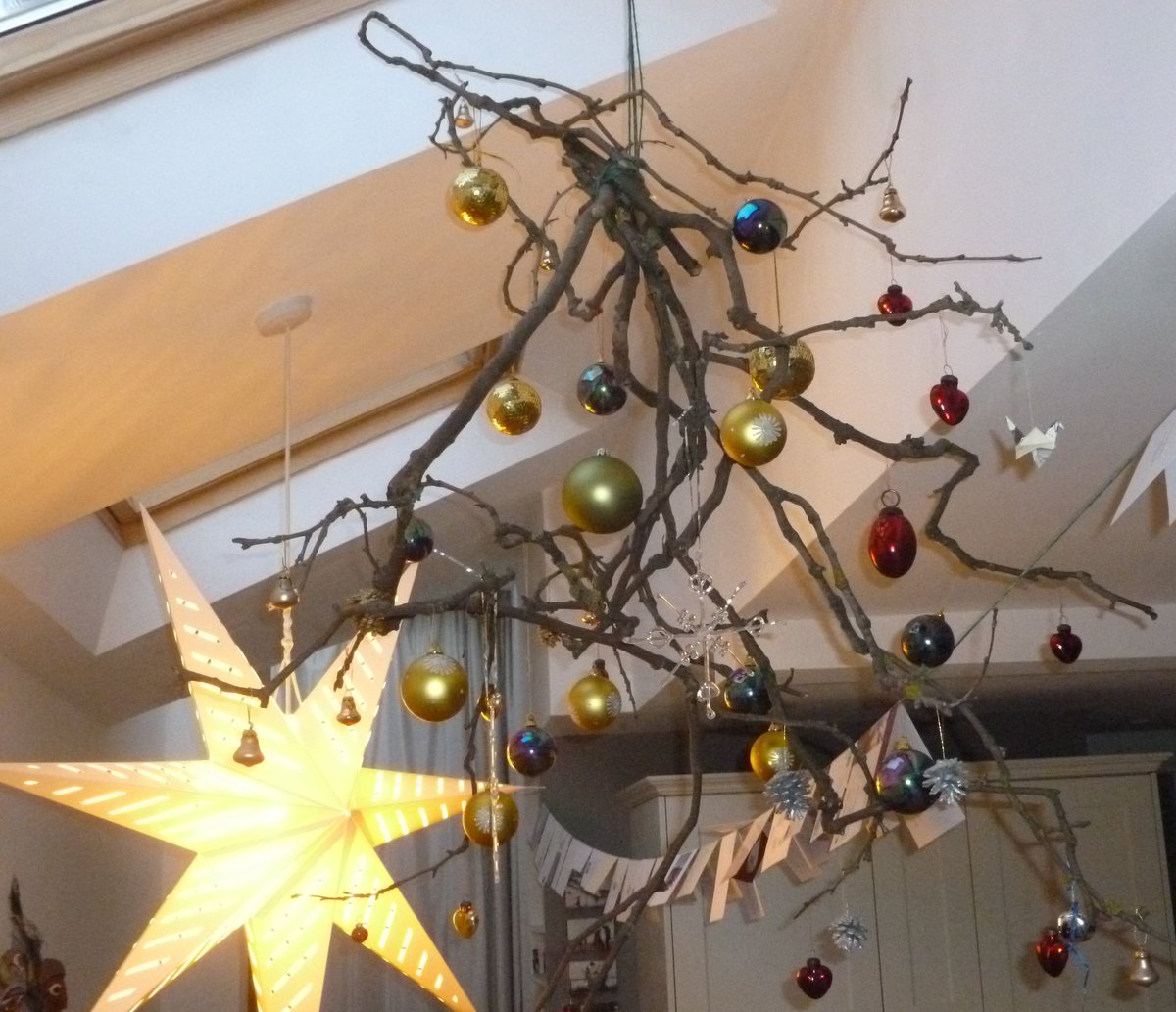
    Beautiful Christmas trees from autumn windfalls no need for deforestation! Just add baubles Try it in 2016 #Tooting
    Embedded image permalink

    Tweet 3 – 28th Dec 2015
    Top Christmas Tip: Recycle your wrapping paper for next year & cut up your cards to make gift tags! #recycle #reuse #Tooting

    Tweet 2 – 27th Dec 2015
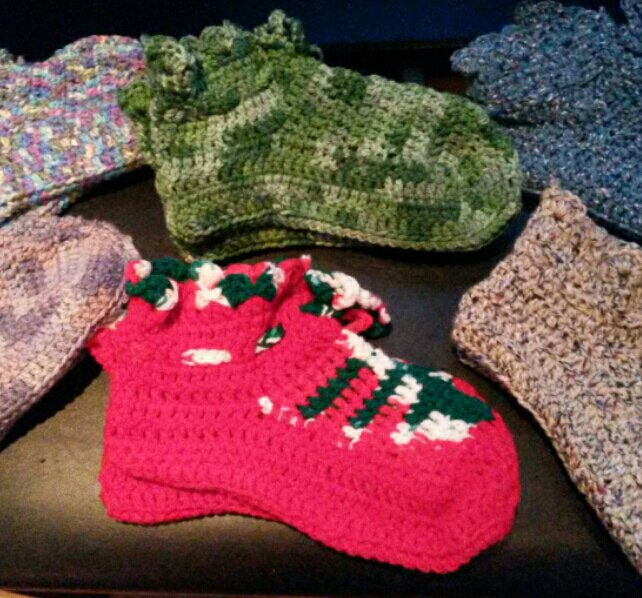
    Hitting the sales? Check out these ethical brands http://ow.ly/3yFfrH  or stay in & knit booties like these!

    Embedded image permalink

    Tweet 1 – 26th Dec 2015
    1st of 11 Xmas tweets. Enough tv ad animals! Going out today into real wild #Tooting @WildLondon @wearewildthing @LondonNPC @TootingCommon

      Thanks for reading, and we look forward 
      to seeing you soon in 2016 
      – in person (or on Twitter!)
       

  • People’s March for Climate – This Sunday 29th November!

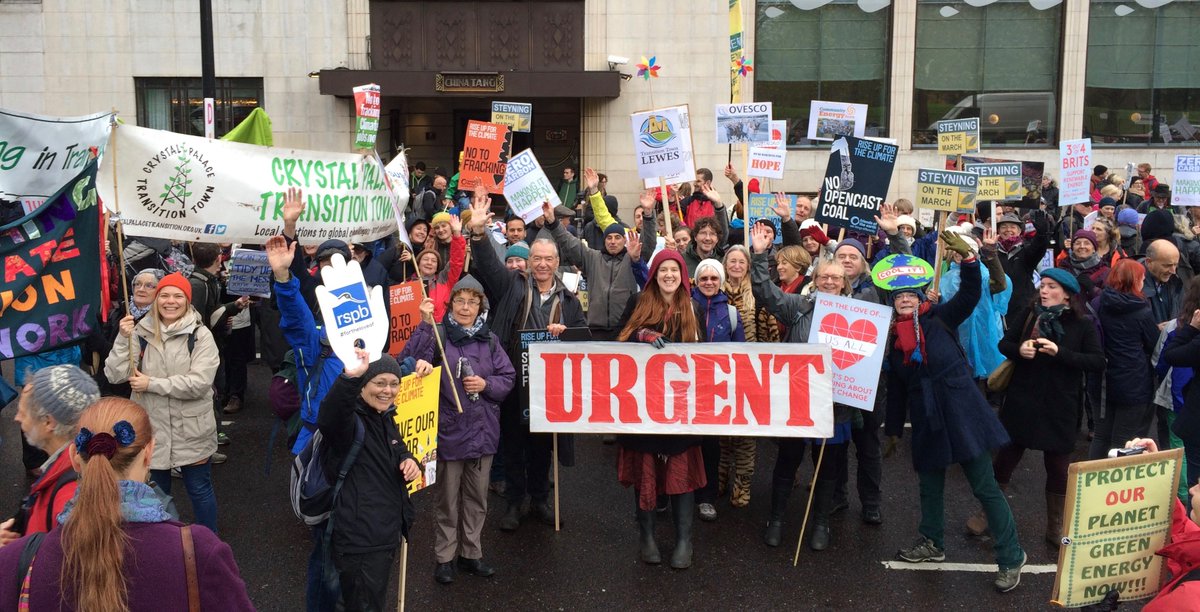
    TTT will be joining the Transition Bloc at the march, join us :
    11am at the entrance to Tooting Bec Underground Station on Sunday 29th November.

    More information from organisers, including a route map is on the Campaign against Climate Change page here

    This weekend marks the beginning of the 2 week International Climate Conference in Paris called COP21. As we all think about recent events in Paris and wish for peaceful resolution to conflicts the world over, the City hosts the World’s major leaders with hope to gain Global agreement to cut carbon emissions and prevent run away climate change.

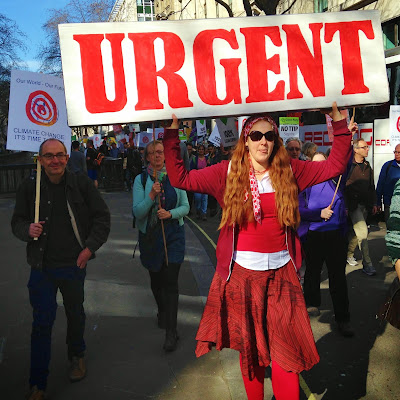
    Our very own Jeni Walker at a similar march earlier this year

    This is the largest scale of negotiation on Climate Change mitigation and, if successful, has the highest possible positive impact for the future of us humans on this Planet we call home. However, politics is a tricky business with competing motivations and historical contexts, not to mention very well funded lobbying from those businesses that don’t want limits on carbon emissions.

    We must let those politicians know that we, the people, care. 
    Care that they go to the table with open minds, care they think about the long term, not the few years to the next General Election, care that they listen to the scientific evidence alongside the human suffering that comes from ever more frequent extreme weather events.

    You can read about our experience at the march earlier this year here

    And think about the reasons why you might want to march here

    Hope to see you there, Richard and TTT gang.

  • ‘The future is dappled in the present’: green sky thinking now

    This post is a round-up of eight imaginative projects and developments that are happening now, in Tooting and beyond
    It’s a selection of what we’ve spotted in the past month.

    My title comes from Paul Allen of Zero Carbon Britain at the Centre for Alternative Technology, one of the contributors to Playing for Time (see below). Paul’s natural-world image means that the opportunities for making a sustainable future are all around us…if we look.

    We hope there is something here to catch your interest and inspire on the Bank Holiday. 
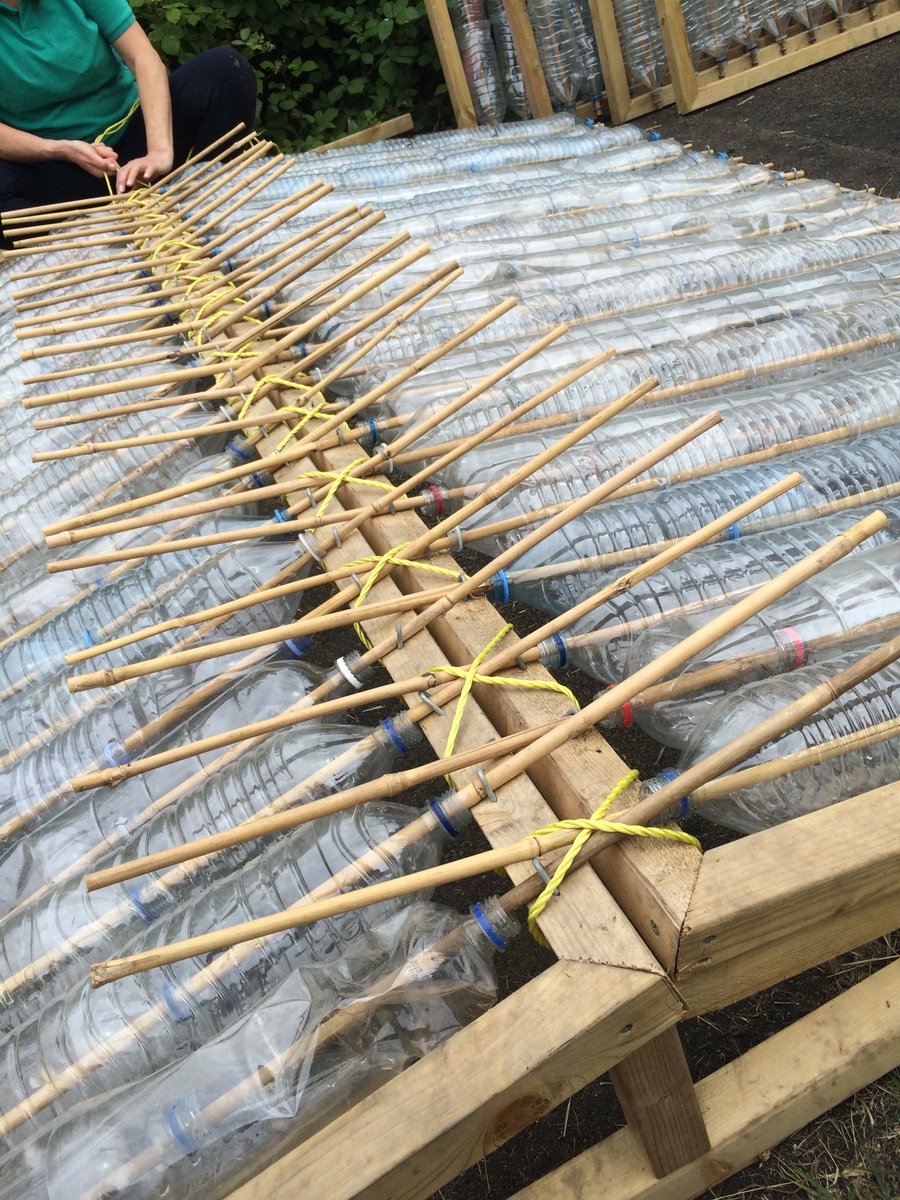
    (Plus, in three posts from last week: there’s our plastic bottle greenhouse to build in the garden 1200-1600 this Thursday and Friday, and then Restart and the first Tooting Field Day later in April.)

    Playing for Time
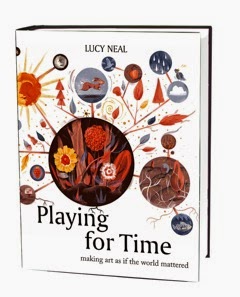
    Lucy Neal, who founded TTT in 2008, has been spending the past two years writing Playing for Time, her book about making art as if the world mattered.
    Playing for Time joins the dots between key drivers of change in energy, finance, climate change, food and community resilience – and offers ‘recipes for action’ for readers to try.

    It’s a wonderful collection of how artists round the globe are at the same time imagining the future and working in the real world on what matters to us all.  

    The book is not only for artists, and one of the points of the book is to encourage us to look out and across our silos of specialism. 
    Dip into the 400 pages…you’ll be hooked!

    It’s Lucy’s book, and it’s also a collaboration with sixty other contributors…so it’s a great representation of the spirit of joint action, connecting with others and local solutions that we can share as ‘Transition’ values. And yes, there is quite a lot about Tooting in the book!

    Playing for Time was published last week, and TTT blog readers can order the book from the publishers now, and get £5.00 off the price.
    To order, enter this discount code: ONPFT2015 at Oberon Books.
    Offer valid until 31 Dec 2015…but no need to wait until then.

    2  Energy from the kinetic force of footsteps (or footballers) 
    “My idea was a floor tile that would convert the kinetic energy from a footstep into electricity” says engineer Robert Kemball-Cook about his invention that provides off-grid power anywhere. It’s expensive now – but We are establishing a whole industry that never existed before.”  
    Read about Pavegen here

    3  Flexible pv panels
     Another engineer, Perry Carroll took ten years to develop a new kind of photovoltaic panel. “Solar is moving from being a hard, inflexible and one-colour product to being soft lightweight, flexible, and maybe multicoloured..” Read about The Solar Cloth Company here

    Strikketoget The Knitting Train

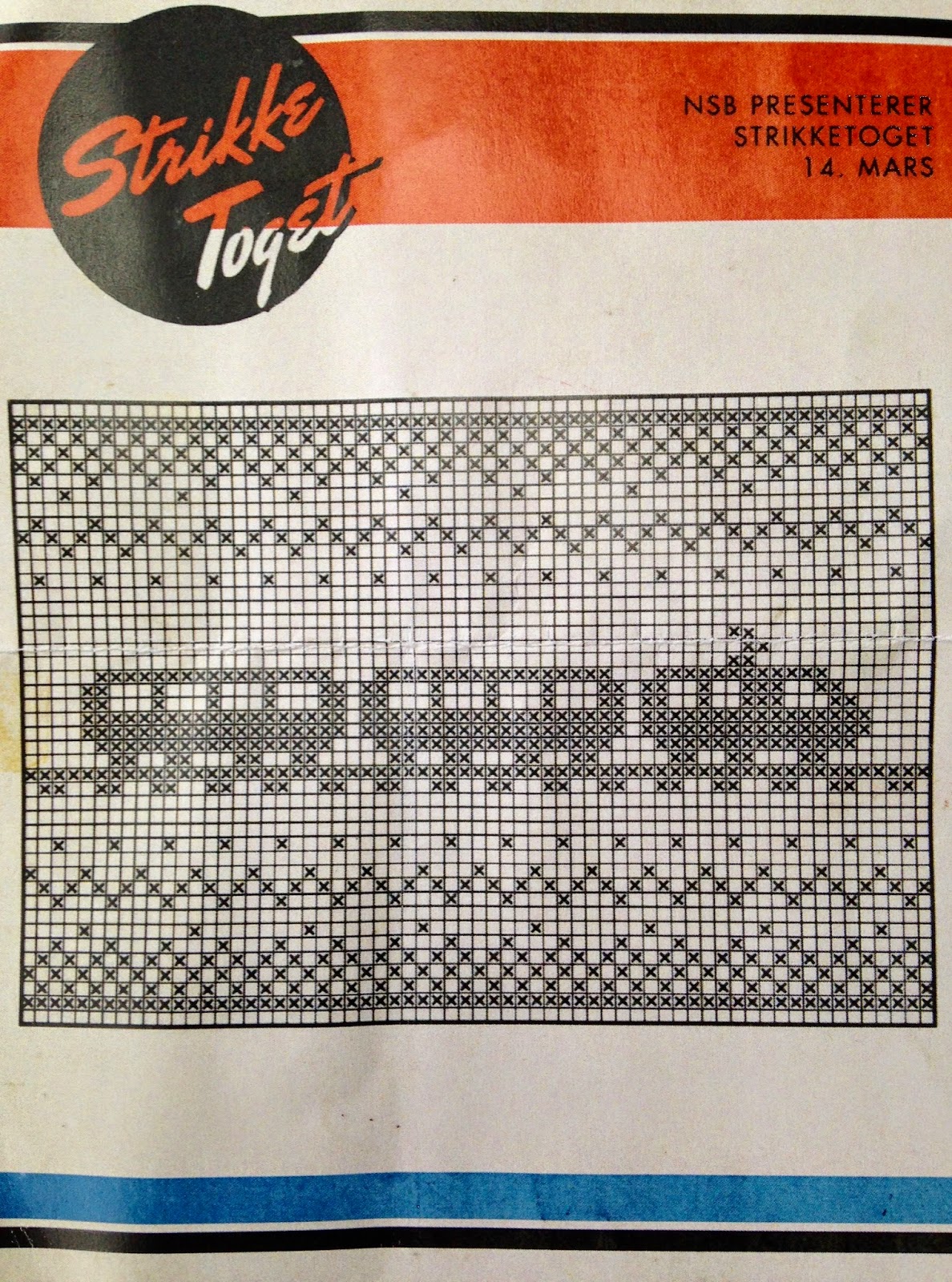
    On a four-hour train journey in Norway last week, I was invited to come to the knitting carriage: learn the skills as a beginner, or practice with new patterns; all materials provided; all ages getting together.
    The tagline: Lære noe nytt. Ta toget. Learn something new. Take the train.

    What could be offered to learn and enjoy on our trains?


    5  The Green Viking helps with composting toilets
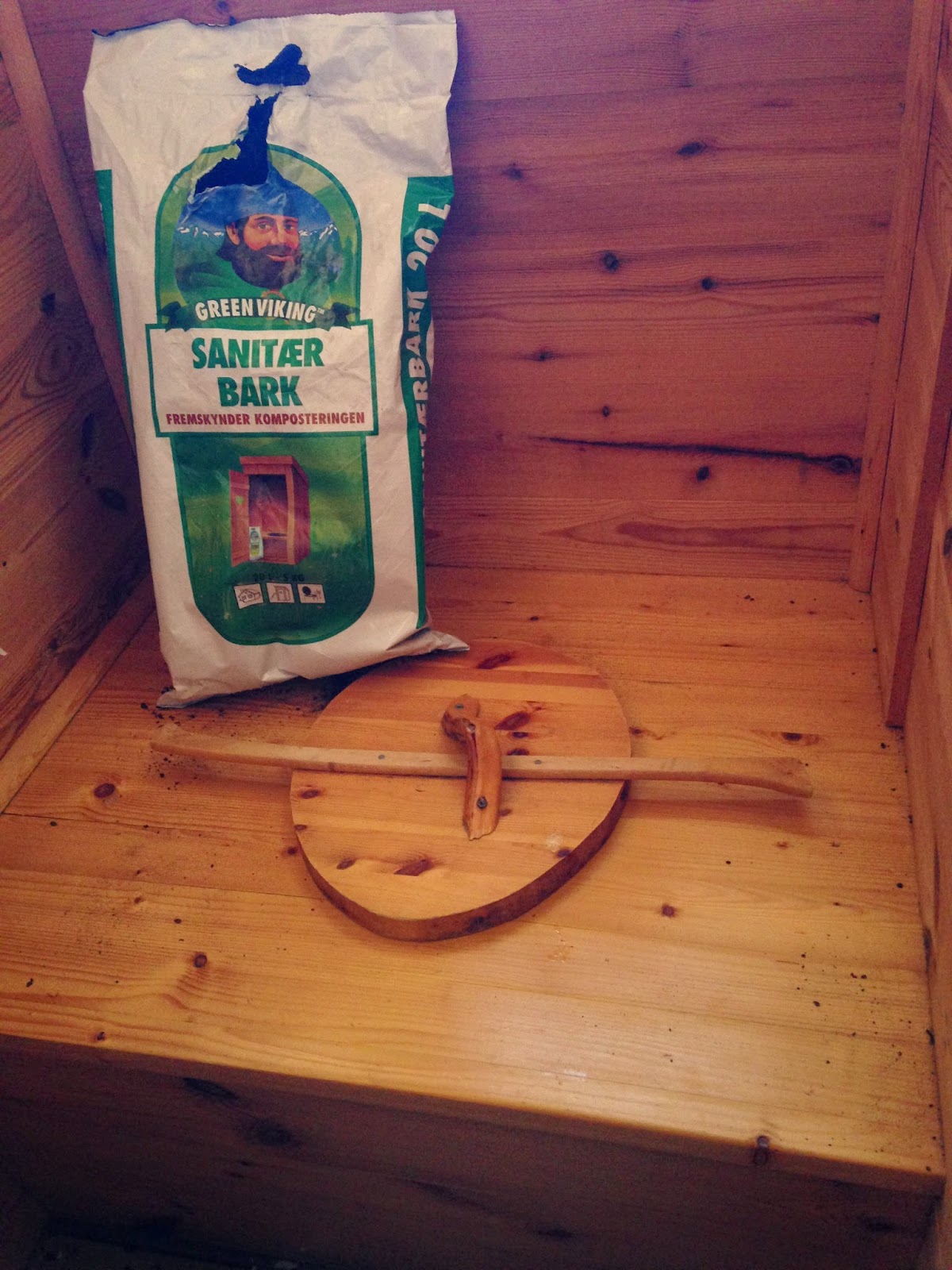
    That train journey led to a ski trip. There were composting toilets in every cabin. Waste bark has been re-purposed and repackaged by an enterprise in Sweden, to provide that magic Green Viking extra.

    In Bangladesh, the wonderfully-named ‘Value at the End of the Sanitation Value-Chain’ project takes the process to the next step, and finds gold at the end of the compost rainbow. 

    How can we be more creative about composting in Tooting?

    Solspeilet The Sun Mirror
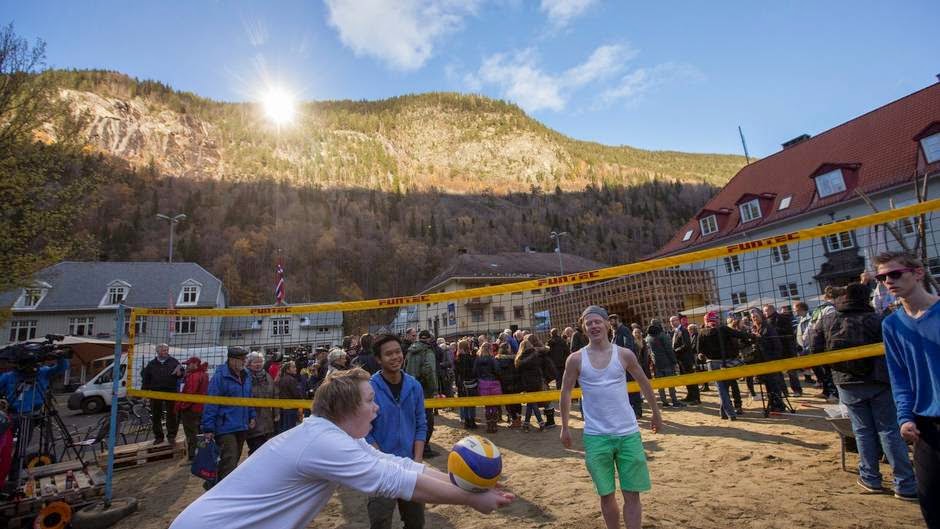
    The ski trip in Norway finished in Rjukan, where the Sun Mirror project conceived by artist Martin Andersen reflects sunlight into the town in its deep valley, which has no direct sun for half the year. Such a ‘simple’ idea.  

    What would we make in Tooting that could have an impact on social and personal wellbeing?

    7  Institutional fund divestment from coal, gas and oil
    You probably know about the global campaigns to get investors to divest from carbon-intensive industries… see 350.org’s Go Fossil Free .
    Last year the Rockefeller Brothers Fund decided to start a process of divestment from coal, gas and oil, saying “it is our moral duty to divest from fossil fuels”. (Yes, John D Rockefeller founded the oil empire that became ExxonMobil).

    Oslo City is selling the coal investments in its pension portfolio next month…which other cities will follow their lead? 
    Last week the Guardian Media group pledged to divest its £800m fund from fossil fuels. 
    And on April 1 it was reported that Jeremy Clarkson has experienced a conversion: he’s signed up with the Guardian to be a ‘poster person for the carbon-haters’.

    Three weeks ago the Governor of the Bank of England defended a Bank study which investigates the risk of an economic crash if action on climate change renders oil and gas assets worthless (because reserves will have to be kept in the ground to reduce atmospheric temperature increases). Corporate insurers might take a huge hit…will that send a signal to investors?

    Sophia McNab and ShareAction have invited anyone interested to join a meeting at BP’s AGM on April 16th, “to show investors that we want action on climate change”. Sophia led TTT’s session on personal pensions last December and you can contact her here to join in or get information about ShareAction’s ‘AGM Army’

    Back to Tooting, where we all have the potential to act, urgently and locally: 

    Re-used materials in a garden project
    Two colleagues from Tooting Outdoors are building garden raised beds with Year Four children at a local primary school.
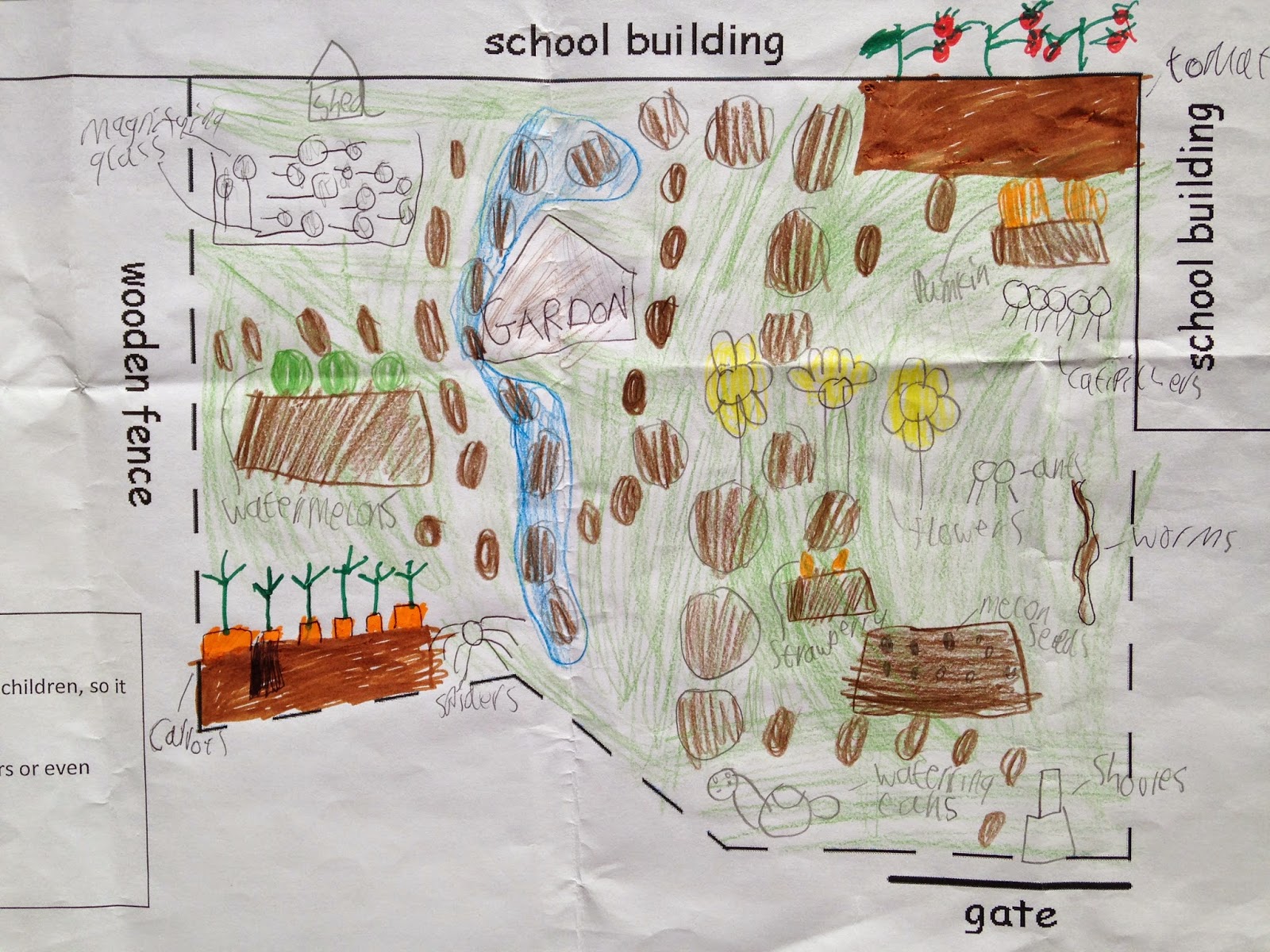
    One child’s vision for the garden
    This outdoor learning project is partly about making an empty space fruitful and delivering a useful outcome. It’s mostly about involving the children in the whole process from imagining what a school garden could be for, to measuring the site and building the beds using tools safely. 
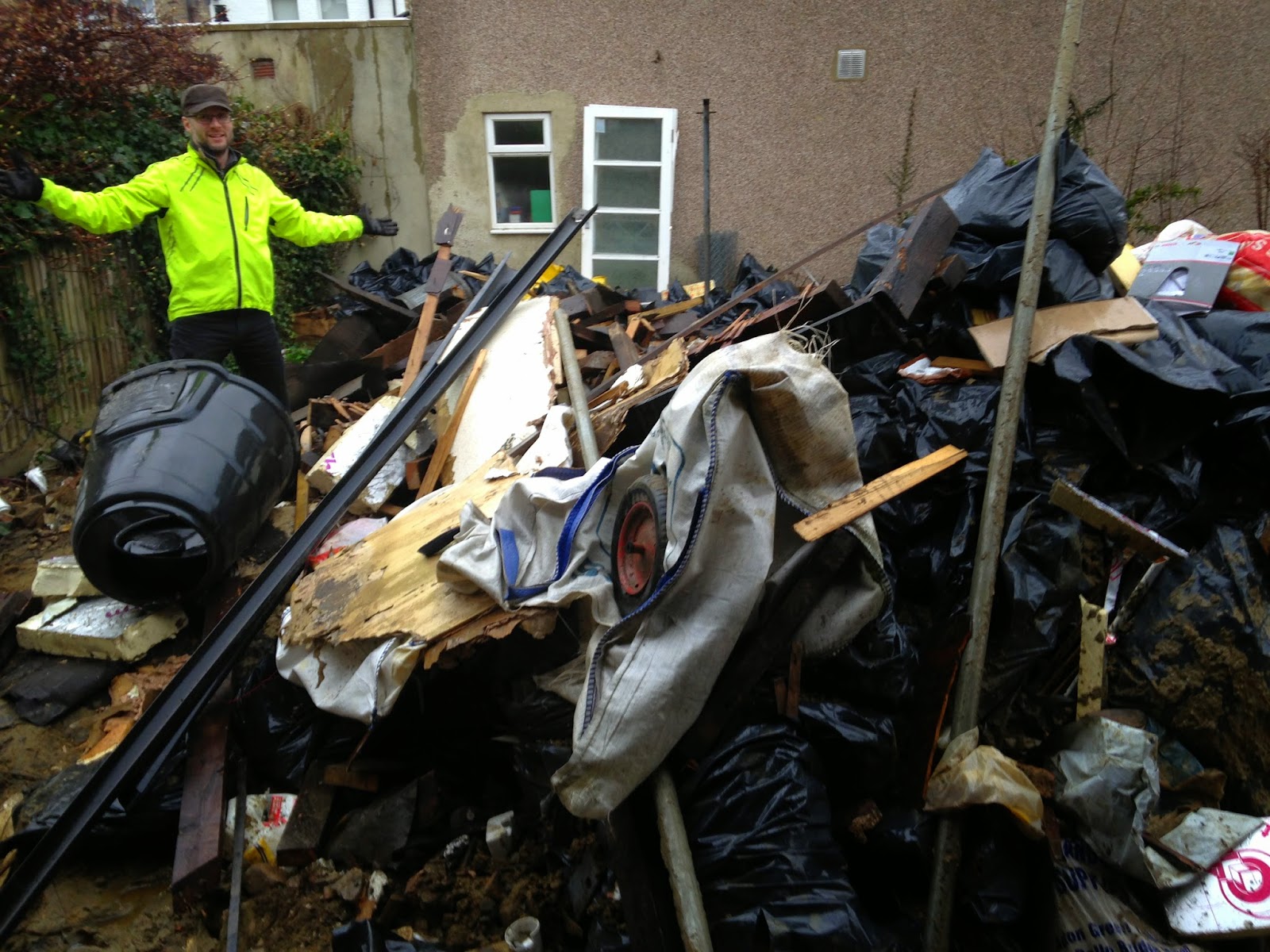
    Think of the carbon we are saving!
    All the materials are re-used / re-purposed, whether the topsoil in the beds or the timbers (100 year-old roof trusses from a house renovation in Tooting Broadway). There was a big time cost: de-nailing the timber took hours; but the ‘carbon cost’ was almost zero. The wood has paid its carbon dues.

    What ‘waste’ can you see in Tooting that could have a valuable second and low-carbon life. 
    How could we set up a service to support that?


    Thanks for reading
    We’re sharing these to encourage us all to imagine what’s possible, and to experiment with positive ideas and creative new ways of working – personal, social, environmental, and economic.   
    These diverse examples aren’t described in detail….all welcome to join a TTT meeting if you have some ideas you’d like to share to explore local sustainability in more depth.  – Charles