
For those of us in North Tooting (aka Battersea) there are Climate Emergency Hustings tomorrow hosted by journalist Michael Crick. It would be great to do something similar in Tooting constituency.
For those of us in North Tooting (aka Battersea) there are Climate Emergency Hustings tomorrow hosted by journalist Michael Crick. It would be great to do something similar in Tooting constituency.
 |
| https://skepticalscience.com |
The impact of global warming denial cannot be underestimated, with plenty of vested interests, for example those corporations that benefit from the continued burning of fossil fuels or cutting down of forests (and there quite a lot of them), keen to invest in putting a dissenting point of view out there. With media coverage often seeking to put both sides of a story, a vocal minority with no scientific backing can get their views amplified. The skeptical science blog for example, referenced in the Guardian article, shows that in 2018 despite near total scientific consensus, the public perception that there actually is a scientific consensus for AGW was only around 50%!!!
There are plenty of reliable sources that support this view. The NASA website lists loads mainly in America, but they are apparently under pressure from vested interests to remove this information.
The Intergovernmental Panel on Climate Change has been clear for some time on the subject:
“Human influence on the climate system is clear, and recent anthropogenic emissions of greenhouse gases are the highest in history. Recent climate changes have had widespread impacts on human and natural systems.”
(From Summary for Policy Makers 2014)
If you know any other reliable reviews of the subject or good debunking of denial, or even some persuasive denial (ha ha!) please do send TTT a link and we’ll be happy to quote it. DT
 |
| IPCC Graph |
Fracking involves the high-pressure injection of ‘fracking fluid’ (water, sand and a cocktail of chemicals) into the ground to create cracks in deep rock formations with the goal of extracting fossil fuels that may lie there, in the Lancashire case natural gas. It’s bad enough that fossil fuels lead to climate change and the associated disasters for humanity and the planet, but this special type of extraction can also involve the risk of earthquakes, toxic chemicals, water pollution and poor air quality[3].
 |
| source: Friends of the Earth |
On the BBC’s Today programme the Chief Executive of this life affirming operation, Francis Egan, was asked whether he would be quite happy to have a house on the site with his children breathing the air there and he replies “yes of course” (podcast here about 5m 55s in). What a great idea!
Surely this should be a mandatory condition of the granting of any fracking licence? Namely that the chief executive, indeed why not all senior executives of such a company, commit to raise their families beside fracking sites so that they too can benefit from the clean air abounding, discover new unusual chemicals and marvel at the array of visiting industrial vehicles, as well as anticipate the excitement of a potentially rumbling landscape plus aftershocks. I’m all for it but I wonder if Mr Egan and his ilk really would be?! Methinks not, it is others who must take such risks for the sake of their profits. But maybe I’m too cynical. What’s your fracking opinion?
Resources:
1. More on fracking from the Guardian
2. Anti-fracking with Frack Off
3. Fracking facts from Friends of the Earth & Greenpeace.
4. In America meanwhile you can even light your own methane laced water
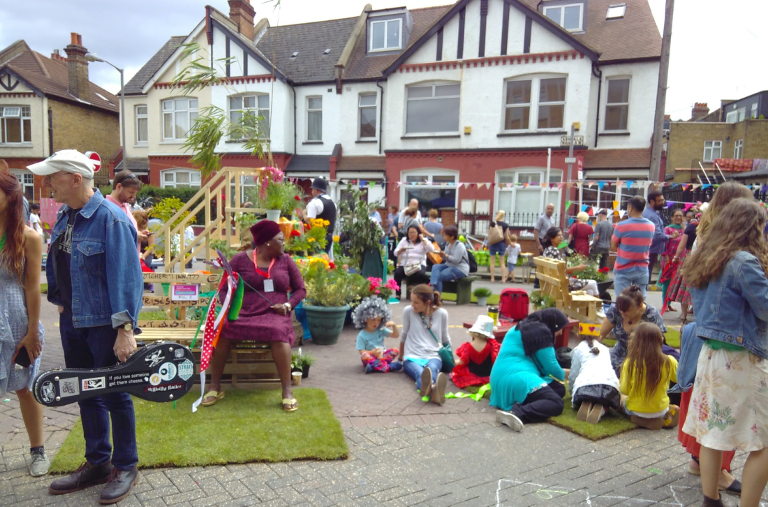
In July 2017 we transformed the bus turning circle in the middle of Tooting into a pop up village green!
[catlist tags=tooting-twirl thumbnail=yes excerpt=yes posts_morelink=”Read more…” template=perfectlist]

TTT are proud to have been able to contribute to this valuable piece of work, hosting and facilitating community conversations, mainly in 2015, about the increasing risks posed by localised heat in cities – including neighbourhoods like Tooting – in our warming climate.
Cold weather challenges are much better recognised by most of us, including health and social care professionals, in terms of individuals’ vulnerability. So it was useful to be part of research showing that urban overheating is a significant risk, and we can take action to reduce its impact.

We commenced the project in a cold spell in winter two years ago, when the priorities seemed very different. It was hard to visualise that later the same summer we would hold a workshop near Tooting Broadway on the hottest day of 2015. Very appropriate!
Funded by the Joseph Rowntree Foundation, the Urban Heat project examined the potential role of the local voluntary and community sector (VCS) in the development of local climate resilience.
In Tooting the research engaged with over a dozen relevant community organisations with diverse services and areas of focus: health care, social care, low-carbon living, community development. A number of local individuals were interviewed as well. Finally, a group of Wandsworth local authority and statutory organisations also explored the impact of Urban Heat.
To read our past TTT blog posts about the whole project since its inception, please click here.
Other partners in the Urban Heat research programme explored the same topic in Hackney and in West London, all co-facilitating alongside the Policy Studies Institute team.

Finally, the Joseph Rowntree Foundation funded a sister research project at the same time, about ‘Climate Resilient Communities’. This was developed in the context of local flooding in the Scottish Borders, mostly rural, but much of the experience and lessons are relevant to all communities working proactively with practical climate challenges. We’ll share that report when it is published.
 |
| Components of agricultural water footprint (from SAB Miller and WWF, 2009) |
Some of the effects are obvious: more carbon emissions, fewer carbon sinks, excess water usage, changing climate. Taking just one of these factors I’m amazed to see that according to Mekonnen and Hoekstra (2010) the water footprint of bovine meat is 15,415 litres of water per kg, compared to 322 litres/kg for vegetables. For beef cattle 98% of the water used up is with respect to their feed.
For more info on Vegetanuary, check out the facebook group.
 |
| Chuck’s Vegetarian Risotto Tonight |
 |
Some vegetables, yesterday |
Not eating meat and what it means, touches on so many of the environmental issues that TTT has tried to tackle over the years. Land and water use, global warming, animal welfare, population growth, the carbon cycle, the changing climate, human health and well-being all seem relevant. It sparked my interest. Then I saw an ad for veganuary on the tube, a campaign to encourage people to become vegan for a month. Could I, a lover of bacon sandwiches, lamb karahi, fillet steak and recently copious amounts of turkey join in with such an endeavour?
I think I can but… how? What will it be like? What about fish? Is anyone else out there interested? There’s only one day to decide … DT

In 2016 we staged the Tour de Tooting combining fun, wellbeing, cycling, wheel mechanics, health and quieter, greener streets to celebrate the wheels in our lives with a parade through the centre of Tooting.
[catlist tags=tour-de-tooting thumbnail=yes excerpt=yes posts_morelink=”Read more…” template=perfectlist]
 |
| BATCA Hero Hilary |
It was a good night for TTT and our partners at last night’s BATCA (Balham & Tooting Community Association) Community Heroes Awards. Our Rooting in Tooting colleagues at CARAS (Community Action for Refugees & Asylum Seekers), won a Team Award, while Hilary Jennings ex-co-chair and key player in TTT since 2008 was a highly commended hero(ine).
 |
| Eleanor Brown, CARAS Youth Services Co-ordinator, with Hafsa and Waseem |
All the Community Award winners are listed in the BATCA press release – click here to read it.
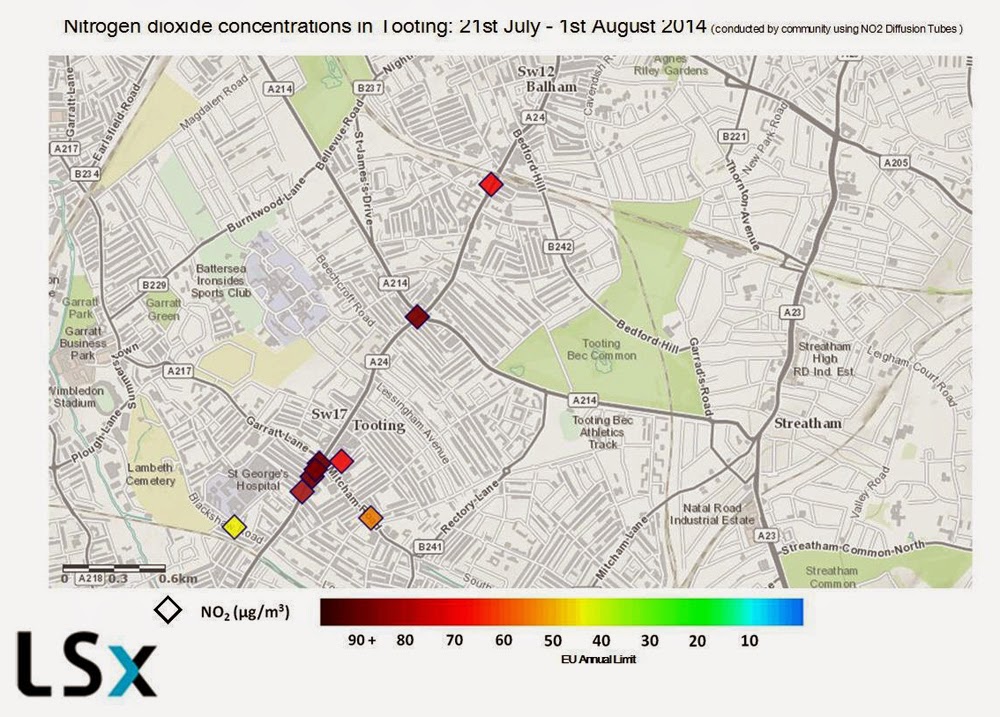 |
| The LSX data showing pollution In Tooting |
At the end of November we held a productive meeting about air quality in Tooting, organised in conjunction with Furzedown Low Carbon Zone, London Sustainability Exchange (LSX) and Battersea & Wandsworth TUC.
This meeting was organised on the back of the citizen science data collected in Tooting’s main roads earlier this year showing levels of NO2 three times the EU limits and PM10 levels twice the EU limit. Many thanks to the speakers: LSX CEO Samantha Heath, Gavin Steadman, Area Manager for the Environment, Wandsworth Borough Council (WBC) and local Labour councillor Rex Osborn, as well as to all those attended.
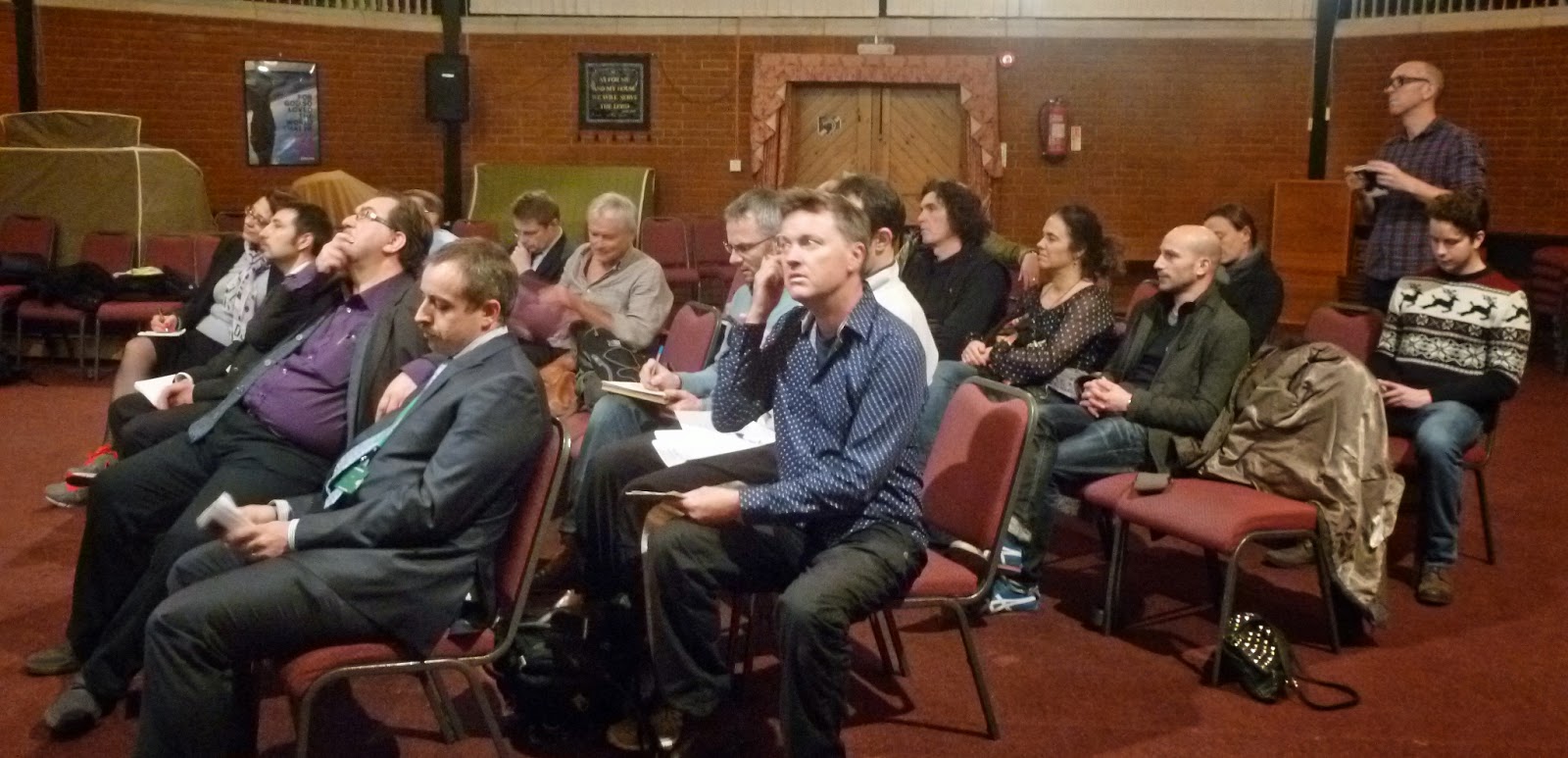
There was a great deal of data to unpick. We heard that an estimated 29,000 people die prematurely each year in the UK due to air pollution, double the combined effect of alcoholism, obesity and road traffic accidents. We also found out more about NO2, PM10s and PM2s (PM refers to Particulate matter 10 or 2 microns in diameter) and the effect they have on our health. For instance 80% of PM10s are caused by road traffic and have been proven to have a direct link to lung cancer. Meanwhile we hope to facilitate giving local residents an opportunity to contribute to WBC’s Air Quality Action Plan due to be put out for consultation in January 2015. We look forward to this and other developments to improve Tooting’s air quality in 2015.
A detailed report on the meeting can be read here while Samantha Heath’s presentation can be accessed here.