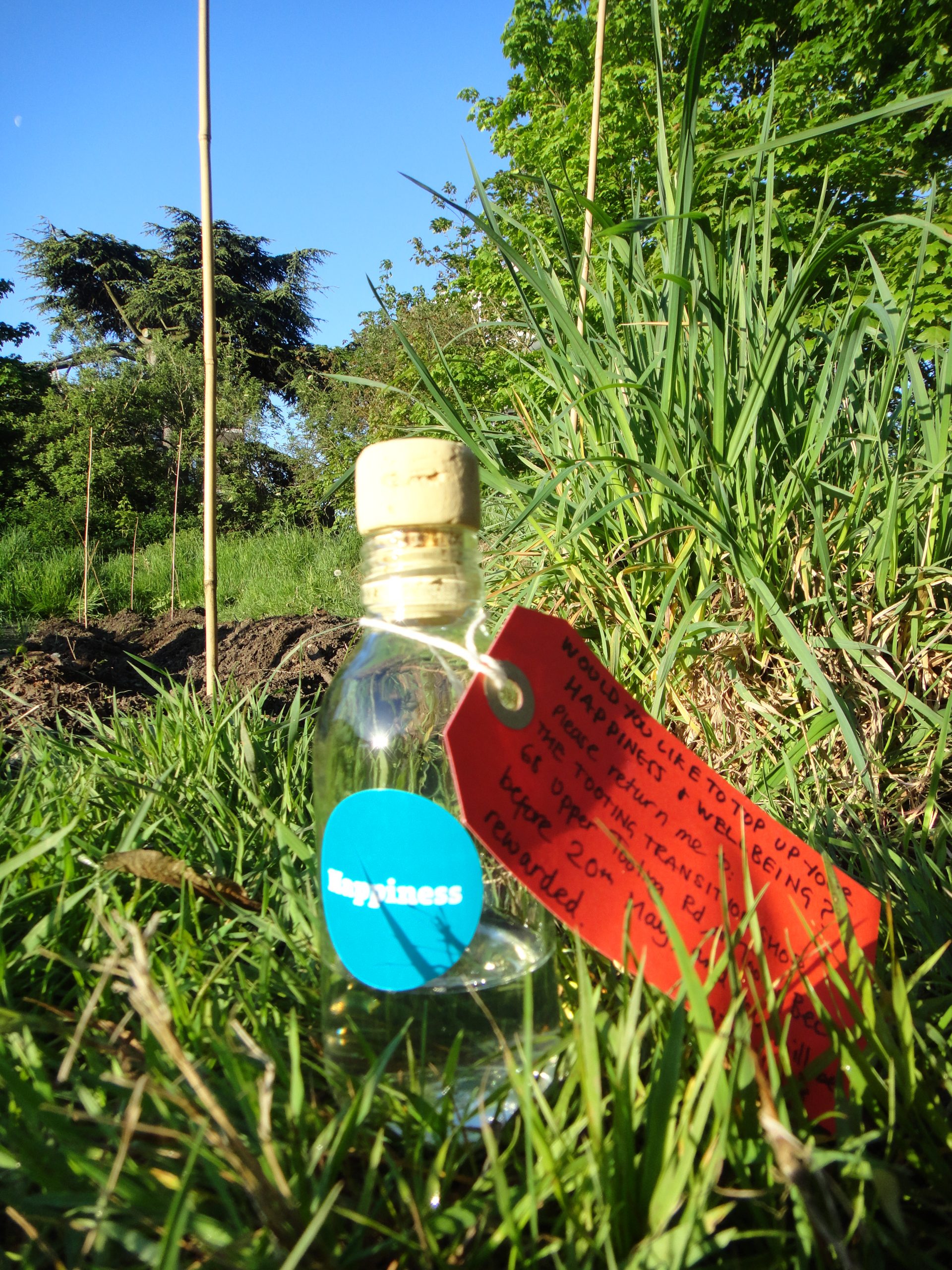
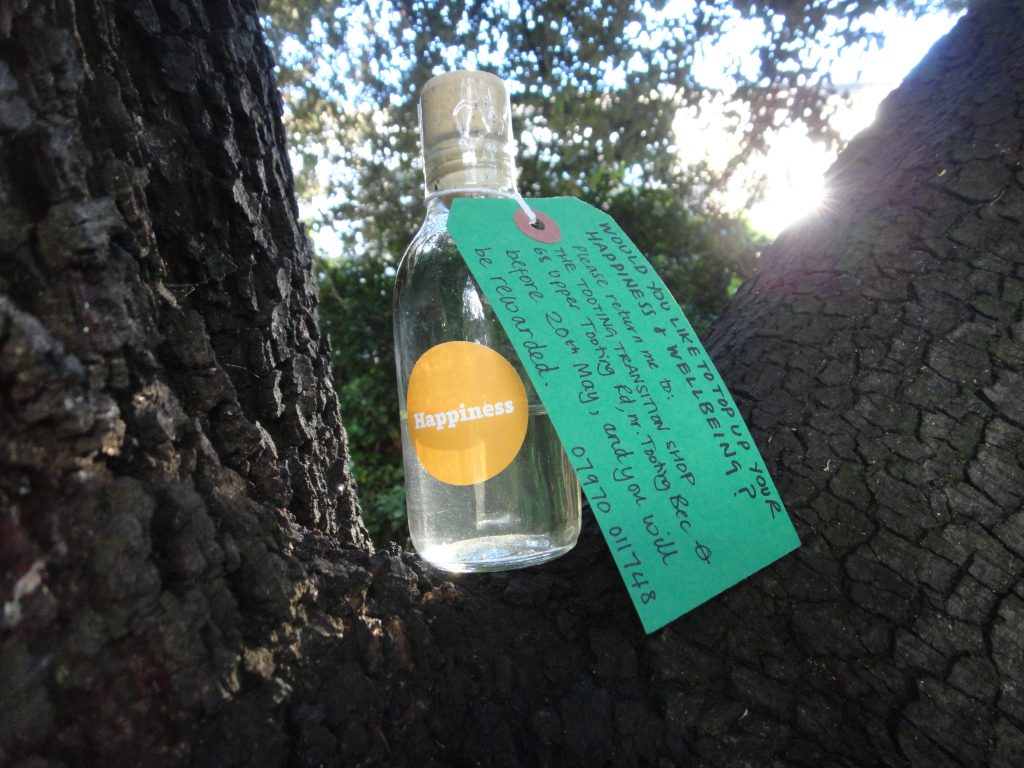
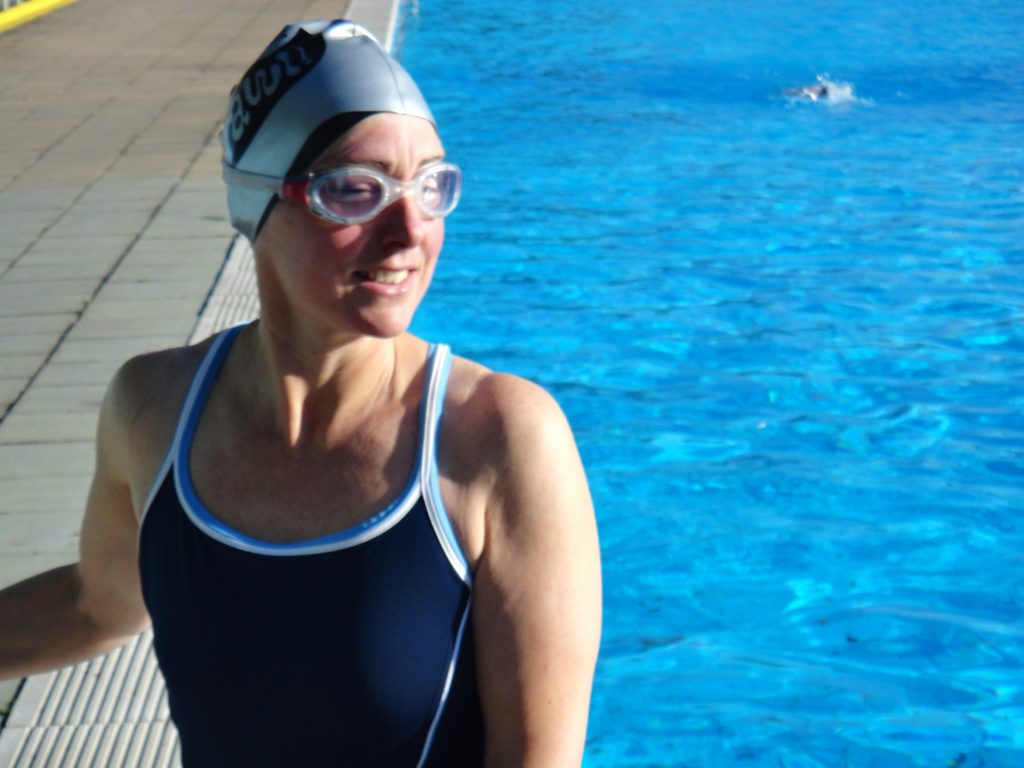
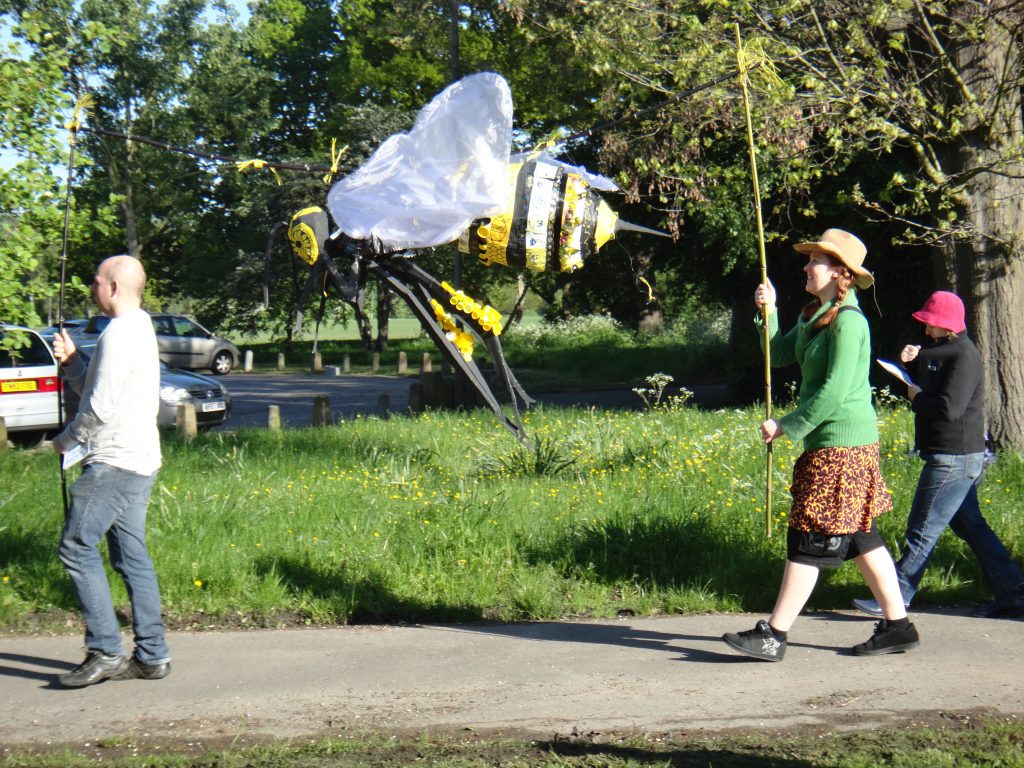
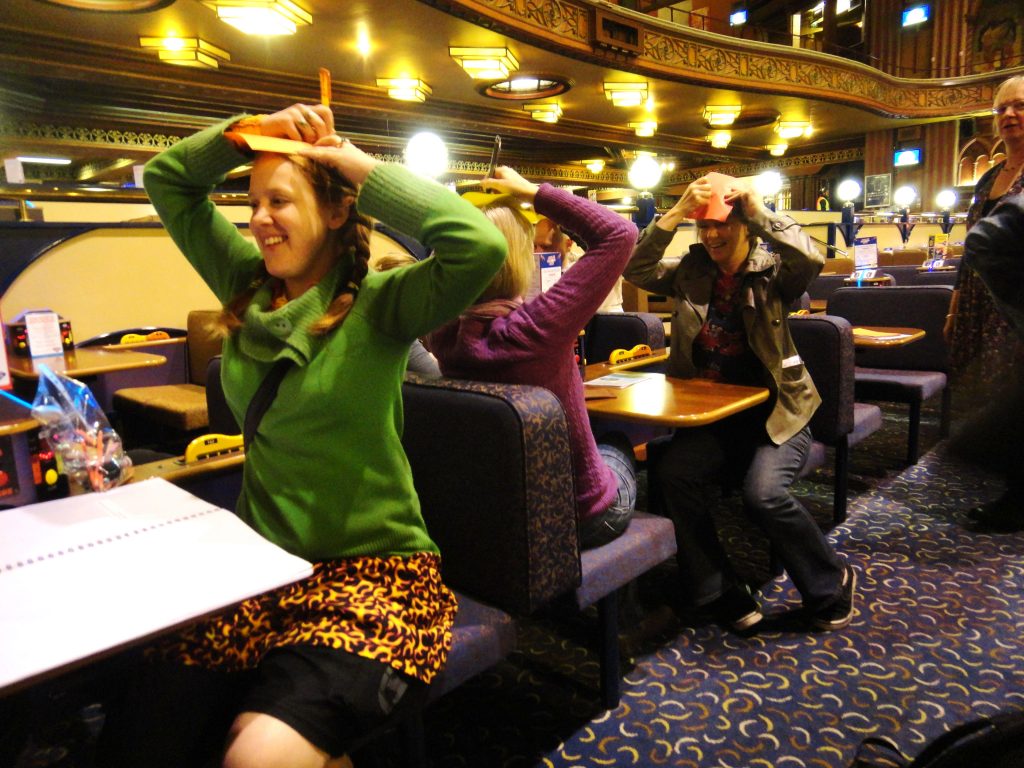
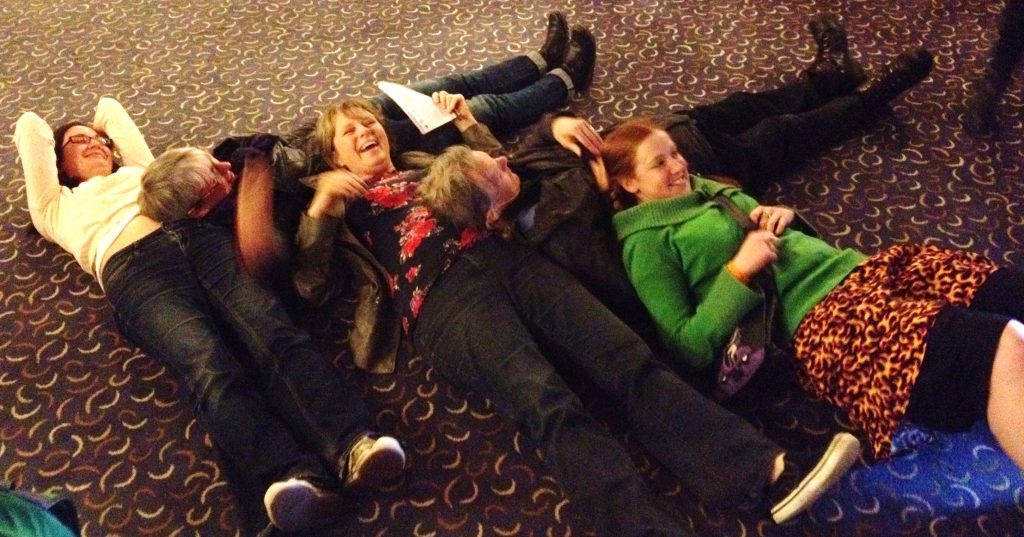
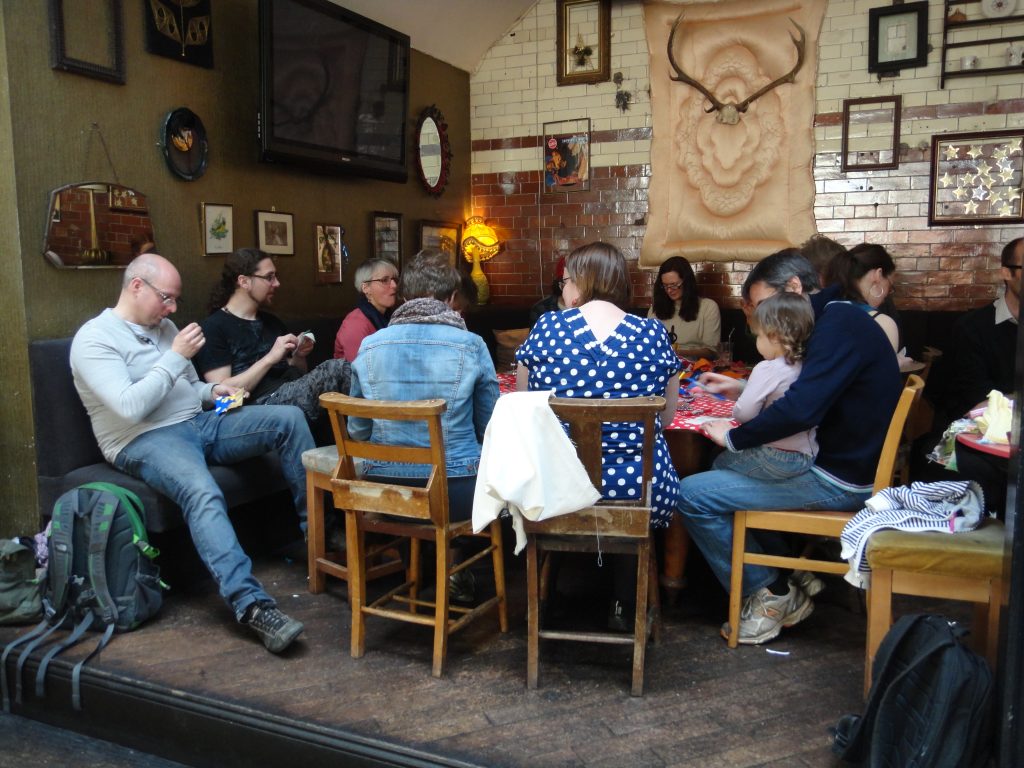
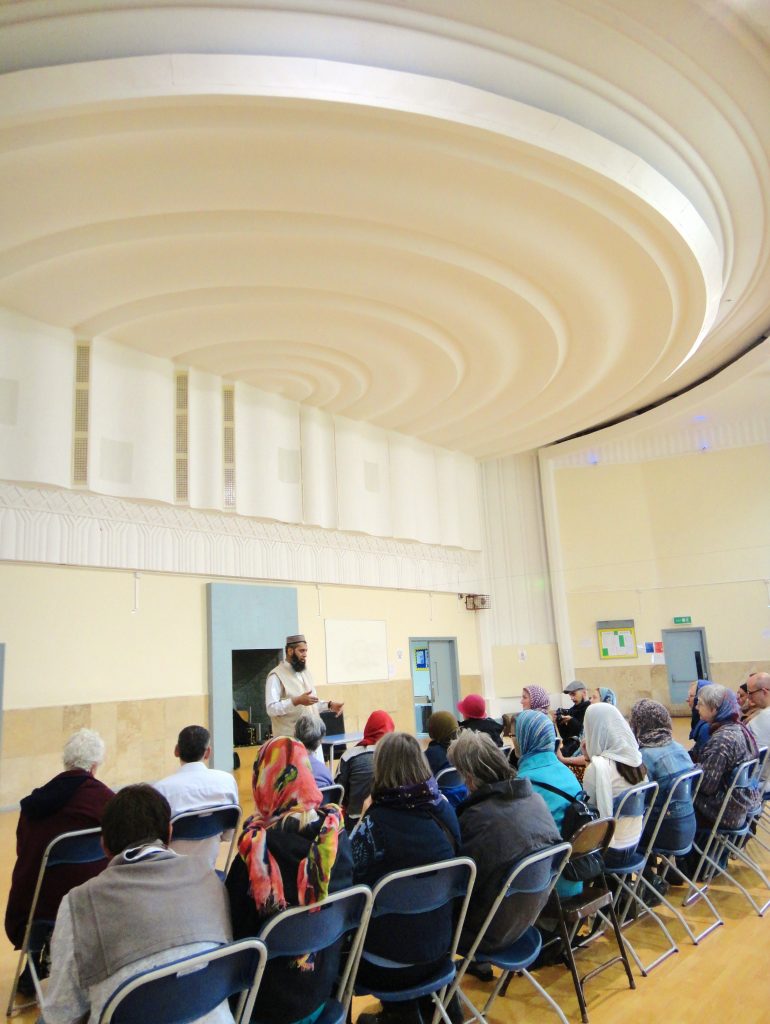
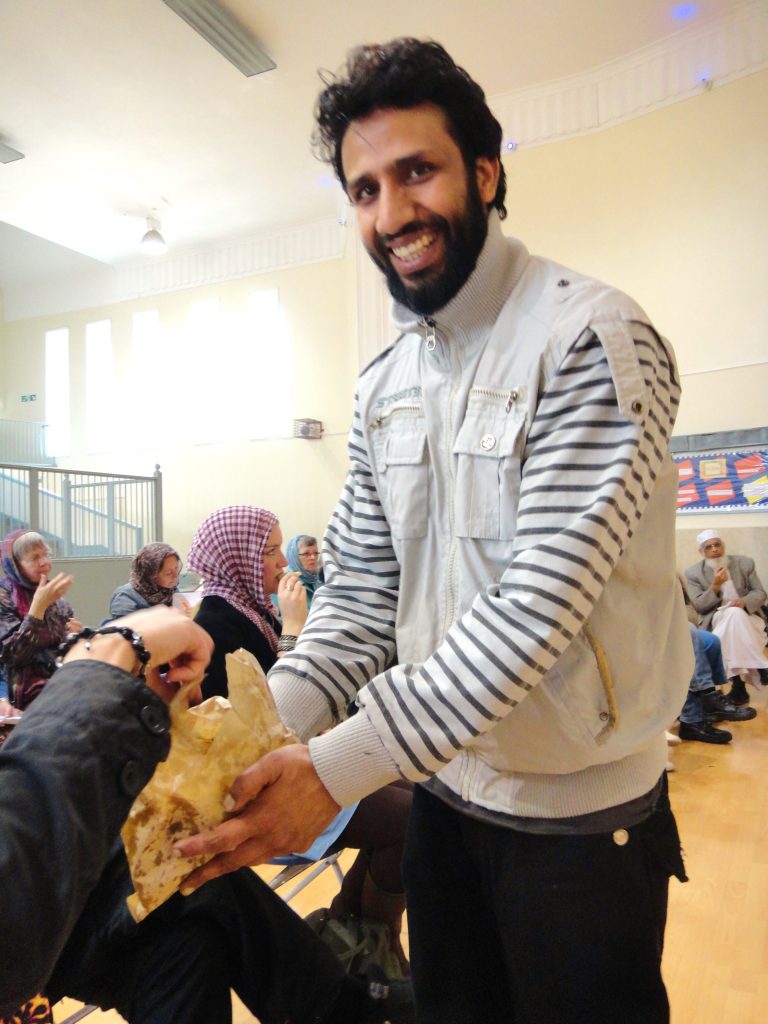
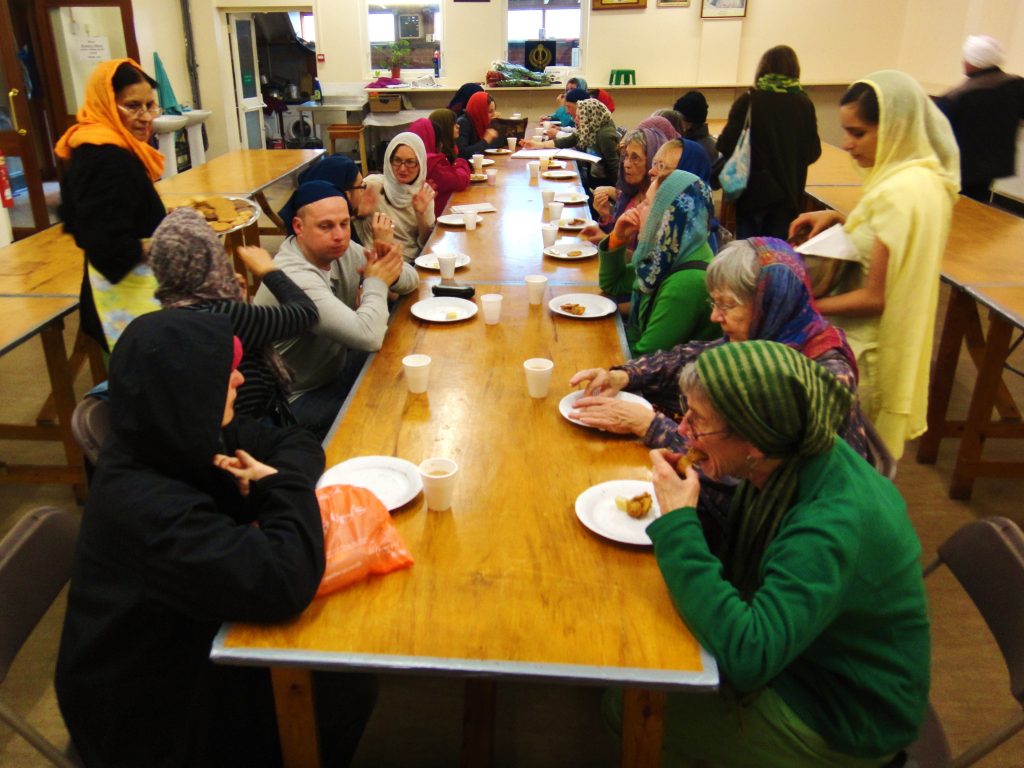
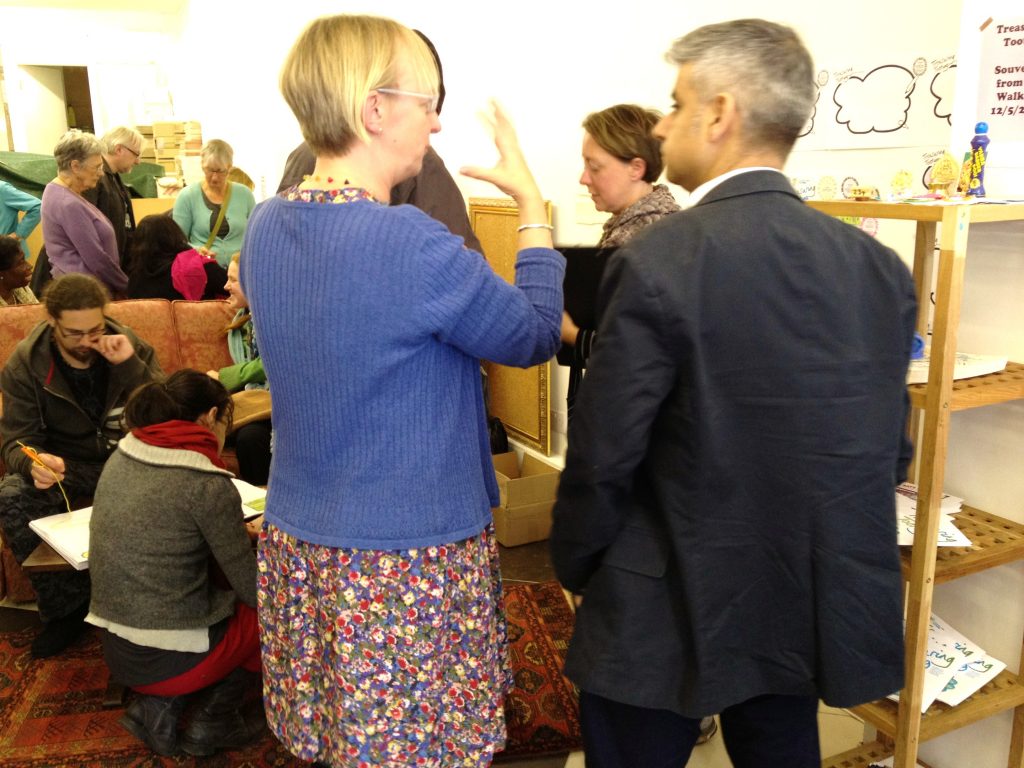
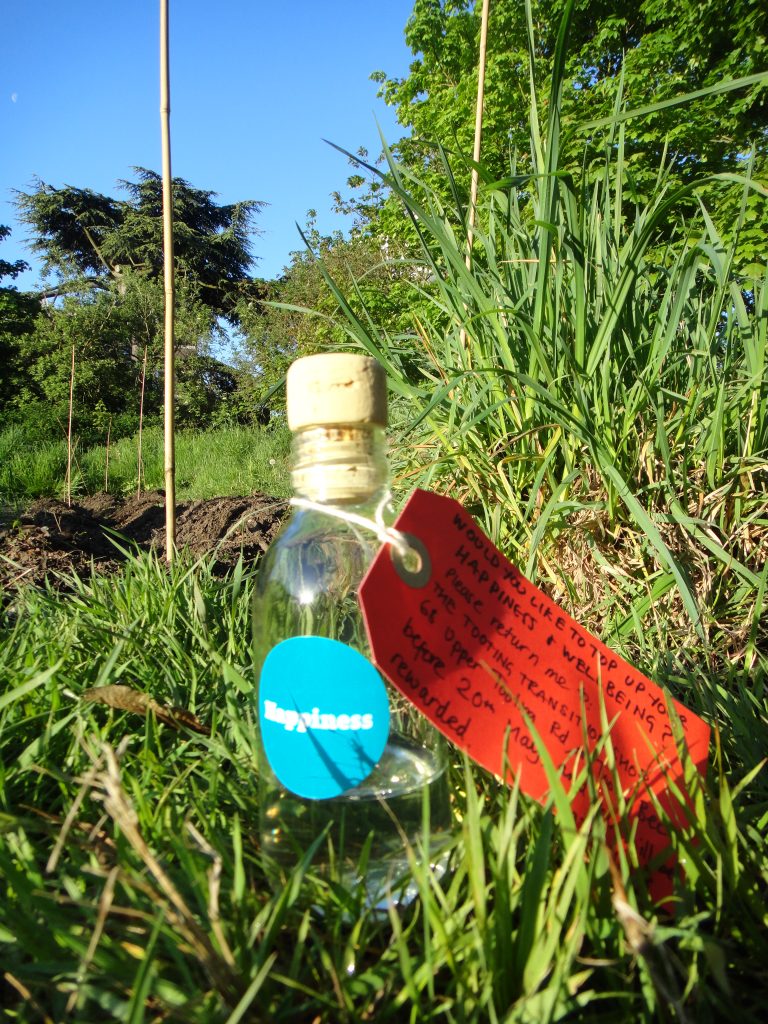
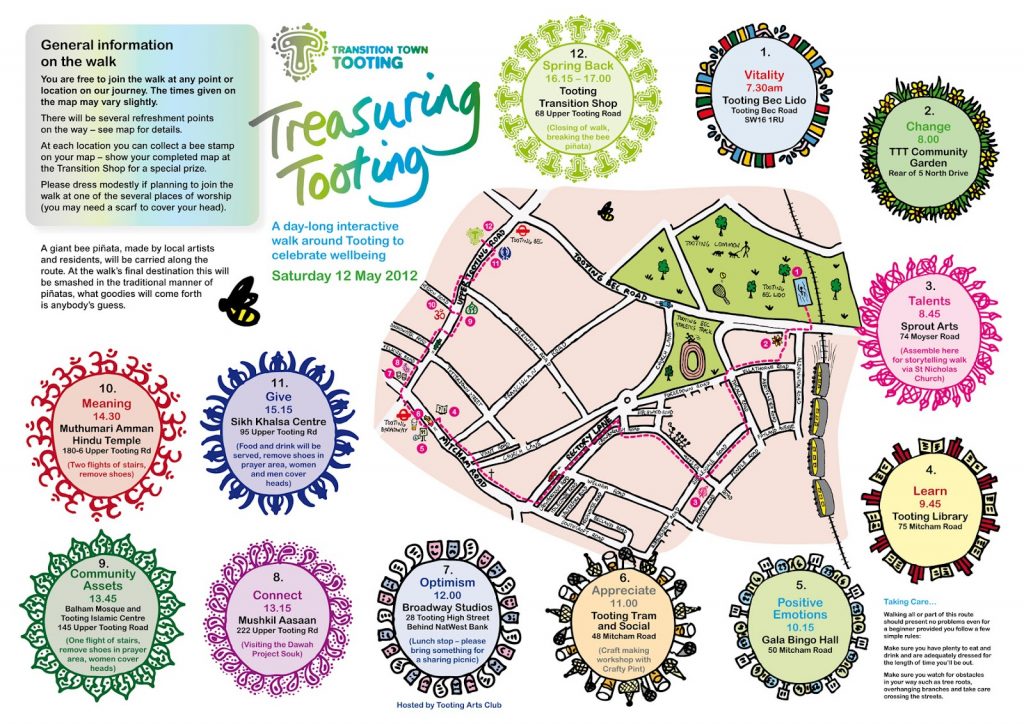
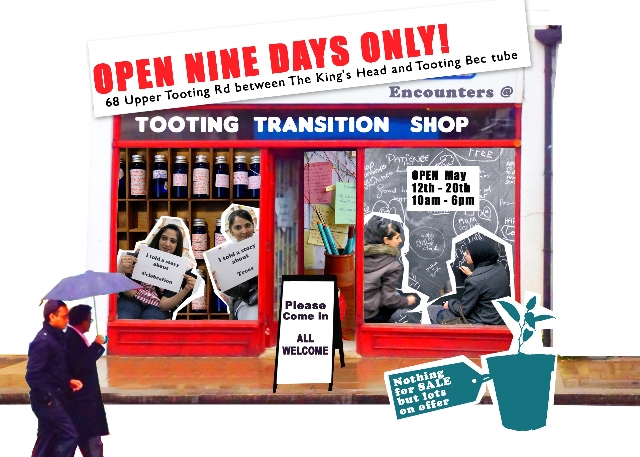
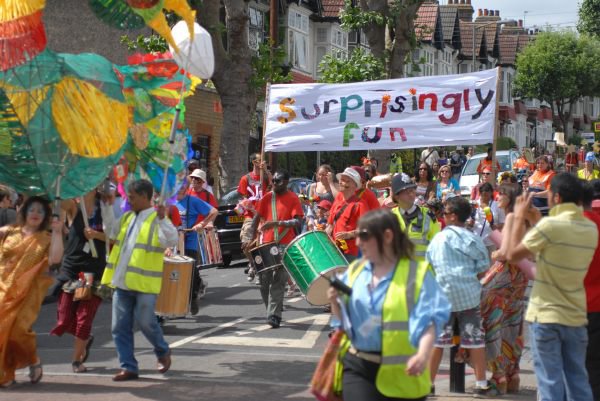
On a glorious sunny day in May 2012, Transition Town Tooting (TTT) held a day-long walk celebrating the places and things that contribute to our local wellbeing. The walk brought together two recurrent themes of Tooting transition: a ‘mobile’ approach to making local connections and a focus on community wellbeing.
Tooting stretches between and beyond two tube stations and along a major arterial road used by 10 million cars each year. Although the area has numerous spaces for education, faith, sports and other activities, there is no central communal shared space. We have numerous halls but no Town Hall, indoor markets but no Market Square, much green space but little centrally that is openly accessible. In the absence of a clear, shared ‘public space’, we have developed an often mobile approach to our activities.
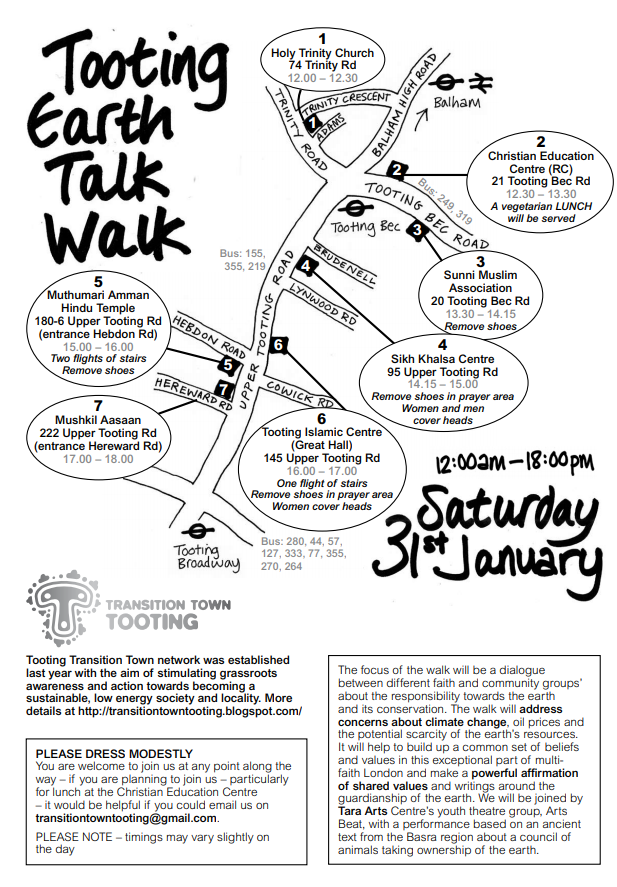
An early experiment was the Tooting Earth Talk Walk which visited seven places of worship at each of which a faith leader spoke followed by a representative of TTT. Much common ground emerged between Christian, Muslim, Sikh and Hindu teachings about man’s care for the earth, while TTT representatives spoke of their hopes and fears for the future.
At the same time in Tooting we have been seeking ways to introduce people to ideas of wellbeing as a way to build local resilience. Many transition initiatives, focusing as they do on people doing something active and constructive with their neighbours, report those involved feeling happier and their communities feeling more robust and more connected. In addition, research shows ‘happiness and fulfillment come less from material wealth and more from relationships; less from focusing on ourselves and more from helping others; less from external factors outside our control and more from the way in which we choose to react to what happens to us’ (Action for Happiness: 2012).
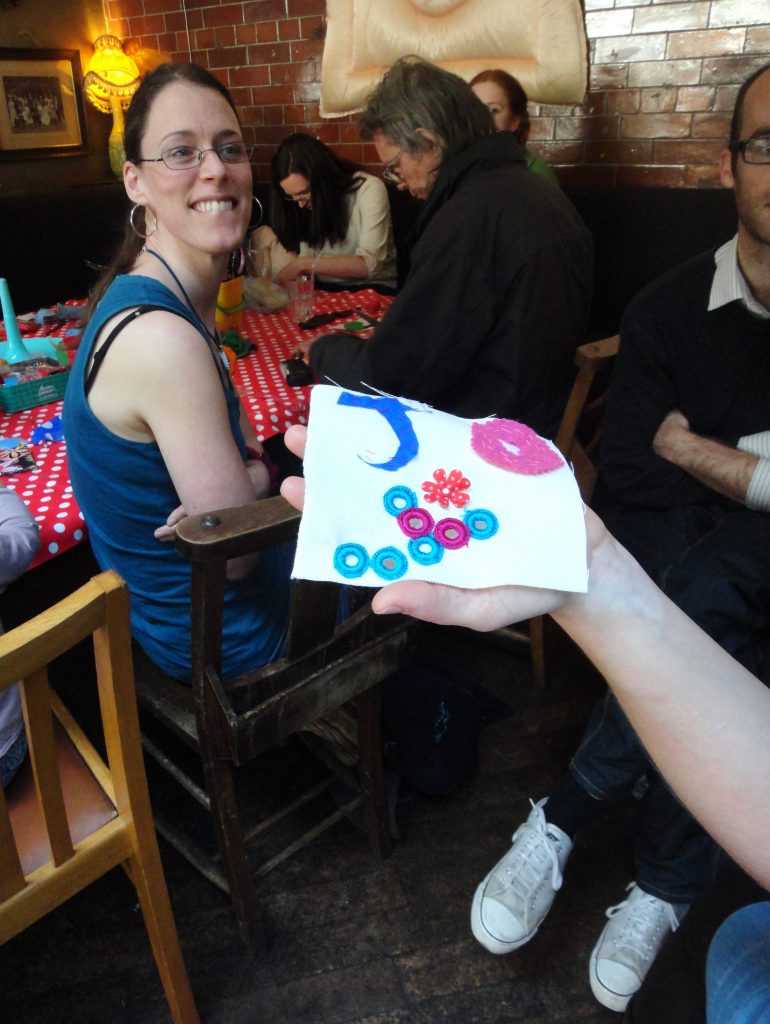
Bringing these themes together, our walk ‘Treasuring Tooting’ celebrated places and things that contribute to our local wellbeing. More than 60 local people joined us as we wended our way through 12 locations from the Lido to the Library, the Bingo Hall to the Market, the Community Garden to the Islamic Centre. At each a different aspect of our happiness and wellbeing was experienced and celebrated – through stories, making, talking, laughing, learning, planting and giving.
Below you can see images from the day as well as a map of the walk and a short video.
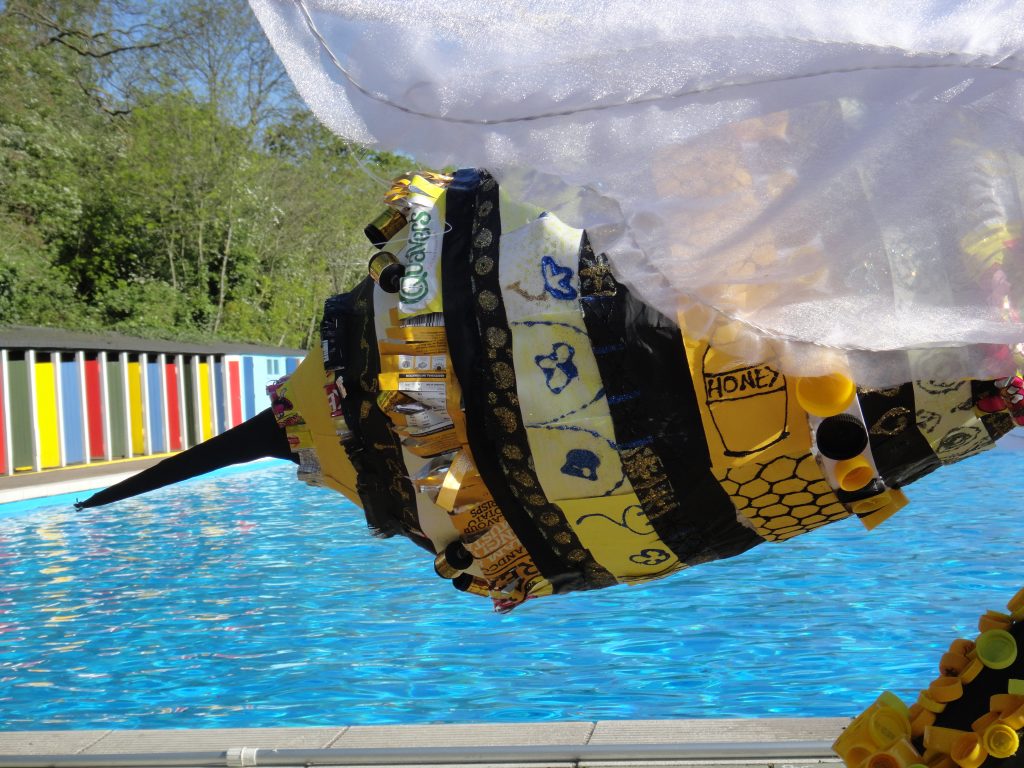
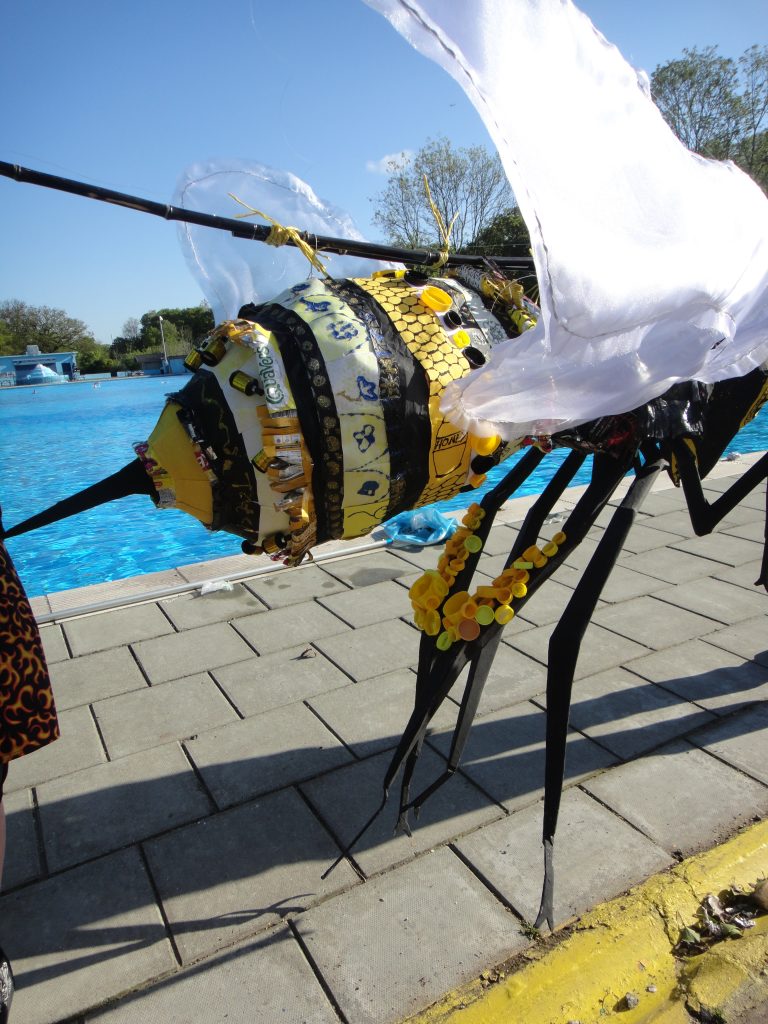
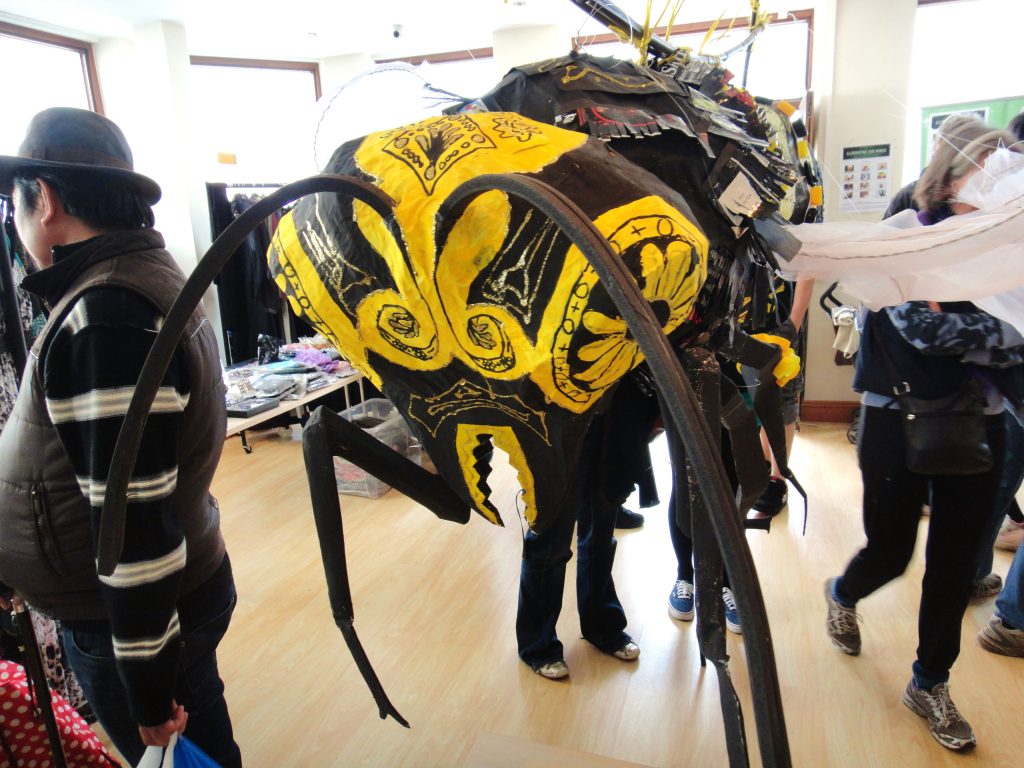
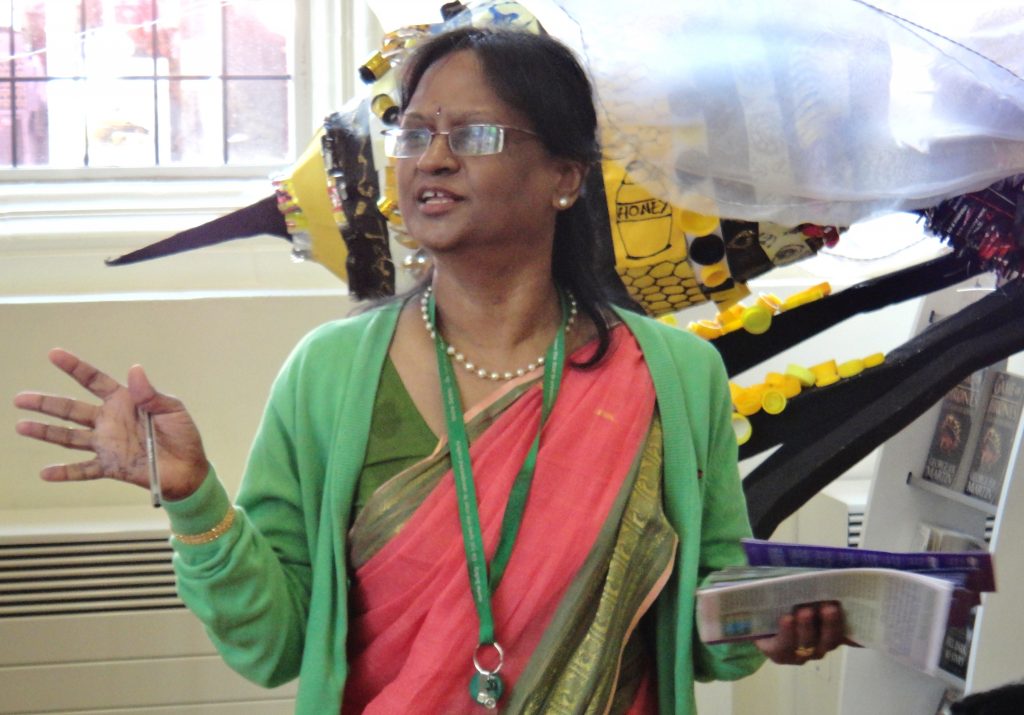
Traffic on Tooting High Street came to a stop in 2010 when the Tooting Trashcatchers Carnival came to town! Over 800 participants from local schools, community groups and clubs took part in this unique carnival made almost entirely from household rubbish.
Check out the CARNIVAL BLOGand read all about what happened on that magical day and take a look at the film below!
There is much talk about the breakdown of communities in urban areas but our experience in Tooting in SW London is of an area teeming with multi-layered communities brought together by faith, politics, sport, art, social support, neighbourhoods, health and much more. These communities may not be immediately visible but looking closely at the buildings we walk past every day you start to notice how many house a community group – a nursery, a constitutional club, a yoga centre, a swimming club, a political party or a gym. In particular Tooting has a large and diverse number of places of worship.
In mid-2009 TTT joined a mile long walk organised by South London Interfaith Group and the Balham and Tooting Community Association where we were welcomed by seven different places of worship including those of Hindu, Sikh, Muslim and Christian faiths. Inspired, we decided to create our own Transition Walk taking as its theme conversation about care of the earth from personal and faith perspectives.
Over several months we made contact with each venue and visited them to discuss the idea behind the walk – we were humbled by the incredibly warm welcome we received and the interest, support and hospitality we were offered. At each stop on the walk a faith leader spoke followed by a representative of Transition Town Tooting. Much common ground emerged between Christian, Muslim, Sikh and Hindu teachings about man’s responsibility to care for the earth and its bounty. The Transition Town representatives gave personal perspectives about their involvement the movement and their hopes and fears for the future of the earth.
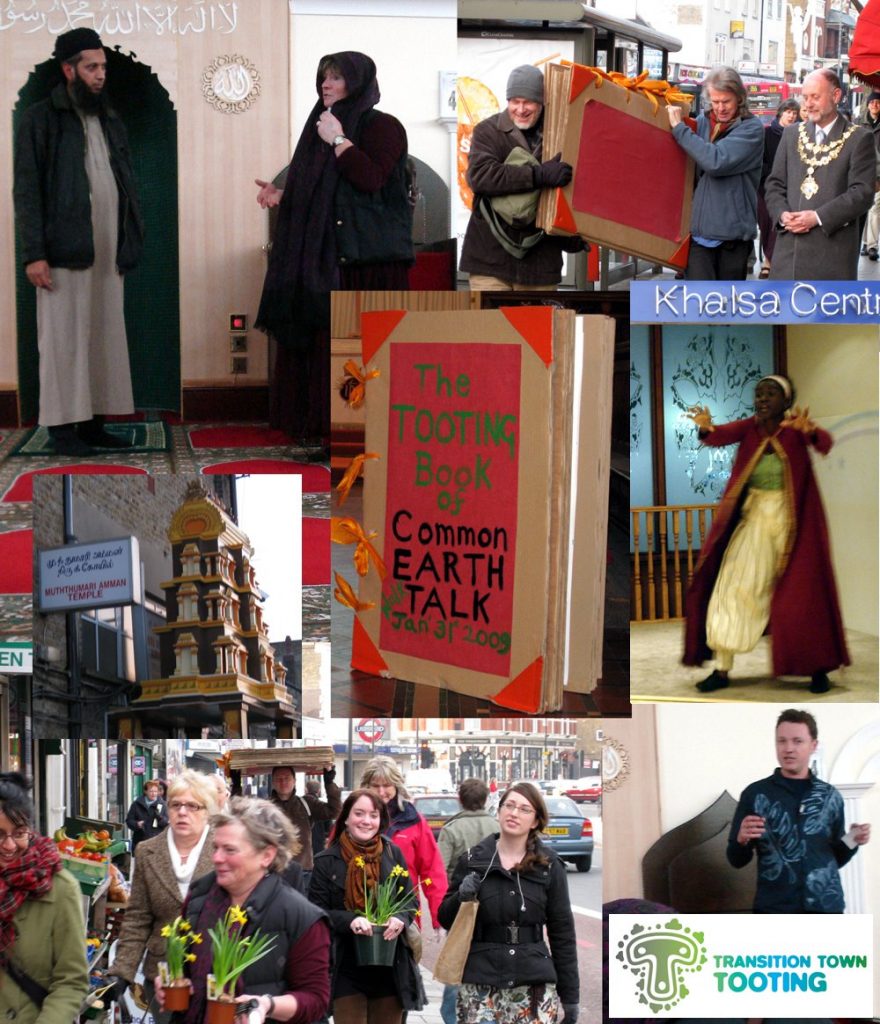
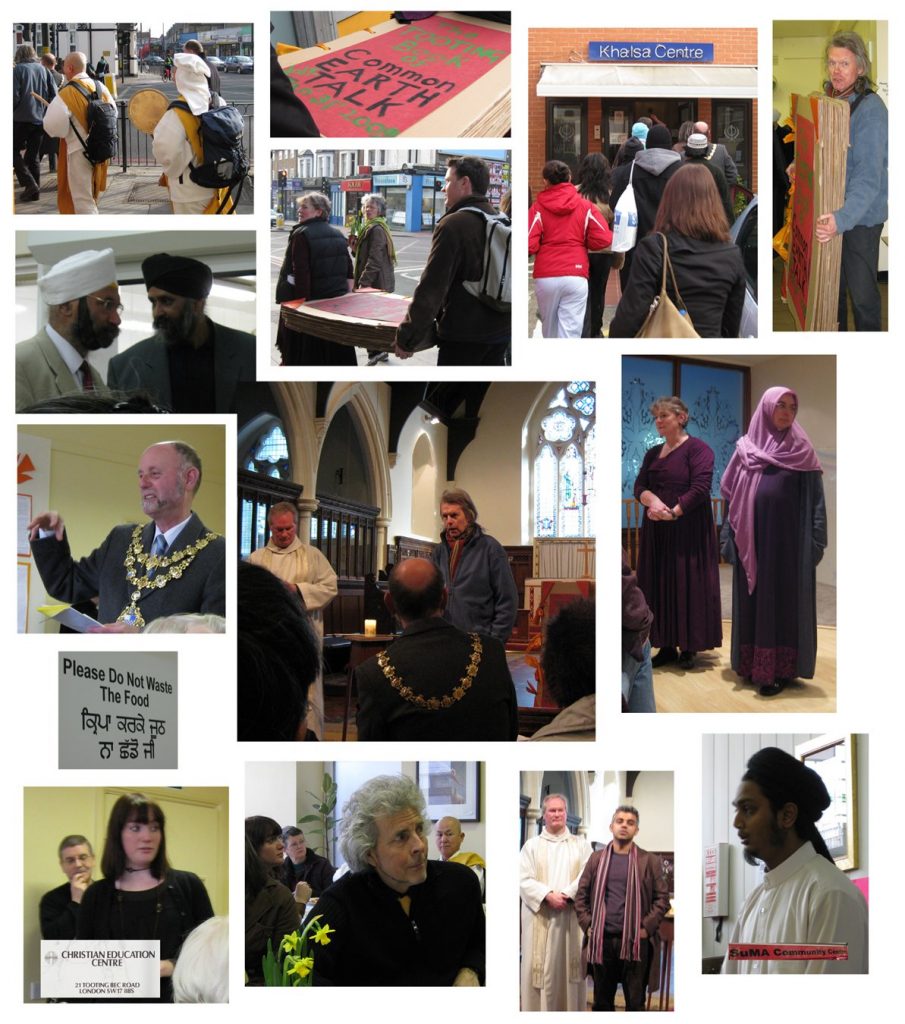
The group carried a giant cardboard ‘book’ in which people wrote their impressions at each stage of the journey and pasted the talks and texts relevant to each visit. At the final venue (Mushkil Aasaan, a local charity) the youth group of a local theatre, Tara Arts performed a short piece based on a 9thC text from Basra describing how the world’s animals sued the humans for their lack of care for the earth. We were joined on the walk by the then local MP, Sadiq Khan, and the Mayor of Wandsworth, Cllr John Farebrother who both provided personal reflections and their appreciation of the space the walk had created for meeting on common ground.
‘A wonderful day, celebrating what we share, but also the creativity and individuality of faiths and cultures here in Tooting. A wonderful welcome through doors we so easily walk past and ignore.’ Kate Allan – BATCA (her full report of the walk can be found below)
PRESERVING THE PLANET: THE ‘EARTH TALK WALK’ report by Kate Allan
On Saturday 31 January, I joined a group of about thirty people on the ‘Earth Talk Walk’ organised by the Tooting Transition Town (TTT) network, who are a group of local people committed to a more sustainable way of life.
The Earth Talk Walk was a series of visits to places of worship of different faiths to hear about their approach to caring for the earth. It was a fascinating experience. The group received a warm welcome everywhere it went. There was a striking similarity among Christians, Muslims, Sikhs and Hindus in their teachings about man’s responsibility to care for creation and use its fruits responsibly. At each stop, a faith leader spoke as well as a representative of Tooting Transition Town. The TTT person explained, often movingly, how he or she had been drawn to the environmental movement and their hopes and fears for the future. This counterpoint of TTT and faith voices was very effective.
The walk began at Holy Trinity, where Hugh Grear welcomed everyone. He drew on Genesis to show God at the centre of creation. He described the tension between man’s ‘dominion’ of the earth and his responsibility ‘to till and keep it’ and its resolution in the teachings of the New Testament. Sadiq Khan MP spoke briefly. The next visit was to the Catholic Education Centre at Tooting Bec (a beautiful Georgian house) where we were given an excellent lunch. The Mayor of Wandsworth, Cllr John Farebrother, provided some reflections.
After that we crossed to the Sunni Muslim Association in Tooting Bec Road, where there’s a small plain mosque behind a shop front. The SMA reflects the Sufi tradition in Islam, where the individual’s quest for closeness to God dominates rather than strict observance of prayers and rituals. The imam explained how the Koran gives man the role of God’s vice-gerent (deputy or appointee) on earth and charges him to care for everything in it. For instance there is a command about avoiding destroying crops and animals when waging war. The imam showed how Koranic teaching is applied to the present day. Mohammed told his followers not to pollute a water source with human waste. This is interpreted as forbidding chemical and industrial pollution today.
The following visits were to the Sikh Khalsa centre and the richly decorated Muthumari Amman Hindu temple. The Sikh spokesman emphasised the responsibility of all men as equals to look after each other and all creation. Our Hindu host described the innate feeling of Hindus for the earth. The first thing a Hindu does on arrival in a foreign country is to kiss the ground. Hindu deities and worship are bound up with nature and creation – water, rivers, the earth are at the heart of their beliefs. The next brief stop was at Tooting Islamic Centre, where the imam again drew from the Koran, in both English and Arabic, to emphasise man’s responsibilities.
The day was more than just a walk. TTT people carried a giant cardboard ‘book’ in which people wrote their impressions at each stage of the journey and pasted the talks and texts relevant to each visit. This will be reproduced as a booklet and will be a durable reminder of the event. The final flourish was a performance at Mushkil Aaasaan, the Asian women’s charity by a gifted young African actress of a story that originated in medieval Iraq. Dramatic and witty, it described how the animals took their revenge on humans who had ruined their lives by taking them to court – and winning.
Social media is where people engage with TTT and our individual projects. The web site is the hub, stepping off point to projects and space for the herstory of TTT and place to give the depth to projects and thinking that social lack.
We are displaying the Google calendar of events, twitter and instagram feeds and links to facebook pages. These all contain the latest information about your project, so it is not necessary to change your project pages with every new date, so we can conserve our time and energy. Another reason for not adding detailed dates is that your page will quickly look out of date and unloved unless you edit it regularly.
Rules
Keep text and images in a grid, for style darling! Images left and text ranged right. For example this post looks better than this one. I appreciate these were created in the old site and look different here.
Dates
See the note above. Please include the year on any dates. 12th February 2021 🙂 12th February 🙁
Please read ALL the information below before you get ready to post!
Voice
The tone of voice we use should be friendly and approachable. Online it’s best to keep things brief and simple.
How to write about your project: Hook them in!
The first sentence’s only job should answer this question: “Why should I be interested in this?”
If it’s interesting people will keep reading, and you can go into more detail. Think from your readers point of view, and keep it short and sweet – like a pull quote in a news article. For example:
“Jellybrella: Reusing waste to celebrate creativity, diversity and sustainability.”
Once you’ve hooked your reader, you can start creating a call to action. This should be a short paragraph at the top of the page. Consider having all this text in bold, and include:
What the project is – as briefly as possible, using these 3 prompts:
Describe the “vision” of your completed project – how will it look, feel, taste, sound?
What will the project do to make this happen?
Who or what will benefit from your project?
Combine your responses into just one or two sentences, for example: “Sharing Seeds creates a green Wandsworth in which humans and wildlife can thrive, by engaging locals to plant at tree bases in their neighbourhood.”
How the reader can get involved – practical things they can do eg. “Help us by collecting plastic bottles on your street!”
Point of contact – contact details (name and email)
Test – show your short paragraph to someone who doesn’t know about your project, and ask them to tell you about it.
Break up text with images or videos. Make it look interesting, so people want to read it!
Keep text and images in a grid, for style darling! Images left and text ranged right. For example this post looks better than this one. I appreciate these were created in the old site and look different here.
How to write about your project in more detail!
Feeling ready to wax lyrical about your awesome project? Here’s some more prompts that may help:
What roles are needed to make this a success?
Who are the community partners?
What resources are needed, material and time / ‘labour’?
How long will the project last?
What is funding source?
Where to learn about project details and progress?
What are the opportunities for this project to lead to other activity / create change?
What’s the intended legacy?
Tags and Categories
Why do we need to add tags?
“Tags provide a useful way to group related posts together and to quickly tell readers what a post is about. Tags also make it easier for people to find your content.”
WordPress support
In short: tags can be a good way to help visitors explore the website
Remember:
Before you create a new tag, check that a similar one does not exist. (“But Garry, how do I check? add Garrya video of writing a post!” – good idea! Watch the video when I have made it!)
Tag your post with as many of the existing tags that are relevant.
If the post belongs to a Category (an existing project) please add that to your post. Please do not create new categories unless you are describing a brand new project – not covered in the existing categories.
Adding links within text
Make it easy to understand what the link leads too. Easy for humans and better for search engines too!
This is bad practise: You can read all our newsletters HERE.
Links to other sites
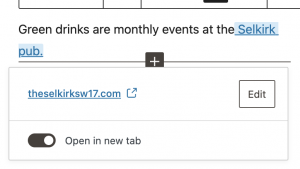
All links to other sites should be set to open in a new tab
Uploading Images
When you have uploaded an image it is important for accessibility and search engines that you add an ‘Alt Text’ description of the purpose of the image. This description is read out to people who cannot see the picture.
Text colour and size
To allow us to apply global changes to the entire site please do not change the colour and size of any text (examples in this page are only in the back end and simply to demonstrate parts of a sentence – they are the exception that makes the rule!)
Coloured text will cause Garry a shed load of work and might make the site look unkempt and make it hard to read.
To emphasise text please use the B and I italic options.
Don’t underline text – on the web this means it’s a link. If it is a link I’ll do that with code. Otherwise It will look and feel broken.
Images and video
Adding video is as easy as pasting in the link.
Images can be uploaded. If you have several imagers use a ‘Gallery’ block. This is good way of clustering images in a nice looking way. See the How To Guide for more on this.
How to add a Post
Garry you need to write this
DO NOT (please)
Create any new pages! – These are the static parts of the site. Projects should be Posts!
Change the layout of the pages until the site is live – This will cause me a shed load of work, as most of the formatting will be dynamic.