Tag: Waste

  • Who’s Playing At This Year’s Foodival?

    Two singer songwriters, two bands, a ukulele combo plus some alternative making & carnival will light up this weekend’s Tooting Foodival at the Samaj Hall.  But can you guess who the performers are? Clues below:

    Head over to the Foodival blog for the full details of this great line up. 
    We look forward to seeing you at Mushkil Aasaan on Saturday for the vegetable and fruit collection or for the food and entertainment at Samaj Hall on Sunday. Or Both! Don’t forget to bring your plate!
    #seedtofeast

  • Reducing Waste for Foodival

    In today’s news we learn that 90% of seabirds have eaten plastic and are likely to retain some in their gut. It’s pretty horrendous that so much waste plastic ends up polluting our oceans and we will be highlighting waste at this year’s Tooting Foodival

    An Albatross takes a shine to a plastic bottle

    It is easy to forget that plastic comes largely from fossil fuels, that diminishing supply of 300m year old organic matter [see US Dept of Energy] that currently powers the global economy. 

    An event we ran nearly five years ago, Plastic from Oil Well to Ocean via Tooting, looked in more detail at this topic and, perhaps surprisingly, is by far the most read post in the history of this blog!  Some of our readers evidently think this topic is important. 

    As usual, as part of Foodival, we will aim to give the south west London public a taste of locally grown, locally cooked, low food mile, tasty food.  But we really want to minimise the waste we create as much as possible and especially waste from plastic that is so harmful to our environment, the natural world and ultimately us.  So, can you help us?

    This year we are asking all festival attendees to BRING YOUR OWN plate and cutlery to the Foodival.  That way we will have less waste, fewer CO2 emissions and a lighter environmental footprint.  Yes it might be a bit of a hassle and something we are not used to doing, but also is this small change that hard to accomplish?  We hope that as many of you as possible will try to join in with this initiative.  We will have biodegradable plates & cutlery on hand as a back up, but there is still an environmental impact inherent in any product manufacturing, so we will be charging for these! 

    So the message is please BRING YOUR OWN or suffer the £1 a plate!

  • ‘The future is dappled in the present’: green sky thinking now

    This post is a round-up of eight imaginative projects and developments that are happening now, in Tooting and beyond
    It’s a selection of what we’ve spotted in the past month.

    My title comes from Paul Allen of Zero Carbon Britain at the Centre for Alternative Technology, one of the contributors to Playing for Time (see below). Paul’s natural-world image means that the opportunities for making a sustainable future are all around us…if we look.

    We hope there is something here to catch your interest and inspire on the Bank Holiday. 
    (Plus, in three posts from last week: there’s our plastic bottle greenhouse to build in the garden 1200-1600 this Thursday and Friday, and then Restart and the first Tooting Field Day later in April.)

    Playing for Time
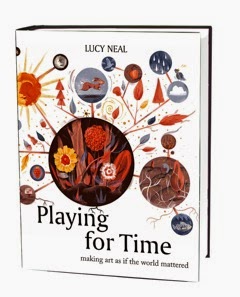
    Lucy Neal, who founded TTT in 2008, has been spending the past two years writing Playing for Time, her book about making art as if the world mattered.
    Playing for Time joins the dots between key drivers of change in energy, finance, climate change, food and community resilience – and offers ‘recipes for action’ for readers to try.

    It’s a wonderful collection of how artists round the globe are at the same time imagining the future and working in the real world on what matters to us all.  

    The book is not only for artists, and one of the points of the book is to encourage us to look out and across our silos of specialism. 
    Dip into the 400 pages…you’ll be hooked!

    It’s Lucy’s book, and it’s also a collaboration with sixty other contributors…so it’s a great representation of the spirit of joint action, connecting with others and local solutions that we can share as ‘Transition’ values. And yes, there is quite a lot about Tooting in the book!

    Playing for Time was published last week, and TTT blog readers can order the book from the publishers now, and get £5.00 off the price.
    To order, enter this discount code: ONPFT2015 at Oberon Books.
    Offer valid until 31 Dec 2015…but no need to wait until then.

    2  Energy from the kinetic force of footsteps (or footballers) 
    “My idea was a floor tile that would convert the kinetic energy from a footstep into electricity” says engineer Robert Kemball-Cook about his invention that provides off-grid power anywhere. It’s expensive now – but We are establishing a whole industry that never existed before.”  
    Read about Pavegen here

    3  Flexible pv panels
     Another engineer, Perry Carroll took ten years to develop a new kind of photovoltaic panel. “Solar is moving from being a hard, inflexible and one-colour product to being soft lightweight, flexible, and maybe multicoloured..” Read about The Solar Cloth Company here

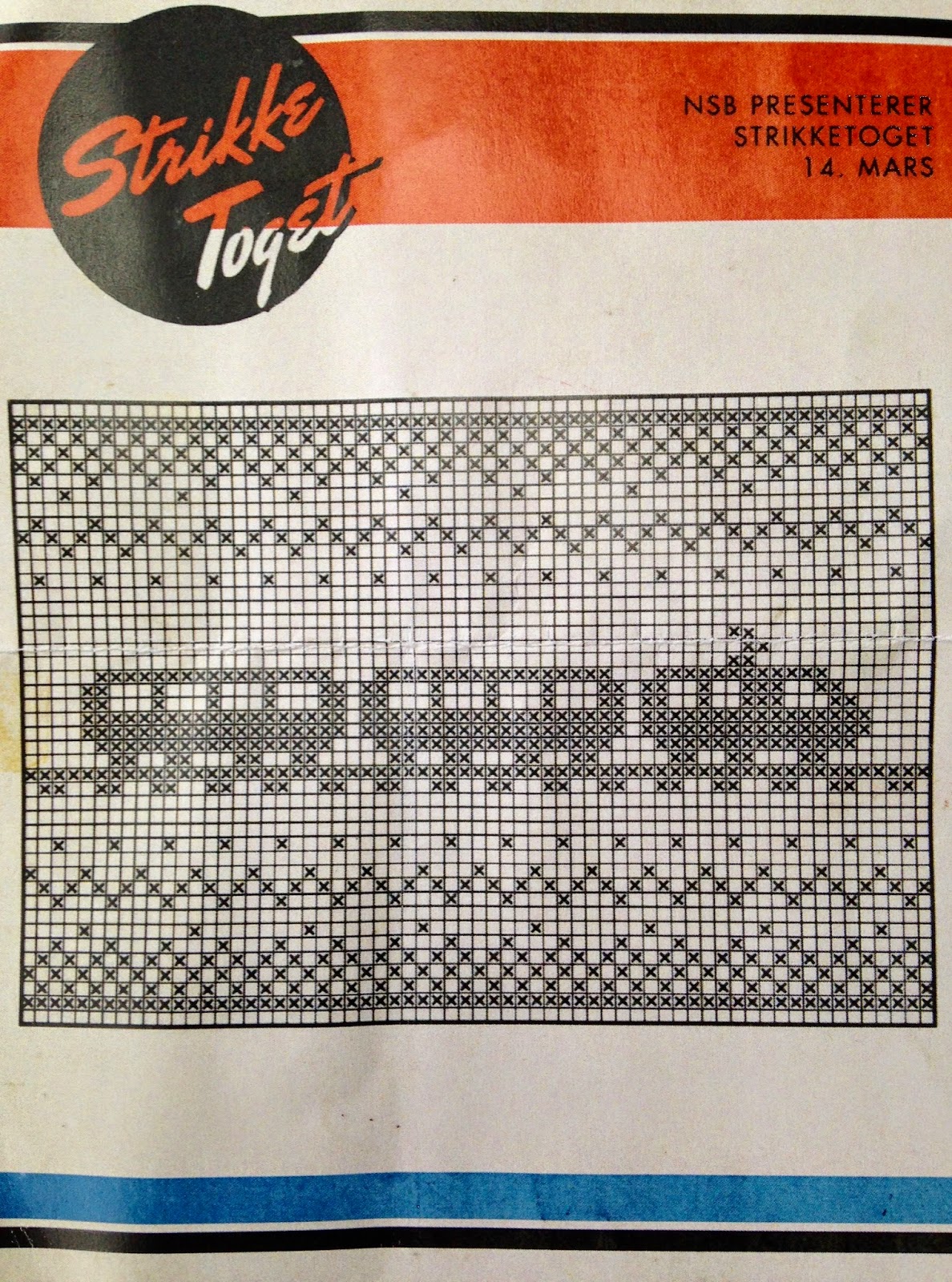
    Strikketoget The Knitting Train

    On a four-hour train journey in Norway last week, I was invited to come to the knitting carriage: learn the skills as a beginner, or practice with new patterns; all materials provided; all ages getting together.
    The tagline: Lære noe nytt. Ta toget. Learn something new. Take the train.

    What could be offered to learn and enjoy on our trains?


    5  The Green Viking helps with composting toilets
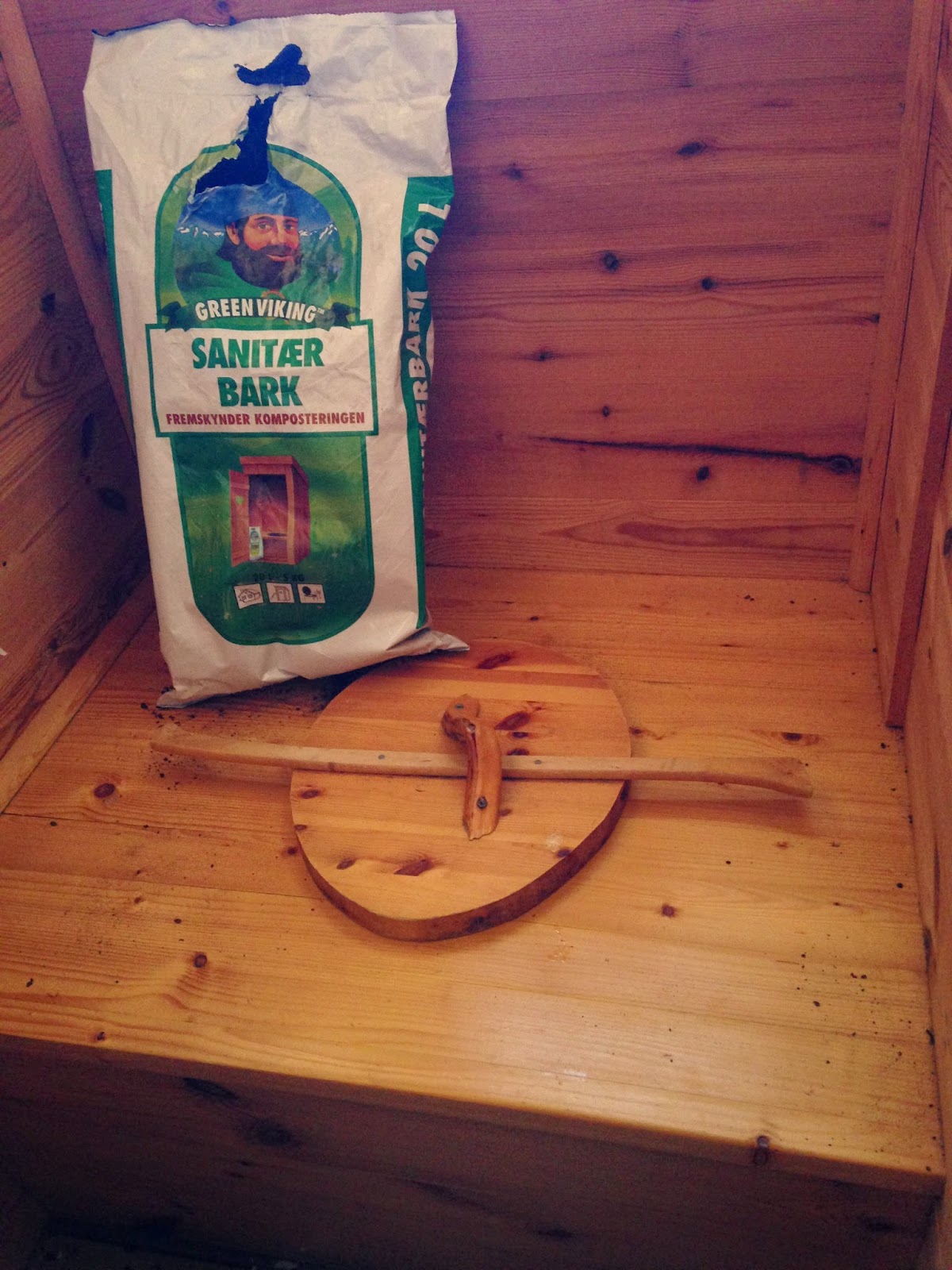
    That train journey led to a ski trip. There were composting toilets in every cabin. Waste bark has been re-purposed and repackaged by an enterprise in Sweden, to provide that magic Green Viking extra.

    In Bangladesh, the wonderfully-named ‘Value at the End of the Sanitation Value-Chain’ project takes the process to the next step, and finds gold at the end of the compost rainbow. 

    How can we be more creative about composting in Tooting?

    Solspeilet The Sun Mirror
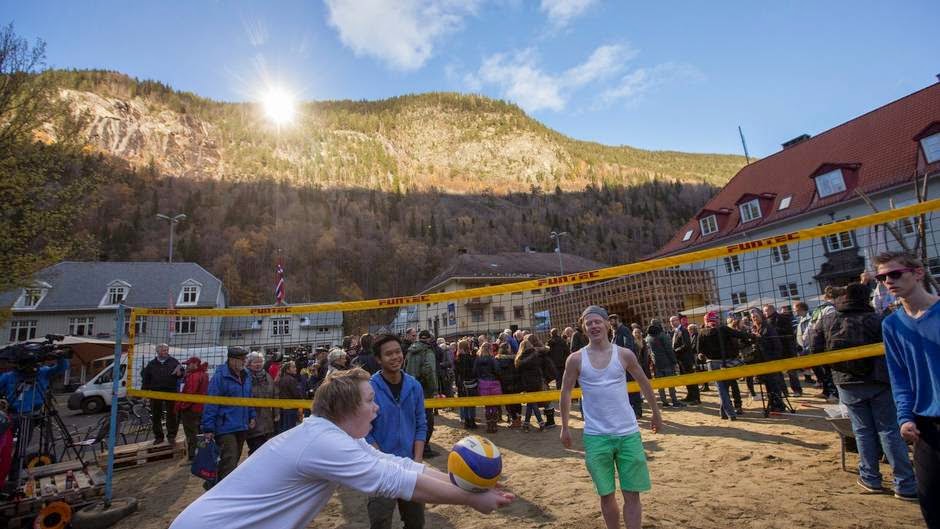
    The ski trip in Norway finished in Rjukan, where the Sun Mirror project conceived by artist Martin Andersen reflects sunlight into the town in its deep valley, which has no direct sun for half the year. Such a ‘simple’ idea.  

    What would we make in Tooting that could have an impact on social and personal wellbeing?

    7  Institutional fund divestment from coal, gas and oil
    You probably know about the global campaigns to get investors to divest from carbon-intensive industries… see 350.org’s Go Fossil Free .
    Last year the Rockefeller Brothers Fund decided to start a process of divestment from coal, gas and oil, saying “it is our moral duty to divest from fossil fuels”. (Yes, John D Rockefeller founded the oil empire that became ExxonMobil).

    Oslo City is selling the coal investments in its pension portfolio next month…which other cities will follow their lead? 
    Last week the Guardian Media group pledged to divest its £800m fund from fossil fuels. 
    And on April 1 it was reported that Jeremy Clarkson has experienced a conversion: he’s signed up with the Guardian to be a ‘poster person for the carbon-haters’.

    Three weeks ago the Governor of the Bank of England defended a Bank study which investigates the risk of an economic crash if action on climate change renders oil and gas assets worthless (because reserves will have to be kept in the ground to reduce atmospheric temperature increases). Corporate insurers might take a huge hit…will that send a signal to investors?

    Sophia McNab and ShareAction have invited anyone interested to join a meeting at BP’s AGM on April 16th, “to show investors that we want action on climate change”. Sophia led TTT’s session on personal pensions last December and you can contact her here to join in or get information about ShareAction’s ‘AGM Army’

    Back to Tooting, where we all have the potential to act, urgently and locally: 

    Re-used materials in a garden project
    Two colleagues from Tooting Outdoors are building garden raised beds with Year Four children at a local primary school.
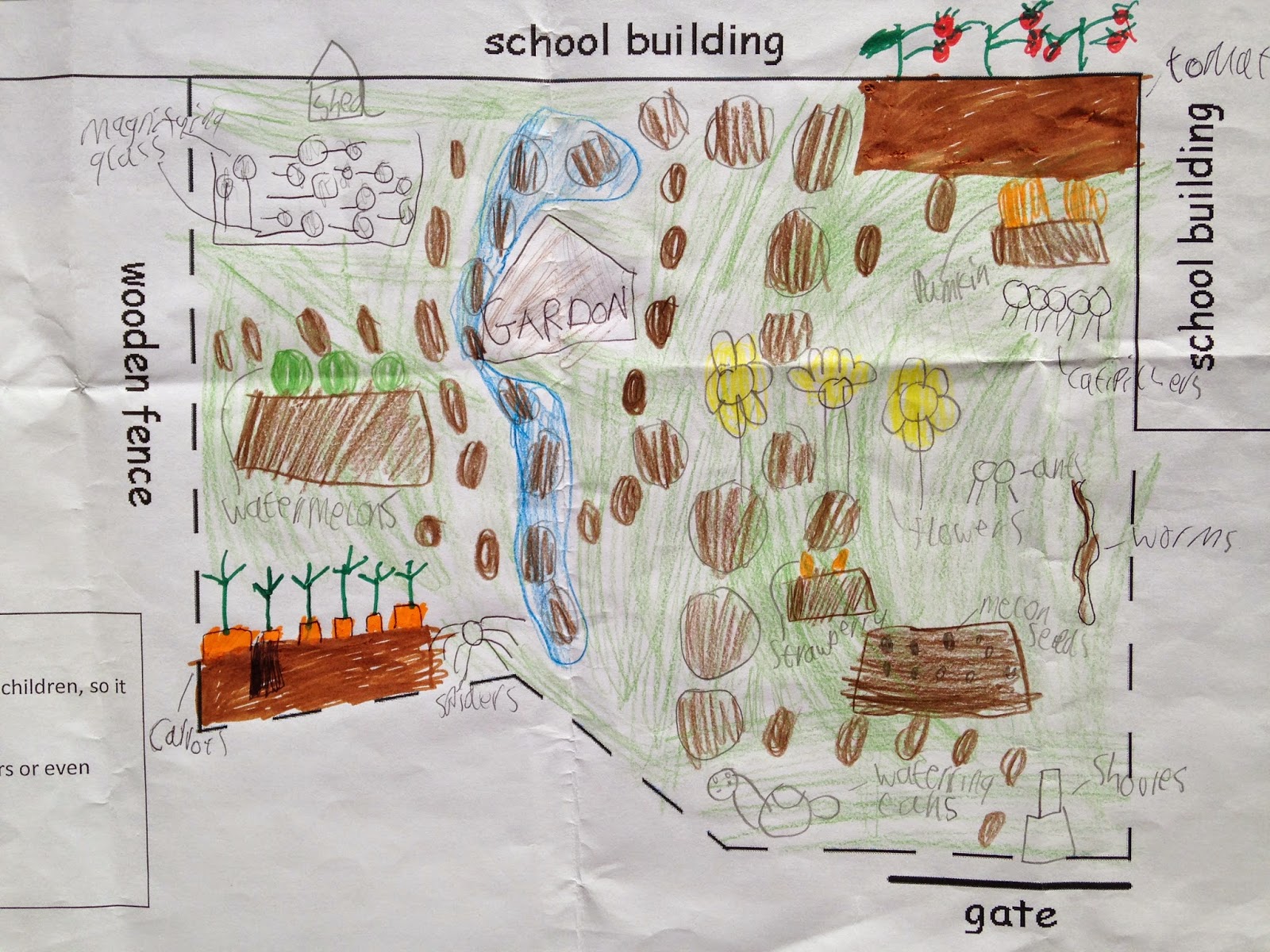
    One child’s vision for the garden
    This outdoor learning project is partly about making an empty space fruitful and delivering a useful outcome. It’s mostly about involving the children in the whole process from imagining what a school garden could be for, to measuring the site and building the beds using tools safely. 
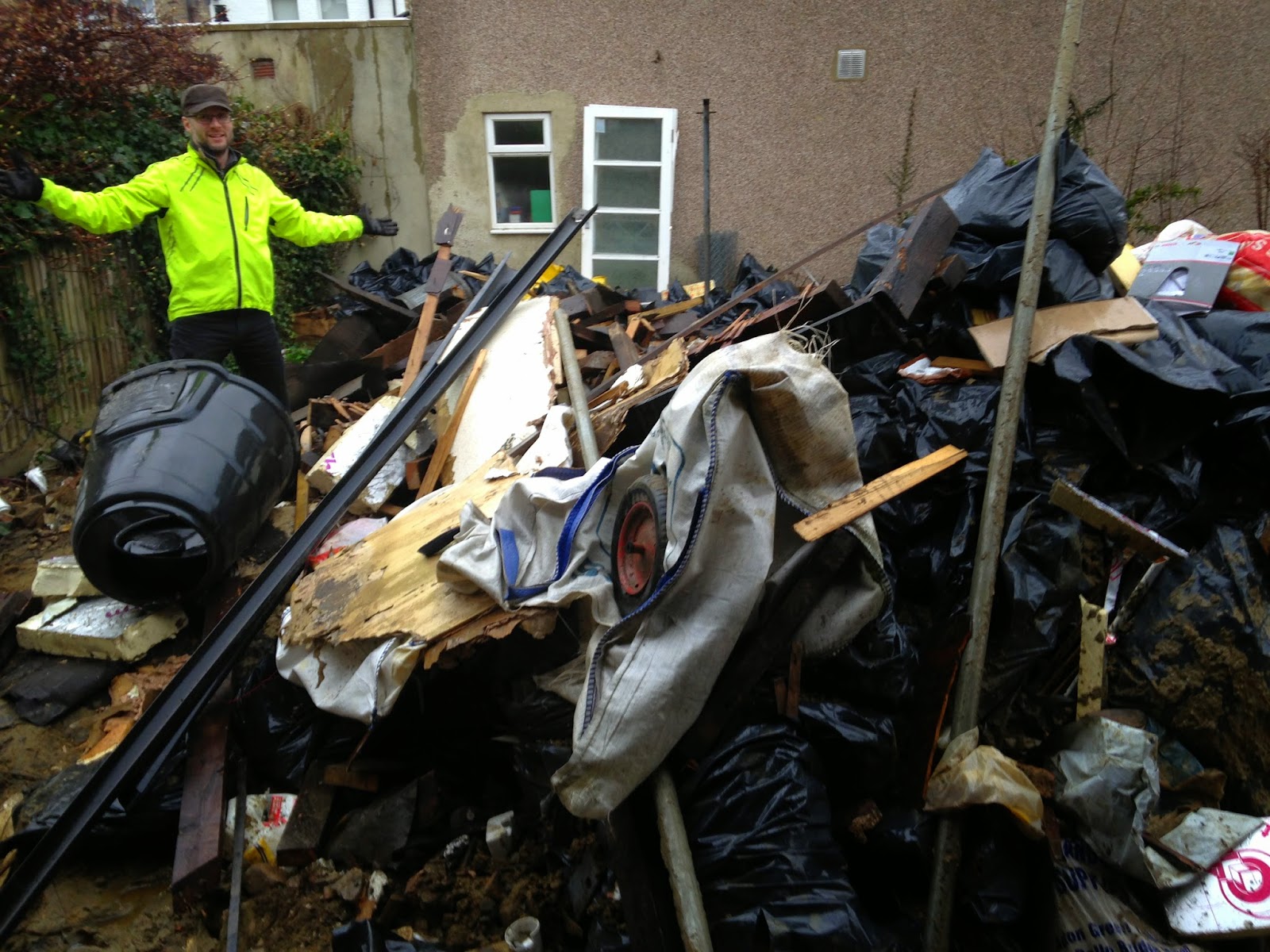
    Think of the carbon we are saving!
    All the materials are re-used / re-purposed, whether the topsoil in the beds or the timbers (100 year-old roof trusses from a house renovation in Tooting Broadway). There was a big time cost: de-nailing the timber took hours; but the ‘carbon cost’ was almost zero. The wood has paid its carbon dues.

    What ‘waste’ can you see in Tooting that could have a valuable second and low-carbon life. 
    How could we set up a service to support that?


    Thanks for reading
    We’re sharing these to encourage us all to imagine what’s possible, and to experiment with positive ideas and creative new ways of working – personal, social, environmental, and economic.   
    These diverse examples aren’t described in detail….all welcome to join a TTT meeting if you have some ideas you’d like to share to explore local sustainability in more depth.  – Charles
  • The Anti-Upgrading Exhibition – at the Lightbox

    ‘Our enormously productive economy demands we make consumption a way of life’.

    This is a quote from 1955 on the wall of an exhibition now showing at the Lightbox Gallery in Woking.

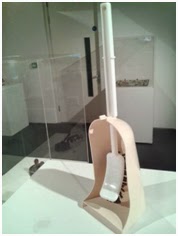
    A toilet brush is the unlikely centre-piece of the exhibition.  Its description reads ‘This is a well designed toilet brush from Addis bought in the late ‘80’s when our house was built, and still as good as new! It still performs perfectly…. it has probably been used over 30,000 times…. (This brush has been very thoroughly cleaned!)
    The exhibition ‘Waste Not…’ runs (free) until 8thApril at the gallery (30 mins on the train from Clapham Junction or Wimbledon).  It is an exhibition of old appliances and other objects that are still used – or at least have been kept in the hope of being used!  
    It shows the objects themselves and short films of their owners talking about them.  It’s all about maintaining things – it is the anti-upgrading exhibition! 

    On 28th March, the South London Makerspace and Restart Project held a fixing and mending workshop at the gallery where they showed members of the local community how to fix their electrical and electronic items, sharpen old saws and tools and mend self-assembly furniture with new parts printed on a 3-D printer!

    If you are interested in getting involved locally with mending, fixing or making – or just have something you’d like to fix – come along to our Tooting Restart Project workshops  at Mushkil Aasaan, 220 – 222 Upper Tooting Road, SW17 7EW (next to Nandos)
    Sat 25th April – 2.30 – 5.30
    Sat 11th July – 2.30 – 5.30
    Sat 26th September – 2.30 – 5.30
  • Bottle Greenhouse action Sunday March 8th, 1100-1300 at Tooting Community Garden

    When you were at school, was your 
    classroom outside in the sun?

    We’re building a plastic bottle greenhouse at the Tooting Community Garden, along with Year Six from Gatton School. 

    That means the children are preparing bottles that would otherwise be added to local waste or recycling. They are measuring the site and problem solving for the construction, all during the weekly outdoor learning sessions.

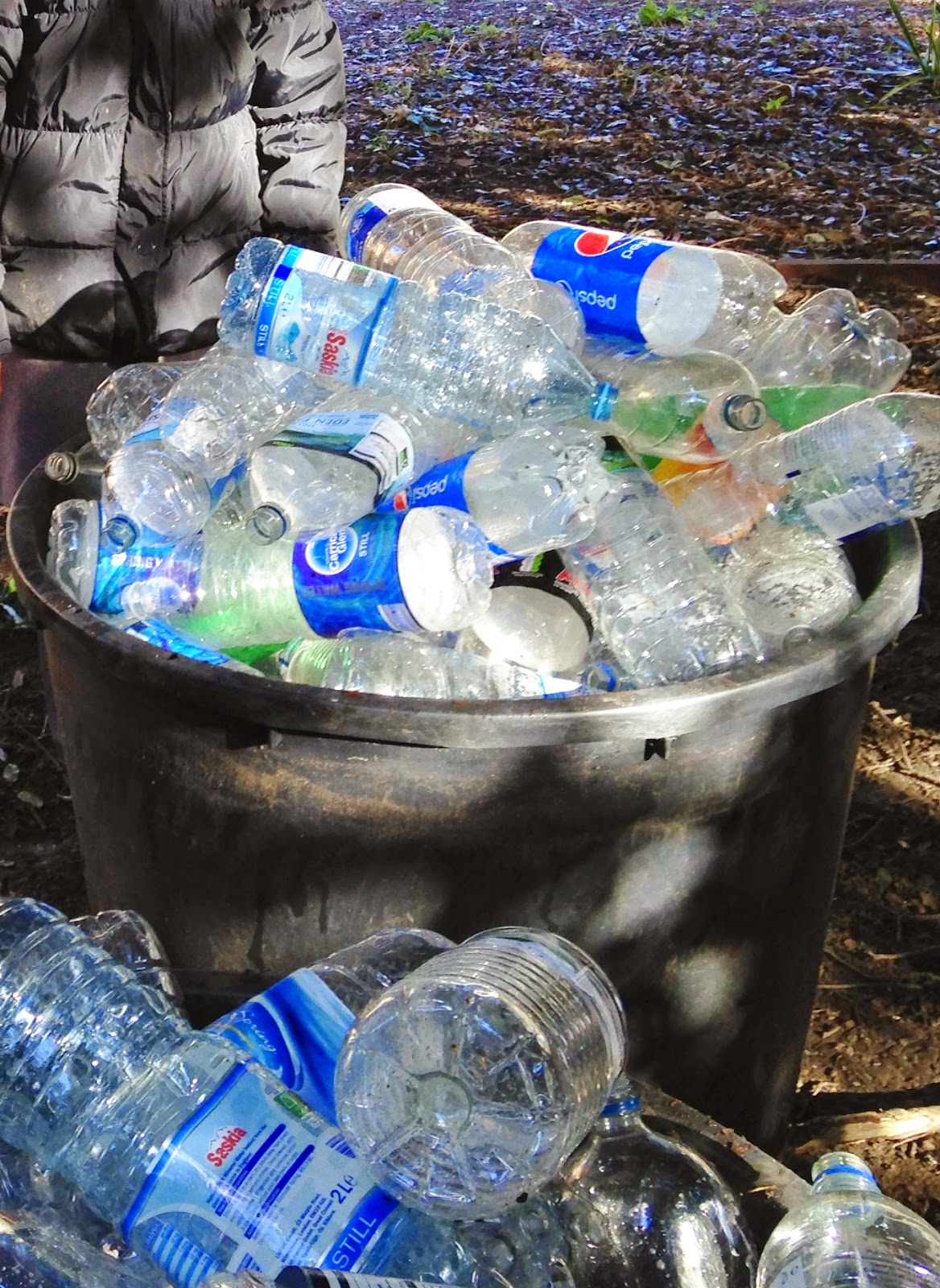
    The whole school community has been collecting 2 litre clear plastic pop or water bottles (that’s the kind we need) since the autumn…every week, the children come loaded with bags of bottles. We’ll use well over 1000. (Anyone welcome to bring bottles to the garden on any Sunday).

    This weekend, in the normal Sunday Garden session from 1100-1300, all welcome to help us catch up a bit with the repetitive but deeply satisfying task of cutting, washing and piling up (hundreds of) our plastic bottles. Yes it is addictive.
    We’ll have the kit – and if you have a favourite pair of sharp scissors, do bring them along. 
    Not all the jobs involve cutting – there’s something for everyone of all ages.

    Please come along!

    The garden is at 5 North Drive, SW16 1RN. We’ll post any last minute info on both the TTT and the Tooting Community Garden facebook pages. Not to tempt fate…..the weather forecast is good. 

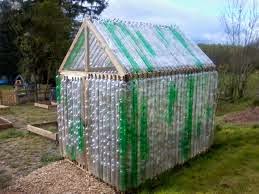
    Bottle greenhouse made by another school
  • Restart Party 2

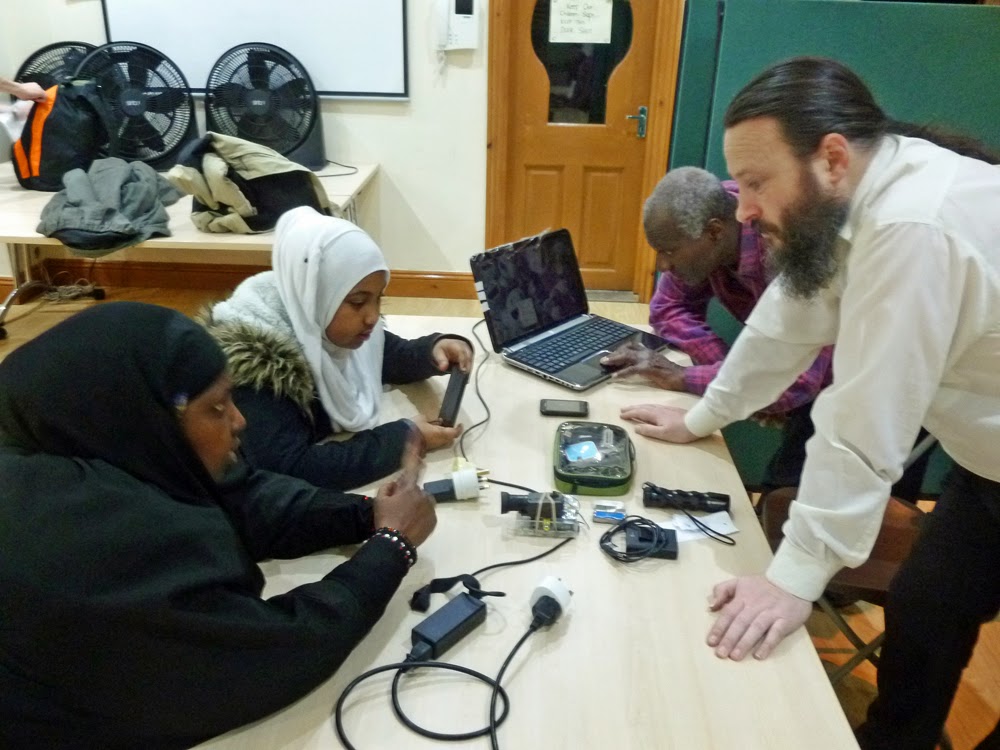
    Tooting’s second Restart Party was held on Dec 3rd at Mushkil Aasaan with more electronic items being fixed by volunteers for free courtesy of the Restart Project.  We had quite a few laptops and tablets this time round. Sidd (pictured) had come all the way from Ilford with his laptop screen recycled as an external monitor – pretty impressive!
    UPDATE: see Sidd’s blog on how he did it

    Sid with his home made machine

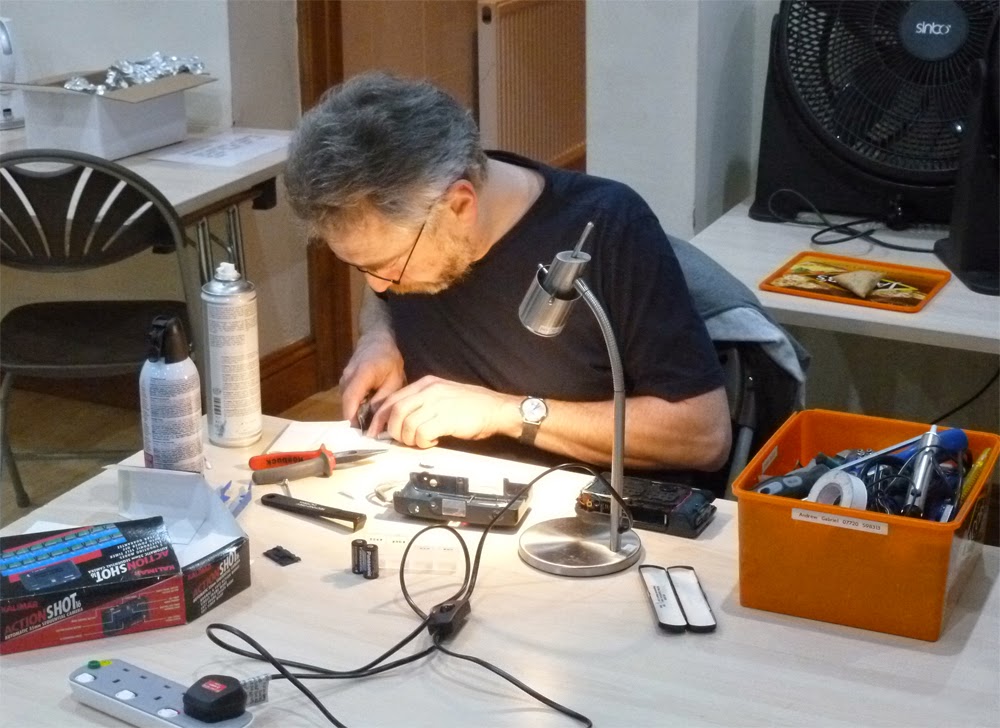
    The Restart Project is a London-based social enterprise that encourages and empowers people to use their electronics longer, by sharing repair and maintenance skills.  We are very grateful to Janet, Ugo and their amazing team of volunteer fixers for running another event with us, and I personally am delighted to have had my old camera fixed after 5 years in a drawer – thank you!

    We hope to make Restart Parties a regular feature in Tooting and are on the lookout for skilled local fixers.  Would you like to share your skills (and probably learn new ones) while helping keep electronic stuff out of landfill? Contact us at the usual address if you’d like to get involved in future Tooting Restart events (transitiontowntooting@gmail.com).  David

    Fixing the shutter on my camera

    Laptop consultancy
    What’s in here?

  • Foodcycle Tooting

    TTT Co-chair, Belinda Sosinowicz blogs her first experiences of the new Foodcycle venture starting this month in Tooting.

    According to Foodcycle (2013) an estimated 400,000 tonnes of useable surplus food can be saved from UK supermarkets each year [1], or in other words, 400,000 tonnes of food is wasted by supermarkets that could otherwise be used.

    To be doing something practical about this fits with our transition values which aim to tackle the big issues of climate change, peak oil, sustainability and scarce resources at a local level.  So recently I found myself being drawn into finding out how I could do more to address the issue of food wastage at my local level by joining Foodcycle.

    Foodcycle is a UK charity that combines volunteers, surplus food and spare kitchen spaces to create tasty, nutritious meals for people at risk of food poverty and social isolation. They run 14 Hubs across the country: volunteer-powered community projects serving nutritious meals for people at risk. Working with community partners they provide communal meals in a warm and welcoming environment to older people, mental health service users, homeless people, low-income families, asylum seekers and refugees, and the long-term unemployed. Since May they have reclaimed over 74, 000kg of surplus food from food retailers.


    As well as this, the project values the fundamental belief that connecting people and communities together improves our wellbeing. Evidence confirms that social connecting is strongly linked to subjective well-being, which relates robustly to happiness and life satisfaction, both directly and through their impact on health and wellbeing. (Helliwell & Puttman 2004) [2] It is also possible to shift our more materialistic values towards pro- environmental and sustainability values; for both people on the receiving end and those giving up their time to volunteer through more pro- social activities. These types of interventions draw on people’s “sense of self” (Crompton & Kasser, 2010) [3], informed by “Intrinsic and self- transcendent” values, particularly universalism, benevolence and community (collectivism) which enhances the welfare of the in-group and the wellbeing of the individual  (Kasser and Brown, 2012). Kjell (2011) [4], concurs with these theories suggesting that greater emphasis should be placed on how humans connect with each other and nature if we are to adopt sustainable cultures. These correlate with bigger- than self-problems and corresponding behaviours such as pro environmental behaviours (Crompton, 2010) [5].

    So how does this fit in with Transition Tooting? Foodcycle have just started a new hub in Wandsworth, based in Tooting (to start with). Led by Emily Oliver, two hubs are starting up this month to collect surplus food from Sainsbury in Tooting Broadway. I volunteered to be part of this epic project which knits all my values (+ my love of growing, cooking and eating) and those of transition together. So a couple of weeks ago, I found myself making a Chili rhubarb pudding with another transitioner in the United Reform Church in Tooting Broad way, as apart of a team making a starter and main course. This was a bit like ‘ready, steady cook; as after a short introduction to Foodcylce we were given a bag of veggies and herbs and asked to create a 3 course meal for those present! We all then shared the meal together. This gave an us a ‘taste’ of what it might be like to volunteer on the project. It was great fun and also a good chance to meet new people with the same ideas to do something good that connects people in our community, starts to address our massive problem of food wastage, inequality, poor health and poor wellbeing- and supports the vision of building a resilient community. Soon we will start serving up meals every Saturday, to people in our local community at the united Reform Church and Mushkil Aasaan. I will be blogging about the project on TTT web site and http://happytooting.wordpress.com so keep an eye out for our meals and our updates!


    [1] Foodcycle (2013) http://foodcycle.org.uk
    [2] Helliwell, J.F. & Putnam, R.D., (2004). The social context of wellbeing. The Royal Society.
    [3] Crompton, T., & Kasser. T. (2009). Meeting Environmental Challenges: The Role of Human identity. UK: WWF.
    [4] Kjell, O. N. E. (2011). Sustainable Well- Being: A potential Synergy Between Sustainability and Well- Being Research. Review of General Psychology 2011, Vol. 15, No. 3, 255–266 DOI: 10.1037/a0024603
    [5] Crompton, T. (2010). Common Cause. UK: WWF. www.wwf.org.uk/change.